The European Commission has proposed an EU-wide ban on social media use for children under 13 and plans supervised, limited "mini accounts" for 13–14 year-olds capped at one hour a day. The proposed "Kids Act" would shift the burden of proof onto platforms to show their services are safe for minors. Member states must still approve the measure, and similar national moves have already faced legal and political hurdles. Von der Leyen also warned of AI risks and will invite AI lab leaders for talks.
EU Proposes Ban On Social Media For Under-13s And Introduces 'Kids Act' To Hold Platforms Accountable
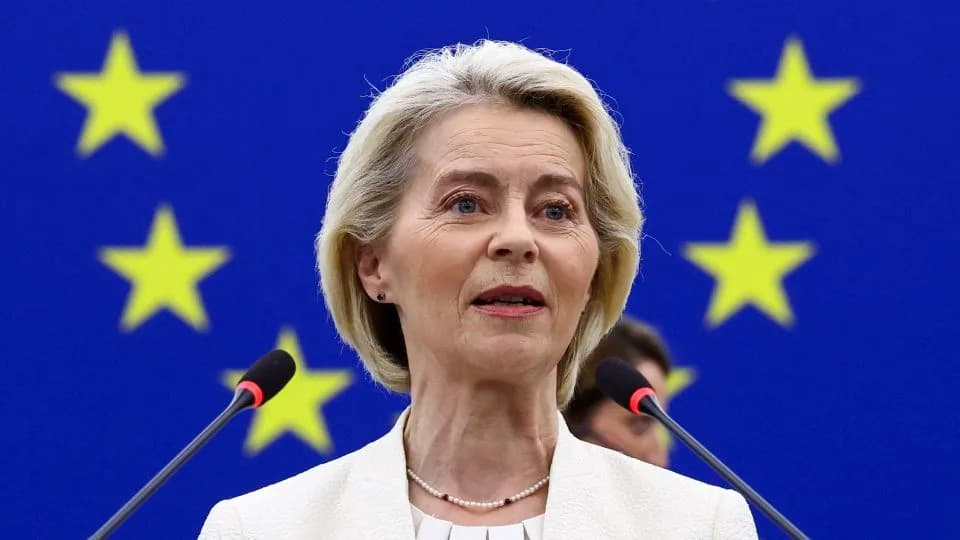
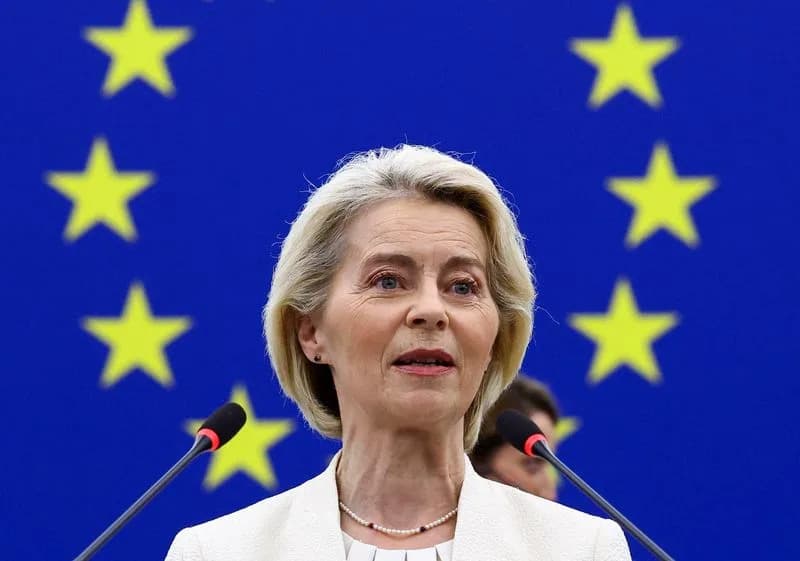
European Commission President Ursula von der Leyen speaks during her State of the European Union address to the European Parliament, in Strasbourg, France, on September 16, 2026. - Yves Herman/Reuters
The European Union announced plans to bar children under 13 from using social media across the bloc and to tighten rules for older children, European Commission President Ursula von der Leyen said in her state of the union address in Strasbourg.
Under the proposal, 13- and 14-year-olds could access supervised "mini accounts" with limited features and a strict daily cap of one hour. Personal accounts would be restricted to users aged 15 and over, von der Leyen said.
New Legal Framework: The Kids Act
The Commission will propose a new legal package called the "Kids Act," which would reverse the current burden of proof: platforms would have to demonstrate that their services are safe for minors rather than regulators proving harm. The move aims to strengthen enforcement where many major platforms currently claim to block users under 13 but have been criticized for weak age verification and enforcement.
"No social media under the age of 13. No personal account under the age of 15," von der Leyen said. "Europe has the power to act. It is us who decide the rules, not Big Tech."
Implementation, National Measures and Legal Hurdles
Even if adopted by the Commission, the Kids Act would still need approval from EU member states and the European Parliament, so it could take years to become law. Several countries within the EU have already moved independently: France passed an under-15 ban that was later overturned by its Constitutional Court; Spain, Denmark and Sweden are pursuing their own age-related restrictions. Australia is cited as having enacted an under-16 social media ban in December 2025.
Lauro Fava, a partner at law firm Pinsent Masons, described the proposal as a potential "new EU behemoth," comparable in scale to the Digital Services Act and the AI Act. He noted that a single EU rulebook could simplify compliance for companies compared with a patchwork of national laws.
AI Remarks And Industry Talks
Von der Leyen also addressed artificial intelligence, saying the technology can benefit humanity "if we get it right," but warned of "massive risks," including unprecedented levels of hacking. She said she will invite leaders of major AI labs to discussions about how the EU can support measures to slow or better manage certain aspects of AI development—an approach that some AI executives have publicly urged.
Next Steps: The Commission is expected to publish the Kids Act proposal formally; it will then be negotiated among EU institutions and member states. Observers say the process could be lengthy and contested, especially around enforcement and technical feasibility of age verification.
Clare Duffy contributed to this report.
For more CNN coverage and newsletters, visit CNN.com and create an account.
Help us improve.