Portugal decriminalized personal possession in 2001 and built an integrated health-and-social-services system around that choice. Over 25 years this approach coincided with large declines in overdose deaths and a roughly 97% drop in injection-related HIV diagnoses. Attempts to replicate Portugal’s results in British Columbia and Oregon show that decriminalization alone is insufficient: sustained funding, institutional coordination and law-enforcement buy-in are essential to reducing harms.
Portugal’s 25-Year Experiment: Decriminalization Worked — But Only Because of the System Built Around It
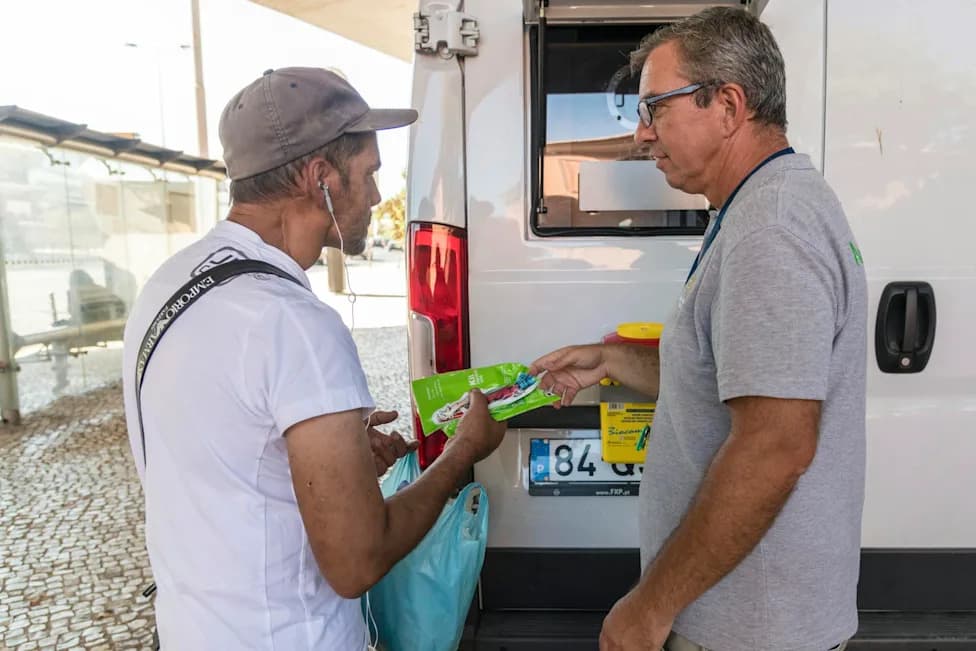
Providing drug users with clean syringes is part of Portugal's harm-reduction approach to substance use.Horacio Villalobos/Corbis News via Getty Images
Nearly 70,000 Americans died of drug overdoses in 2025 — a decline from nearly 108,000 in 2022 — yet the U.S. rate remains far higher than peer countries. At the height of the opioid crisis the U.S. overdose death rate was roughly 68% higher than Canada’s and almost five times that of Australia. Beyond fatalities, substance use disorder carries hundreds of billions in healthcare, criminal justice and lost-productivity costs, and it devastates families and communities.
For decades, U.S. policy focused on supply disruption, criminal penalties for possession and promoting abstinence. But other national approaches show different possibilities.
What Portugal Did
In 2001 Portugal decriminalized possession of all drugs for personal use. That decision capped a broader national shift that began in 1999, when a multidisciplinary commission proposed an integrated strategy combining prevention, treatment, harm reduction and social reintegration.
Decriminalization in Portugal does not mean drugs are legal. Trafficking and manufacture remain criminal offenses. Instead, people found with small quantities for personal use are referred to multidisciplinary dissuasion commissions. These panels can connect people to health and social services, or impose minor administrative sanctions — but they cannot impose criminal charges or prison time for possession.
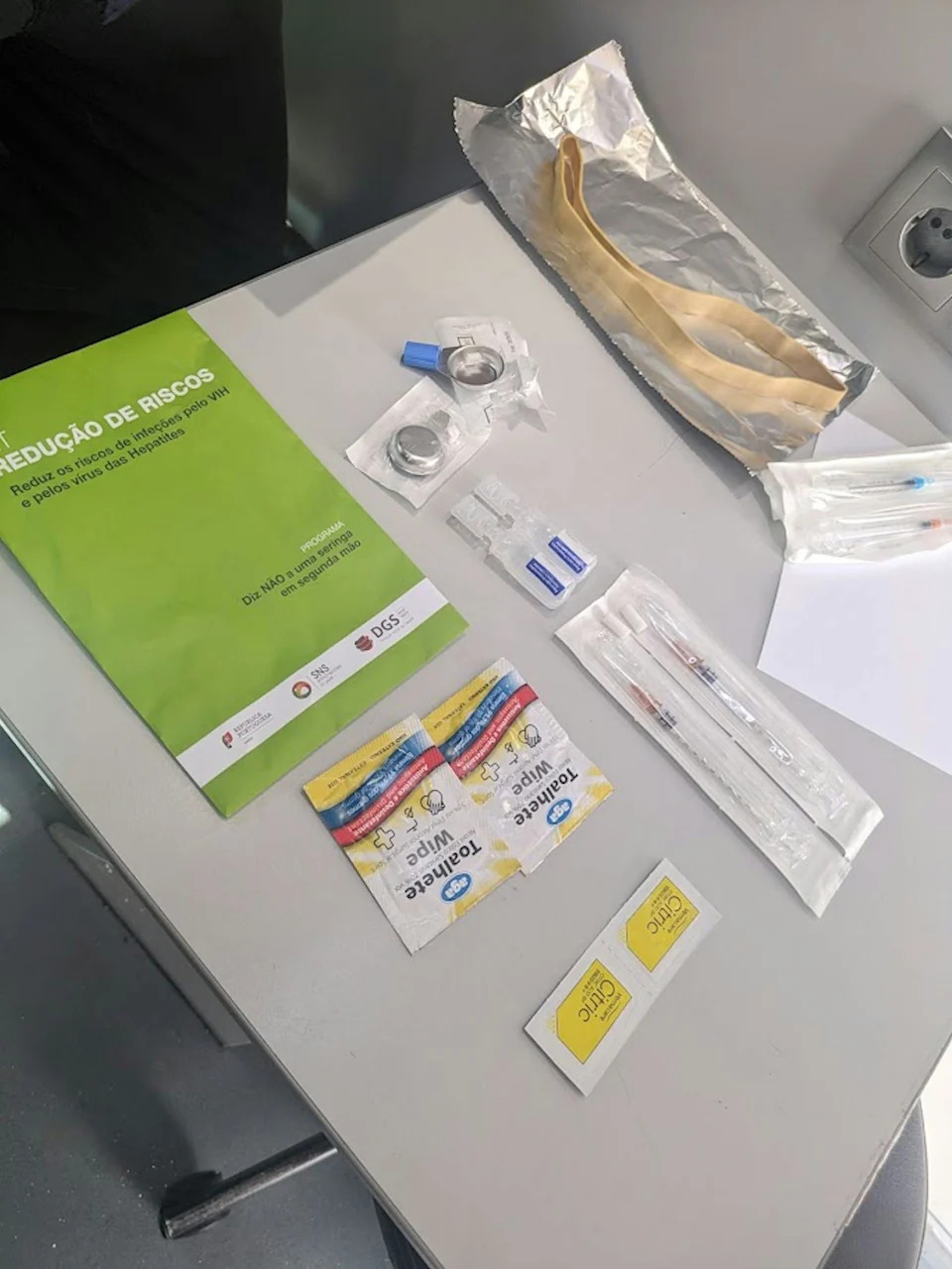
Providing sterile injection equipment has been an important part of Portugal's harm-reduction approach and its efforts to reduce HIV transmission associated with injection drug use. Robert Glover,CC BY
Services Built Around Decriminalization
Portugal paired legal change with long-term investment in health and social services. The country expanded harm-reduction programs (sterile injection equipment, supervised consumption and drug-checking services), created a nationwide network of multidisciplinary outpatient treatment teams, and addressed social determinants like housing and employment that hinder sustained recovery.
Those investments were maintained through financial crises and budget pressures, creating multiple access points for people who use drugs and ensuring that help was available even when abstinence was not immediately achievable.
Measured Outcomes
The results are notable. Drug-related deaths fell sharply after the policy shift and remain low by European standards: Portugal recorded 105 fatal drug overdoses in 2023 (96 in 2022; 81 in 2021), well below crisis-era highs. New HIV diagnoses tied to injection drug use fell from 583 in 2005 to 19 in 2024 — roughly a 97% decline. In 2023 more than 24,000 people received care through Portugal’s specialized public outpatient system.
Public attitudes also shifted: problematic drug use increasingly is framed as a health and social problem rather than a moral failing that requires punishment.
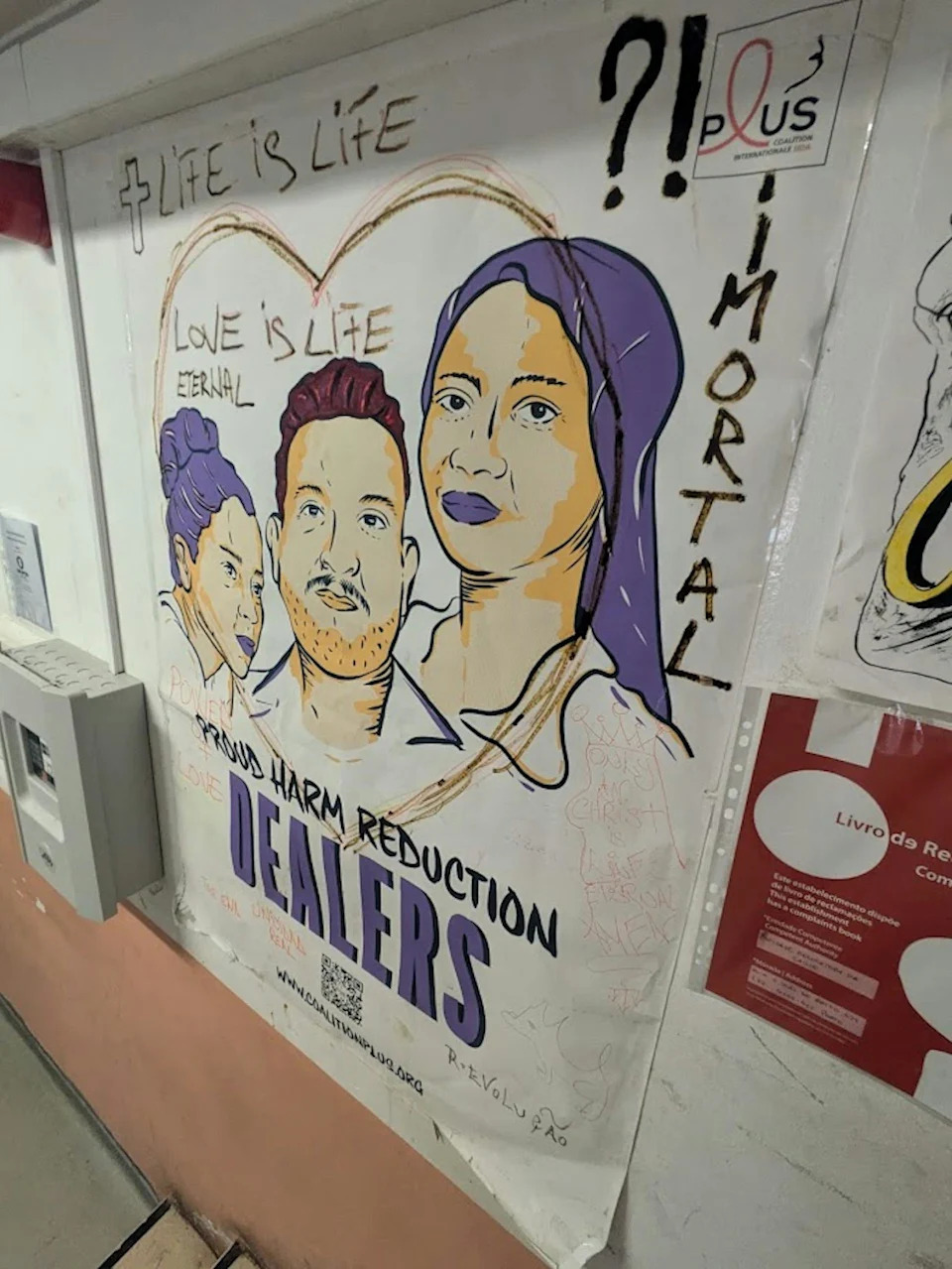
Healthcare workers in Portugal take great pride in how they treat patients who use substances. Robert Glover,CC BY
Why Portugal’s Example Isn’t Plug-and-Play
Portugal’s experience is frequently held up as a model, but replication is difficult. The Portuguese approach depends on an integrated health and social-services system, sustained political support, and operational buy-in from institutions — including law enforcement — that must carry the policy out.
British Columbia’s 2023 decriminalization pilot and Oregon’s Measure 110 illustrate the limits and risks of incomplete implementation. In British Columbia police were not required to refer people to services, treatment providers received no extra funding, and waitlists persisted; the pilot reduced possession offenses but showed little evidence of broader health gains and was allowed to expire in January 2026. Oregon’s Measure 110 decriminalized possession in 2020 and pledged cannabis-tax revenue for expanded services, but a 2025 state audit found unstable leadership, delayed services and poor coordination. Law enforcement buy-in was limited, services were added to an already fragmented behavioral health system, visible public drug use and rising fentanyl deaths fueled public frustration, and possession was re-criminalized in 2024 before reliable outcome data were available.
The Real Lesson
Portugal’s most important lesson may not be decriminalization itself, but the painstaking work required to build and sustain systems that connect people with treatment, healthcare and social supports — without making abstinence a precondition for receiving help. Legal change can be a component of reform, but lasting reductions in harm depend on coordinated services, steady funding and institutional cooperation.
Authors and Disclosures: This article was written by Karyn Sporer and Robert Glover of the University of Maine. Karyn Sporer has received funding from the U.S. Department of State’s IDEAS Program, the Open Society Foundation, and the Department of Homeland Security’s National Center of Excellence for Terrorism Prevention and Counterterrorism Research. Robert Glover has received funding from the Open Society Foundation and an IDEAS grant from the U.S. State Department. In 2027 Glover will travel to Portugal as a Fulbright Scholar to study Portuguese drug policy, train Portuguese university faculty on community-engaged course design, and teach at Universidade Católica Portuguesa in Lisbon (January–June 2027).
Help us improve.