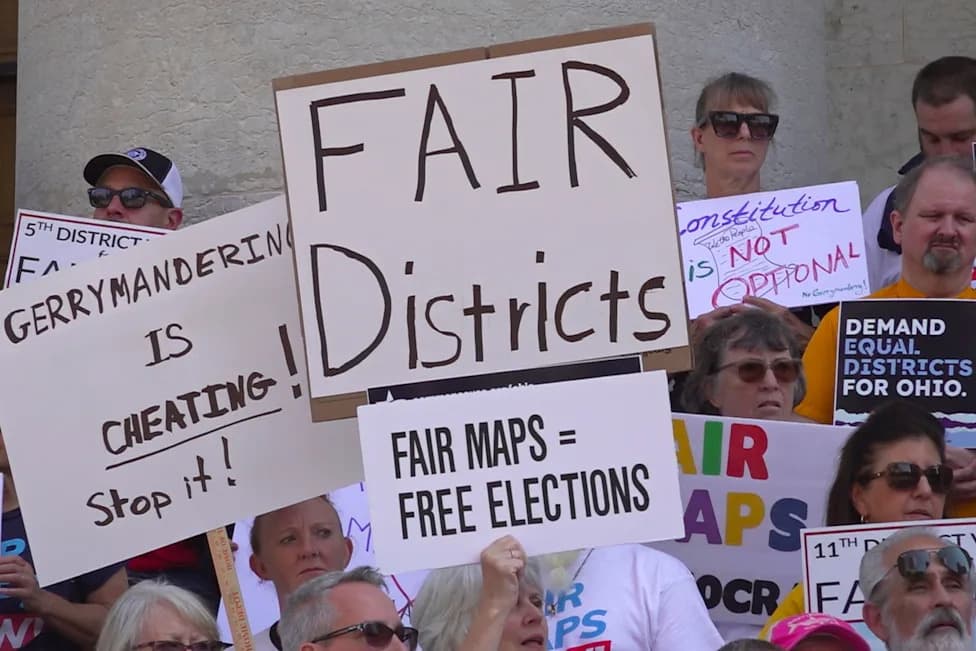
The 2026 midterms are shaping up as a referendum on President Trump, with roughly 250 million Americans eligible to vote on Nov. 3. A 14-month gerrymandering "arms race" produced new congressional maps in nine states and could hand Republicans several extra seats, although courts have intervened in some cases. The Cook Political Report projects a likely net gain of about four GOP seats from redistricting alone, but national polling currently gives Democrats an edge, leaving control of the House uncertain. Election experts warn the mid-decade redistricting surge marks a significant erosion of long-standing democratic norms.
How Republican Gerrymandering Could Decide the 2026 Midterms

trump
Midterm elections historically work against the party of a sitting president, and that dynamic has put extra pressure on Donald Trump as voters prepare for Nov. 3, 2026. Roughly 250 million Americans will be eligible to vote, and while control of the House and Senate is at stake, the contests are widely framed as a referendum on Mr. Trump’s leadership.
What Happened
Republicans have moved aggressively this cycle to protect and expand their narrow congressional majority through gerrymandering — the partisan drawing of electoral boundaries. A 14-month "gerrymandering arms race" saw state legislatures rush to redraw House maps ahead of the midterms. By the time the cycle settled, nine states (eight with Republican-controlled legislatures and one Democratic) had enacted new maps — the highest mid-decade total in modern U.S. history.

Gavin Newsom, California's governor, has tried to counter Republican gerrymandering with some redistricting in his own state - Reuters
Redistricting: Routine, But Not Always Mid-Decade
Redistricting is normally a decennial process tied to the census and intended to keep districts roughly equal in population as the country grows. Mid-decade changes are rare and typically signal deliberate political manoeuvring rather than routine adjustments.
Key Moves And Legal Battles
Texas moved first in July 2025 after President Trump publicly urged Governor Greg Abbott to redraw maps that he said would deliver "five more seats". California responded: Governor Gavin Newsom and state voters approved the Election Rigging Response Act on Nov. 4, 2025, a Democratic-led map change designed to blunt the Texas initiative and projected to yield roughly a five-seat Democratic advantage in that state.
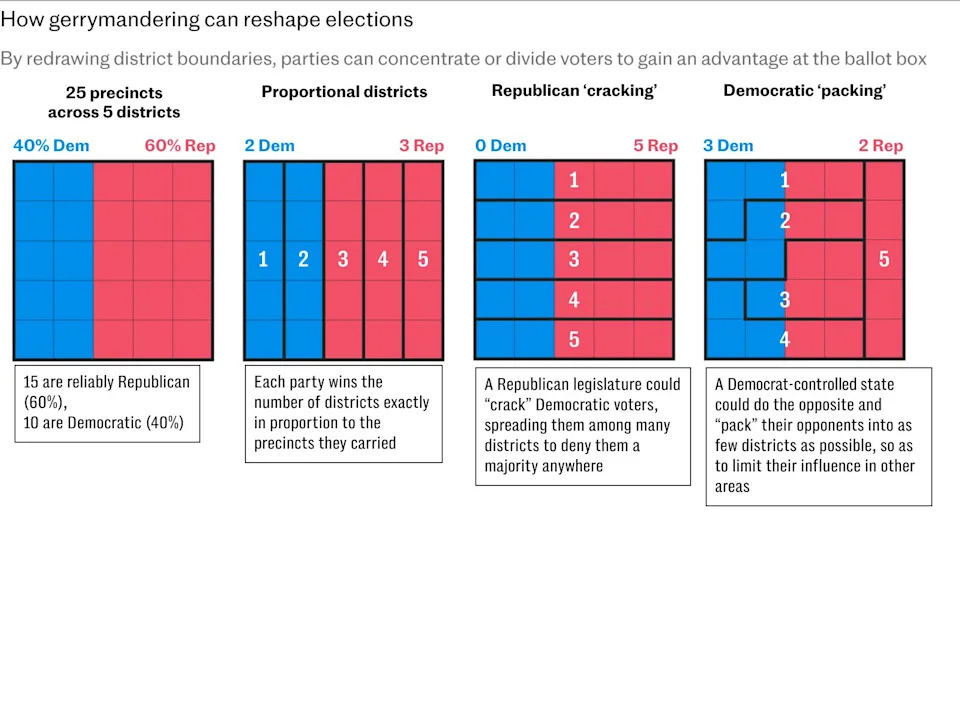
1609 How gerrymandering works
The courts have produced mixed results. The Supreme Court rejected a Missouri Republican map on Sept. 3, while an April ruling found Louisiana's 2024 map to be an unconstitutional racial gerrymander. Other challenges, such as a finding that Texas' proposed map was ethnically gerrymandered, arrived too late in the cycle to prevent implementation. Overall, nine states were able to put new maps into effect this cycle, according to the Cook Political Report.
How Much Difference Will It Make?
According to the Cook Political Report, the enacted redistricting could net Republicans up to eight extra House seats in a best-case scenario, though the report's most likely projection is a gain of about four seats from maps alone. National polling — including a generic ballot average compiled by the Silver Bulletin — currently shows Democrats leading by roughly seven points, a gap that could offset map-driven gains and leave control of the House favoring Democrats.
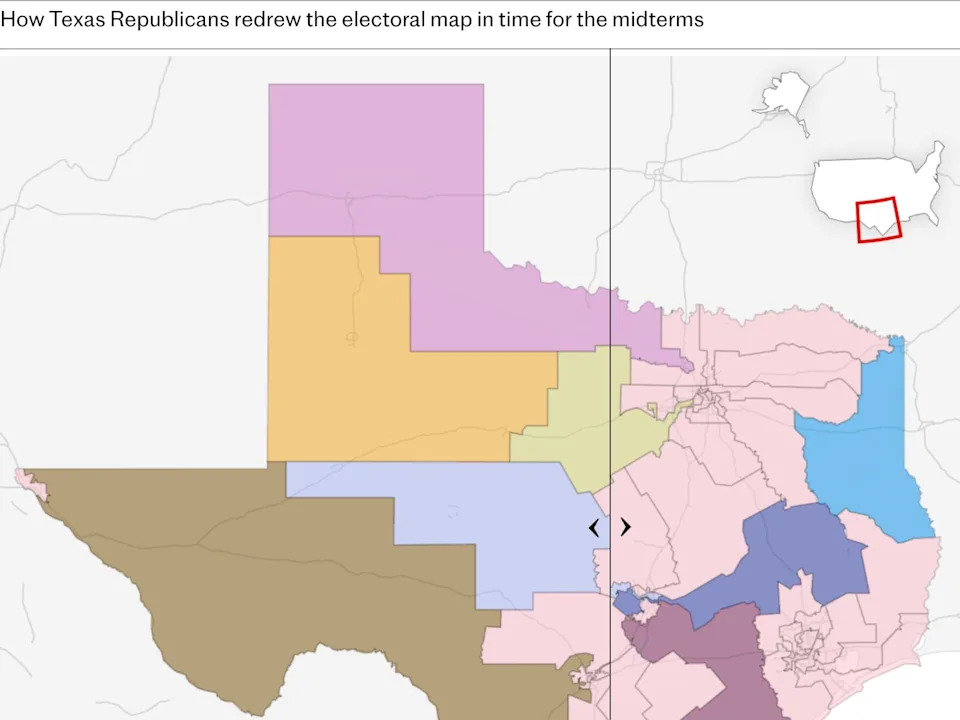
How Texas Republicans redrew the electoral map in time for the midterms
Why This Matters
In many democracies, independent commissions draw electoral maps; by contrast the U.S. leaves mapmaking largely to partisan state legislatures, which creates incentives for strategic line-drawing. Polarization and geographic sorting have amplified the effects: the share of "landslide counties" (where a presidential candidate wins by 20 points or more) has climbed from about 20% in the 1990s to nearly 60% in recent cycles.
"What this cycle has done is get rid of the norm of not redistricting unilaterally purely for political purposes in the middle of the decade, in a way that had been the norm in the past 60 years," said Erin Covey of the Cook Political Report.
Advocates for election reform warn that the mid-decade surge in partisan mapmaking represents a breakdown of longstanding norms and guardrails that supported fairer representation. The Princeton Gerrymandering Project finds that 15 states now score poorly for electoral fairness (five leaning Democratic and ten leaning Republican).
Outlook
Even with aggressive mapmaking by Republicans, current polling and broad political dynamics leave Democrats favored to win back the House. "I would say Republicans have a very slim chance of holding on to the House at this point," Erin Covey said. "It's not impossible, but they would have to pitch a perfect game — and gerrymandering would likely be one factor if they do." The final outcome will hinge on turnout, campaign dynamics, legal rulings, and how effectively the map changes translate into votes on Election Day.
Help us improve.