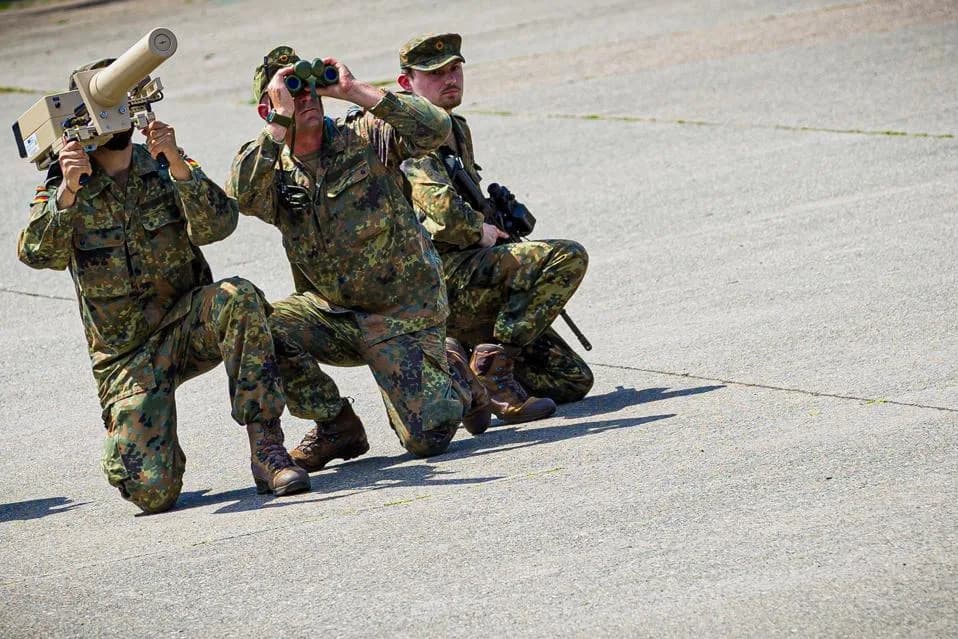
The Pentagon’s Joint Interagency Task Force 401 issued a public primer, "Small Drones, Big Problems," to explain basic counter-drone principles to non-military audiences. It emphasizes deception, environmental shaping, and electronic warfare—particularly RF jamming and GPS spoofing—over risky kinetic "hard kills." The guide takes a largely reactive stance: deny drones the ability to find, track, or affect targets, but cautions that disruption can succeed even if drones are later neutralized.
What the Pentagon’s New Guide Reveals About Stopping Small Drones

A Ukrainian FPV drone operator controls a drone remotely using a headset in 2025. (Photo by Maks Muravsky/Global Images Ukraine via Getty Images)Global Images Ukraine via Getty Images
The Pentagon’s counter-drone unit recently published a public primer aimed at helping non-military audiences understand and respond to threats from small unmanned aircraft systems (sUAS). The handbook, Small Drones, Big Problems: A First Principles Approach to Countering-UAS, was produced by Joint Interagency Task Force 401 and emphasizes practical, high-level approaches rather than technical or classified tactics.
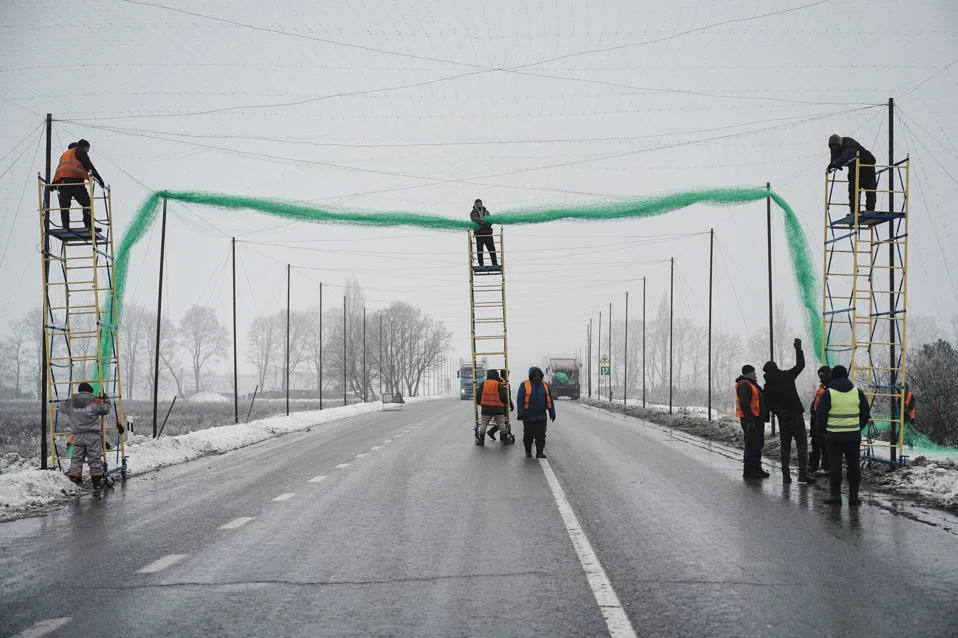
City workers install anti-drone nets over a road on January 28, 2026 in Kharkiv, Ukraine to protect critical and social infrastructure, equipment, and people from drone attacks. (Photo by Viktoriia Yakymenko/Suspilne Ukraine/JSC "UA:PBC"/Global Images Ukraine via Getty Images)
What the Guide Covers
The manual focuses on three broad approaches: deception, environmental modification, and signal disruption. It explicitly favors non-kinetic "soft-kill" measures—electronic warfare, spectrum management, and navigation interference—over riskier kinetic "hard-kill" options such as interceptors or small arms fire, which can cause collateral damage.
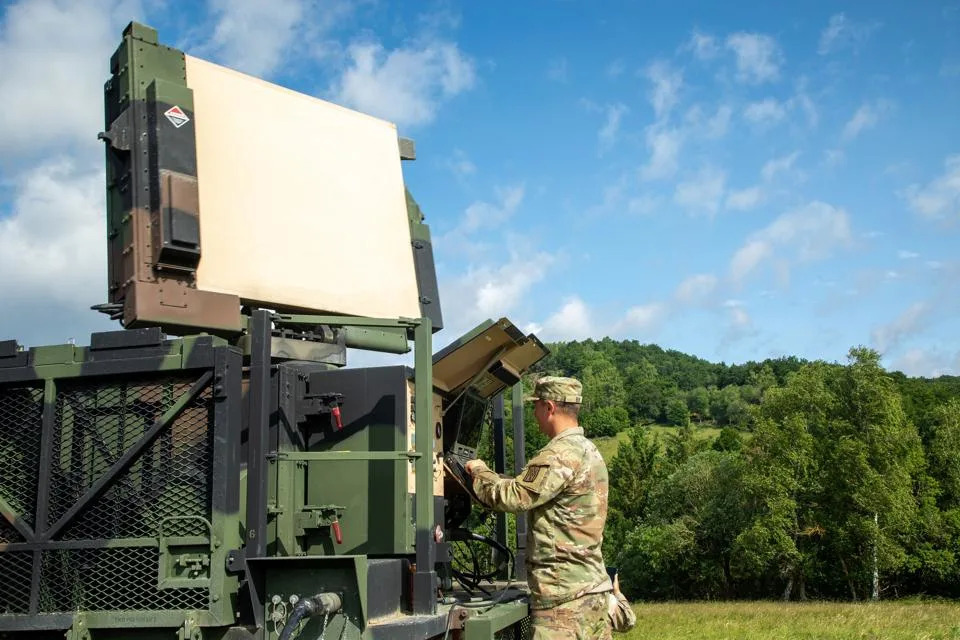
A U.S. soldier operates an AN/MPQ-64 Sentinel radar system against drones during Project Flytrap, a counter-drone exercise held in Germany in June 2025. (U.S. Army photo by Pfc. Brent Lee)
The handbook’s stated aim is defensive: "If a drone cannot find you, cannot track you, or cannot produce an effect, the mission fails regardless of whether the drone survives." That reflects a reactive posture that prioritizes denying an attacker the ability to observe or affect a target.

A member of Ukraine's 72nd Brigade Anti-air unit stands on the back of an anti-aircraft autocannon while using binoculars to search for incoming drones. (Photo by Chris McGrath/Getty Images)
Deception and Shaping the Environment
Practical steps recommended include reshaping or camouflaging sites so they appear unimportant from the air, dispersing crowds and equipment, using decoys, erecting nets or barriers to alter flight paths, and introducing clutter and structures that block lines of sight. These measures are intended to make targets less attractive or visible to operators and their sensors.

A police vehicle is seen in front of an entrance of Landvetter Airport in Sweden after the airport was closed in November 2025 due to drone intrusions. Flights were cancelled or redirected. (Photo by Adam Ihse/TT / TT News Agency / AFP) / Sweden OUT (Photo by ADAM IHSE/TT/TT News Agency/AFP via Getty Images)
Electronic Warfare and the Spectrum
The guide places heavy emphasis on electromagnetic effects: radio-frequency jamming, GPS interference or spoofing, and other means to degrade a drone’s navigation and communications. It also notes how commonplace electronics and built environments—routers, large metal roofs, warehouses, and dense urban canyons—can create unpredictable propagation, echoes, or a raised noise floor that either hinders drones or lets them "hide in the noise."
Kinetic Options—Used Sparingly
The manual acknowledges hard-kill tools such as nets, interceptors, or small-arms engagement but highlights their higher risk of collateral damage and legal complications in civilian settings. That is why non-kinetic measures are presented as preferable when feasible.
Limits, Trade-Offs, and a Historical Analogy
The handbook deliberately avoids operational detail and advanced technical recipes, making it a primer rather than a field manual. It draws an analogy to World War II "Happy Times" for German U-boats, arguing that early advantage for drone actors was temporary. The article notes, however, that defeating the U-boat threat required not just technology but proactive, aggressive anti-submarine tactics—suggesting that a solely reactive posture may be insufficient against persistent or adaptive drone campaigns.
"A drone can achieve its purpose even if it is defeated," the guide warns, noting that disruption—forcing closures, triggering resource-intensive responses, or diverting attention—can be a successful objective for attackers.
Takeaway
The Pentagon’s guide is useful as a public primer: it clarifies basic principles, highlights trade-offs between soft and hard countermeasures, and underscores the importance of planning and environmental design. But it stops short of offering a comprehensive, proactive doctrine for denying drone access entirely. As sUAS technology evolves, the most valuable progress will likely combine improved detection and selective interdiction with proactive measures that reduce the opportunity for disruption in the first place.
Originally published on Forbes.com.
Help us improve.