Hanoi is speeding ahead with a large-scale redevelopment program, spending $2.4 billion in H1 2026 to clear land for nearly 1,500 projects. Major plans include a $28 billion Red River reconstruction and a $35.2 billion Vingroup‑backed Olympic zone with a 135,000‑seat stadium. Officials emphasize flood control and new transport hubs, but residents face demolitions, delayed compensation and loss of street livelihoods. Analysts warn the rapid pace, limited consultation and high developer debt risk social disruption and financial strain.
Hanoi’s Fast-Moving Makeover: Big Projects, Loud Demolitions and Lives Upended
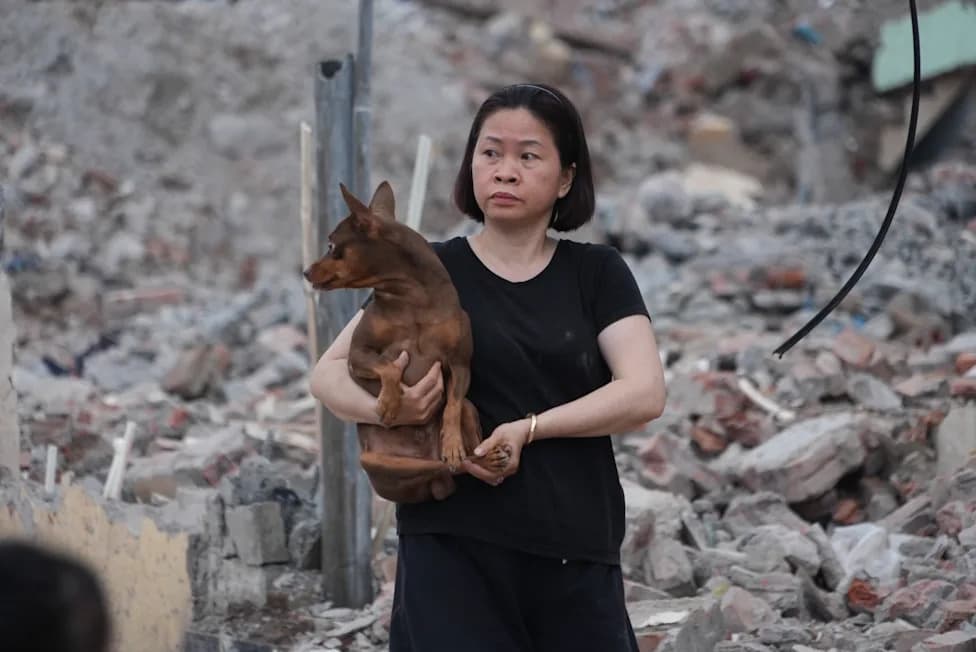
A woman carries her dog as she leaves her home that has been partially demolished to build a new ring road in Hanoi, Vietnam, Thursday, June 11, 2026. (AP Photo/Hau Dinh)(AP Photo/Hau Dinh)
The sound of construction now defines much of Hanoi: hydraulic breakers shattering concrete, excavators groaning and bricks crunching as entire blocks are dismantled to make way for an ultramodern vision of the city.
Ambitious Plans, Massive Spending
Officials say Hanoi spent $2.4 billion in the first half of 2026 to clear land for nearly 1,500 projects as the capital pursues rapid modernization intended to support double-digit economic growth. Authorities frame the work as essential to boost infrastructure, expand transit links and add flood controls and air-pollution measures as the city adapts to more extreme weather linked to climate change.
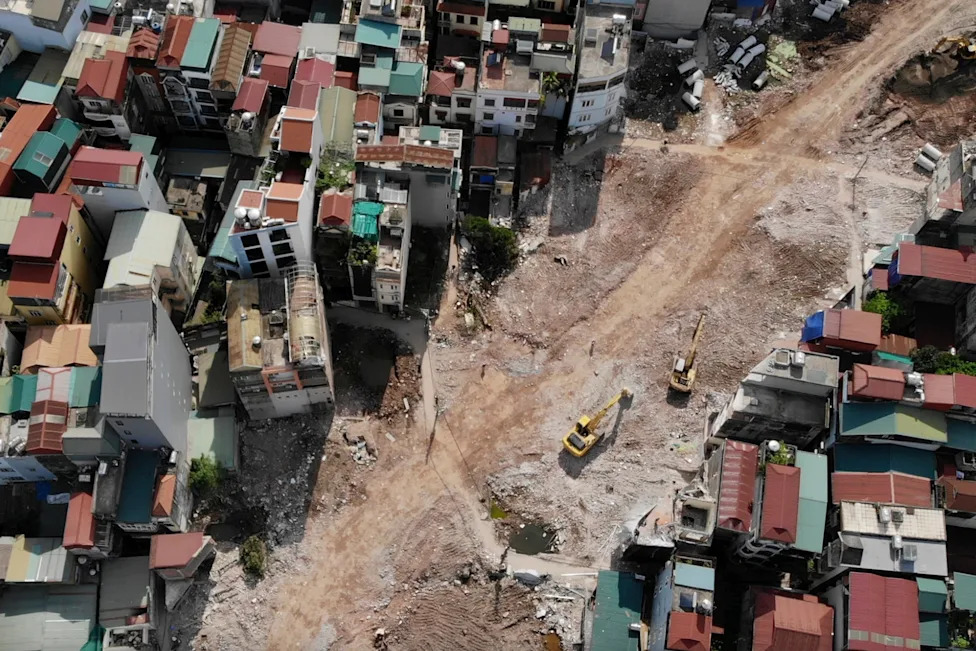
This aerial shot shows a ring road being built, cutting through a residential community in Hanoi, Vietnam, Monday, June 15, 2026. (AP Photo/Hau Dinh)(AP Photo/Hau Dinh)
Flagship Projects
The centerpiece is a proposed $28 billion redevelopment along both banks of the silty Red River, covering about 11,400 hectares (roughly the size of central Paris) and promising new roads, parks, urban districts and strengthened drainage to limit chronic flooding. Another headline scheme is a $35.2 billion Olympic sports zone backed by Vingroup, which would include a drum-shaped stadium designed to hold about 135,000 spectators.
Who Pays the Price?
While billboards sell gleaming towers, broad boulevards and waterfront promenades, the demolition dust settles on neighborhoods whose residents say they are losing homes, livelihoods and the familiar street culture that has shaped Hanoi for generations.
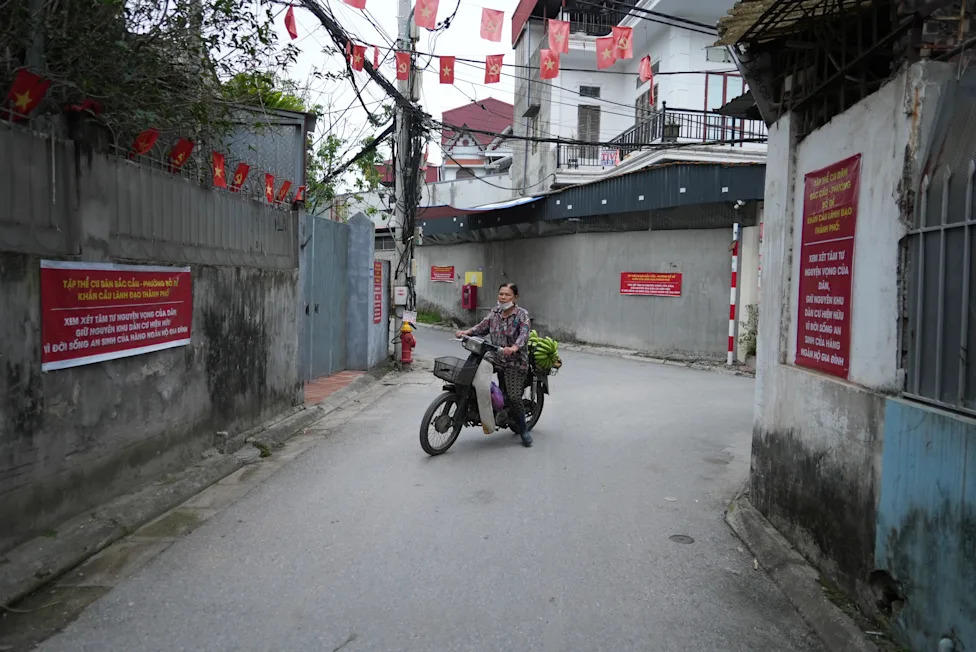
A woman rides a moped past banners put up by local residents to call for stopping a project that would displace the entire village by the Red river in Hanoi, Vietnam, Thursday, June 11, 2026. (AP Photo/Hau Dinh)(AP Photo/Hau Dinh)
Nguyen Thi Nhan, who previously sold fruit from a 300-square-meter (3,230-square-foot) shopfront, said her home was demolished to make way for a road. "We just have to wait. I don't know where they will relocate us," she said, and she has not yet received compensation, according to her account.
Small changes to the streets have outsized impacts: a citywide sidewalk crackdown that began in November cleared illegal parking, vendors and other commercial encroachments. Vendors say the removal of plastic stools and tables outside shops has directly reduced their capacity to serve customers and their small profits.
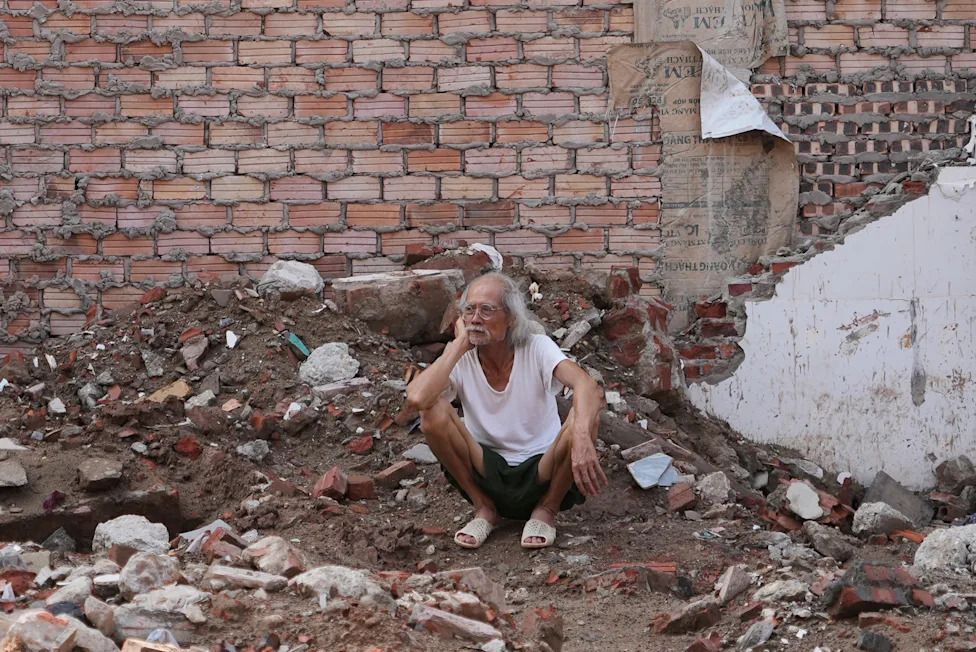
A local resident sits on the ground of his demolished house, watching the demolition in his neighborhood to clear site for a new bridge crossing the Red river in Hanoi, Vietnam, Friday, June 5, 2026. (AP Photo/Hau Dinh)(AP Photo/Hau Dinh)
"My profits are already small to begin with," said Thuy, a beef noodle seller who gave only one name.
Residents of the Bac Cau riverside community hung banners imploring officials to let thousands of families remain, fearing planned roads will eventually erase their neighborhood. "We want to continue to live here, we've been here for generations," said Van, speaking only on first-name terms out of concern for speaking publicly.
Economic Stakes and Risks
Analysts say modern infrastructure is important to attract foreign investment and create opportunities, but they warn of trade-offs. Nguyen Khac Giang, a visiting fellow at the ISEAS–Yusof Ishak Institute, cautioned that the construction surge could divert capital from the high-tech industries Vietnam aims to develop, push property prices higher, and expose banks to risk if the market weakens.
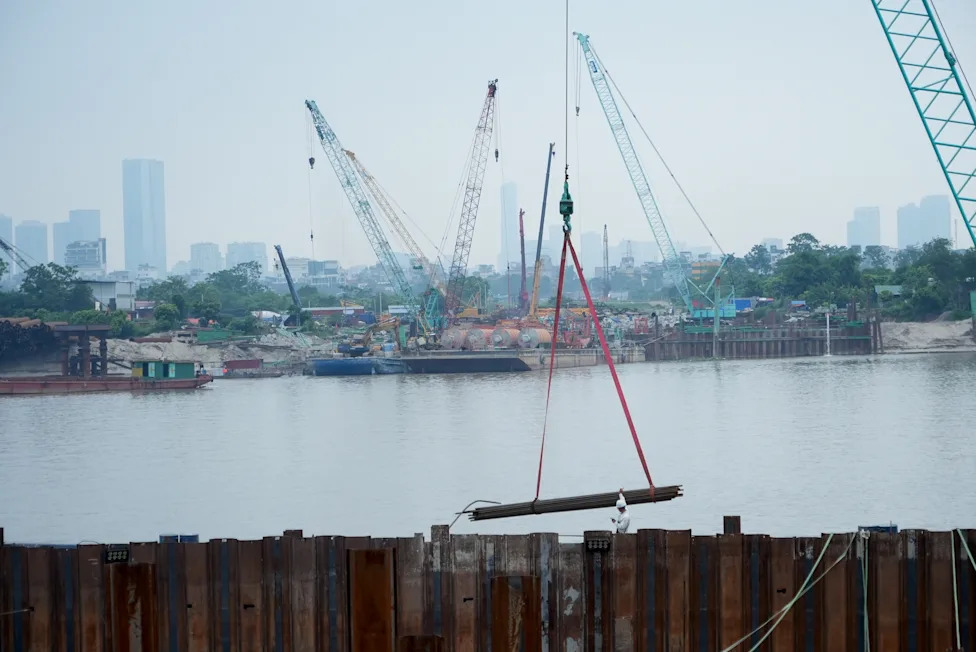
The construction site of a new bridge crossing the Red river is seen in Hanoi, Vietnam, Thursday, June 11, 2026. (AP Photo/Hau Dinh)(AP Photo/Hau Dinh)
Real estate accounts for roughly 3.5% of Vietnam's GDP but makes up about a quarter of bank lending. A 2025 S&P Global report noted that many developers carry heavy debt burdens relative to peers in countries such as Indonesia and the Philippines.
Execution Challenges and Social Costs
Experts say the core challenge is execution: land acquisition, fair compensation, resettlement and coordination across agencies. Unlike the outward expansion of recent decades, Hanoi's current drive focuses on reshaping the city that already exists — a more complex task that affects property rights, institutions and long-established communities.
Linh Nguyen, lead analyst at Control Risks, said the shift from expansion to reconstruction "is a fundamentally different challenge" that raises questions about whether a more centralized state can deliver projects planned for years but never carried out.
Hanoi has published rules for compensation and resettlement, covering damaged structures, relocation costs and even support for moving graves. Still, some residents report delays or uncertainty about payments and relocation options.
What Is at Stake
The redevelopment promises flood control, modern transport hubs and potential economic gains. But residents and analysts alike warn that the fast pace of change, limited consultation and heavy developer debt could fracture communities, raise housing costs and create financial risks that undercut the very benefits the projects aim to deliver.
The Associated Press' climate and environmental coverage receives financial support from private foundations. AP is solely responsible for all content.
Help us improve.