Video evidence suggests the YJ-20 hypersonic anti-ship missile has been launched from a Type 052D destroyer as well as the larger Type 055. The missile is estimated to cruise above Mach 6 and potentially reach Mach 9–10 during the terminal phase, with a range of roughly 1,000–1,500 km. Fitting YJ-20s to the more numerous Type 052D fleet would markedly expand China's A2/AD strike network, though formal fleet-wide operational status remains unconfirmed.
China Expands YJ-20 Hypersonic Anti‑Ship Missile Deployment To Type 052D Destroyers
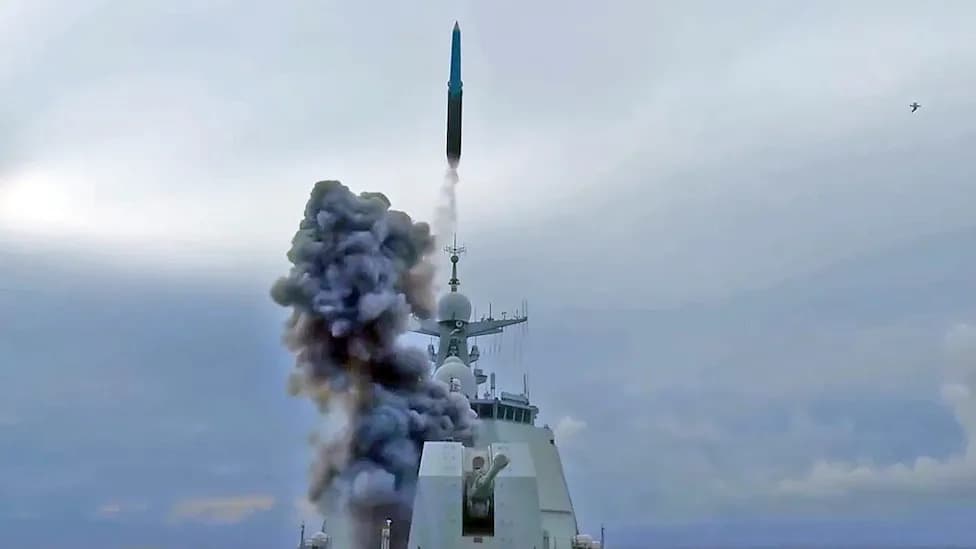
Evidence has emerged indicating that China’s feared YJ-20 hypersonic anti-ship missile is now also being fielded aboard the People’s Liberation Army Navy’s (PLAN) Type 052D class destroyers. These warships are far more numerous than the Type 055 ‘super destroyers,’ on which the missile was previously integrated, suggesting that the PLAN intends to distribute the weapon across a much broader portion of its surface fleet rather than reserving it exclusively for its largest combatants.
New footage suggests the People's Liberation Army Navy (PLAN) has begun launching the YJ-20 hypersonic anti-ship missile from Type 052D (Luyang III) destroyers, extending the weapon beyond the larger Type 055 class where it was first observed.

A view of the foredeck of theYinchuan, a Type 052D destroyer of China's People's Liberation Army Navy, reveals 32 of the 64 VLS cells.TENGKU BAHAR/AFP via Getty ImagesAFP Contributor
A clip circulating online and attributed to the PLAN shows a YJ-20 being cold-launched from a vertical launch system (VLS) on the foredeck of an unidentified Type 052D. In the footage the missile is ejected from the cell, its solid-rocket booster ignites, and it rapidly accelerates away; no target engagement is displayed.
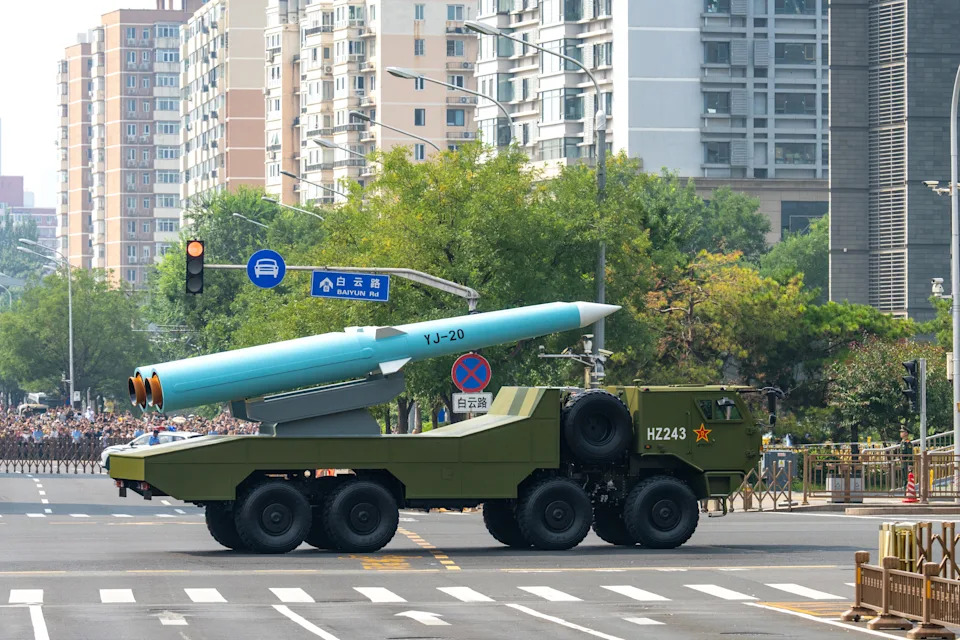
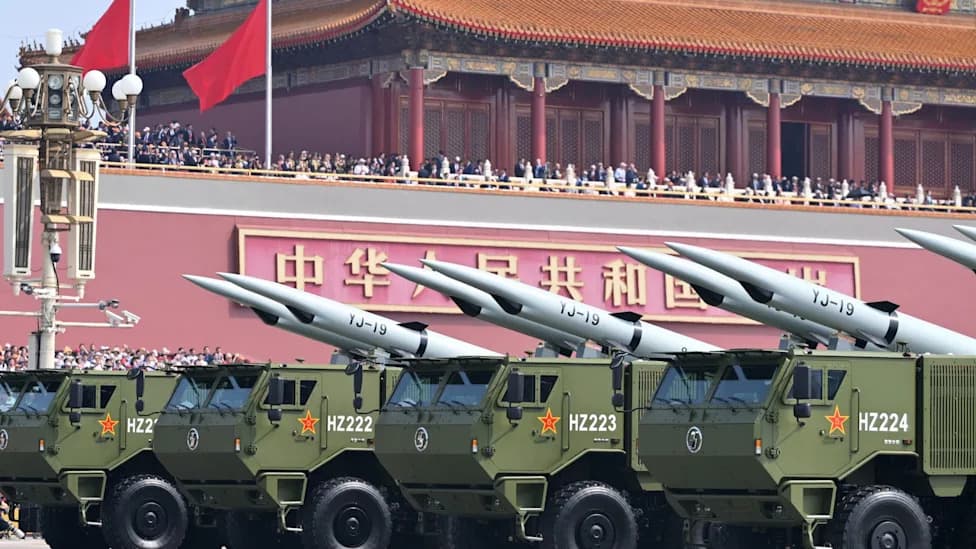
YJ-20 hypersonic anti-ship missiles, or mockups thereof, are reviewed during the V-Day military parade on September 3, 2025, in Beijing, China.Photo by VCG/VCG via Getty ImagesVCG
Capabilities and Design
Open-source estimates place the YJ-20's cruise speed at above Mach 6, with terminal velocities possibly reaching Mach 9–10. Range estimates generally fall in the 1,000–1,500 km (roughly 620+ miles) band. Guidance reportedly combines satellite navigation and mid-course updates with an active radar and/or infrared seeker in the terminal phase.
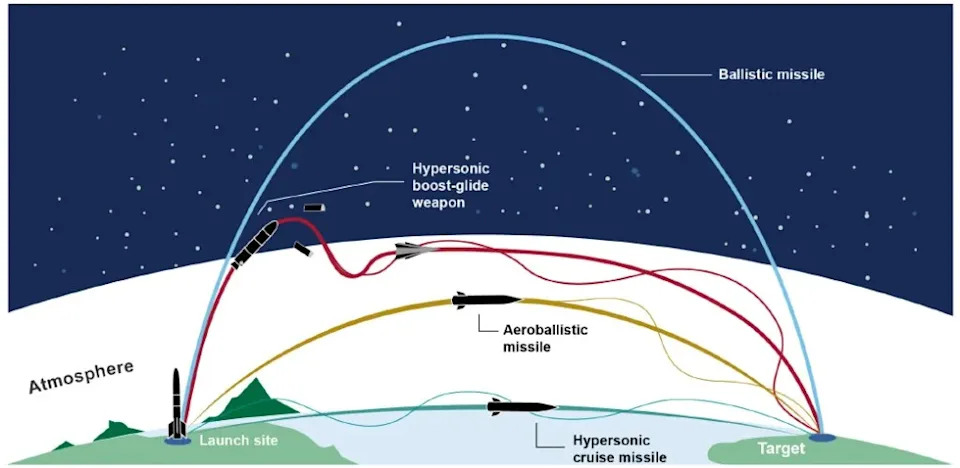
A graphic showing, in a very basic way, the difference in trajectories between a traditional ballistic missile and a hypersonic boost-glide vehicle, as well as that of a quasi- or aero-ballistic missile and an air-breathing hypersonic cruise missile.GAO
Observers describe the YJ-20's flight profile in two ways: an aero-ballistic (quasi- or skip-glide) trajectory that can 'porpoise' during descent, and a conical boost-glide mode where a booster lofts a maneuvering glide vehicle into high altitude before a maneuvering terminal approach. Both approaches emphasize high terminal speed and unpredictable maneuvering to complicate interception.
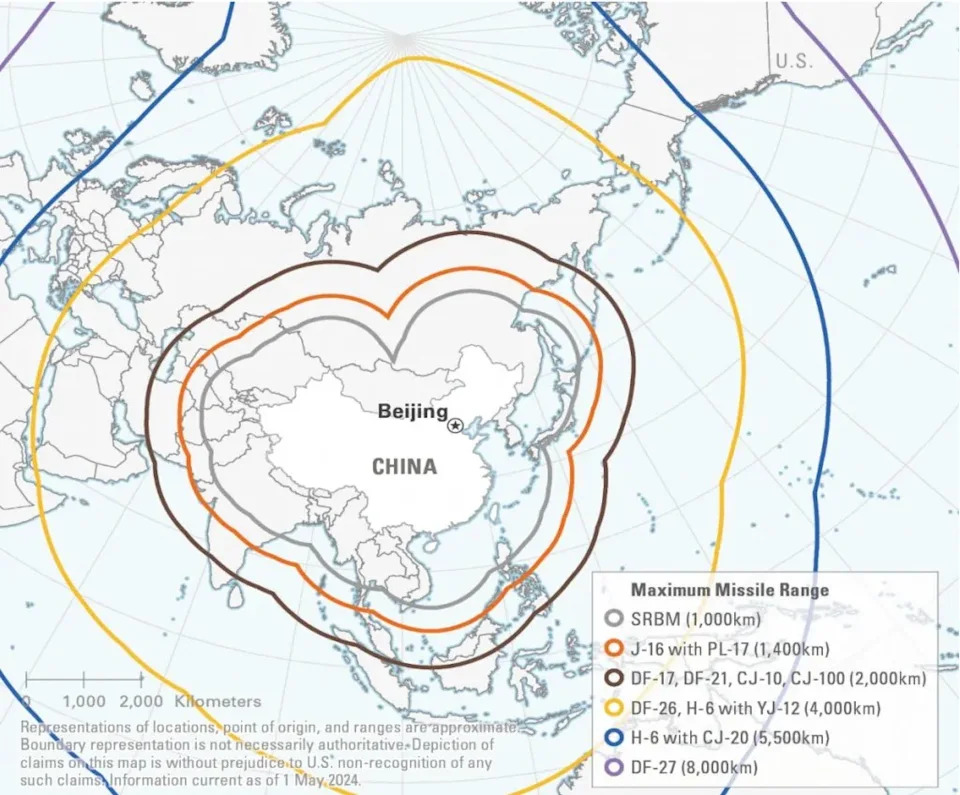
The estimated ranges of selected Chinese conventional strike weapons, as depicted by the Pentagon.U.S. Department of Defense
Platform Implications
The Type 052D displaces about 7,500 tonnes and is fitted with 64 VLS cells (32 forward, 32 aft). It is the PLAN workhorse: roughly 35 Type 052Ds are believed to be in service with more under construction. The Type 055 'super-destroyer' carries 112 VLS cells but only about 10 were operational as of late 2025. If broadly fielded on Type 052Ds, the YJ-20 would substantially increase the number of hulls capable of long-range hypersonic anti-ship strikes.
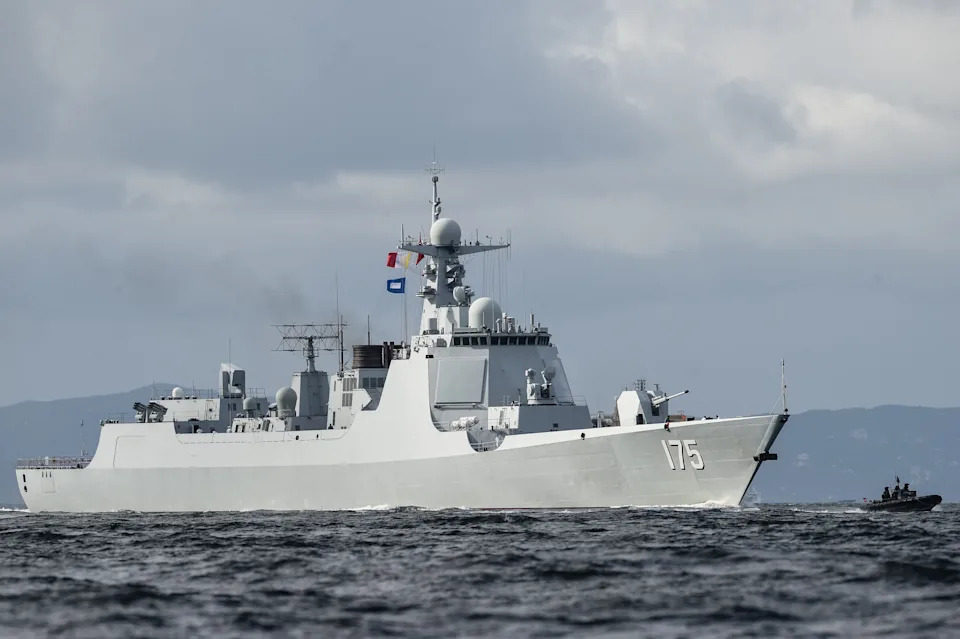
TheYinchuan, a Type 052D destroyer of China's People's Liberation Army Navy, provides an escort ahead of the aircraft carrierLiaoningas it arrives in Hong Kong territorial waters in 2017.ANTHONY WALLACE/AFP via Getty ImagesAFP Contributor
Operational Status And Uncertainties
Official PLA footage in late 2025 showed a Type 055 (Wuxi) conducting what Beijing described as a "finalization test," and the YJ-20 also appeared in the September 3, 2025 military parade. Earlier open-source sightings—initially labeled YJ-21 after a 2022 launch—are now widely thought to have shown the YJ-20 or an earlier prototype. Despite multiple public displays and launches from two destroyer classes, it remains uncertain whether the YJ-20 has achieved formal, fleet-wide operational status; the Type 052D launch could represent either an operational rollout or a limited trial.
Strategic Impact
Deploying hypersonic anti-ship missiles across a larger share of the surface fleet would strengthen China's layered anti-access/area-denial (A2/AD) posture across the western Pacific. A higher density of launch platforms complicates U.S. and allied naval planning by increasing the number of potential launchers that can threaten high-value ships at long stand-off ranges.
The U.S. Department of Defense's 2025 annual report concluded that "China has the world's leading hypersonic missile arsenal" and noted continued advances in conventional and nuclear hypersonic technologies. The spread of the YJ-20 to more numerous hulls would be consistent with Beijing's broader investments in long-range strike and naval power projection.
Key Remaining Questions: How many Type 052Ds can accommodate the large YJ-20 in their VLS cells, whether fielding will be rapid or limited, and how effectively regional defenses can detect, track, and—if necessary—intercept such weapons.
Help us improve.