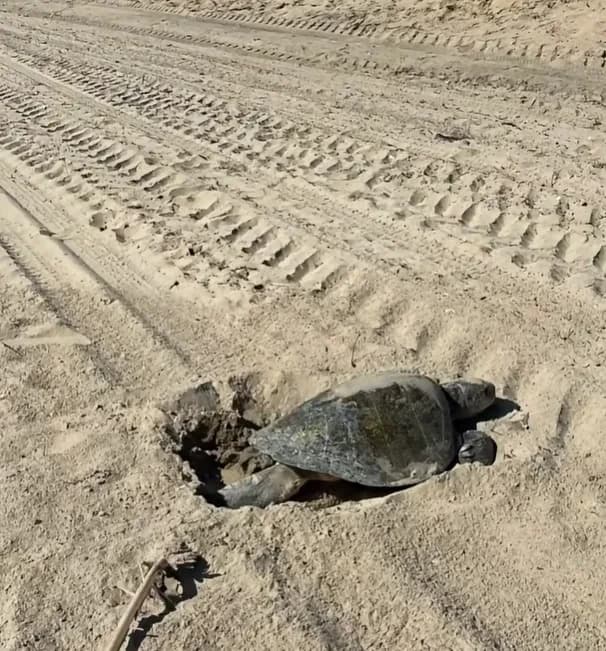
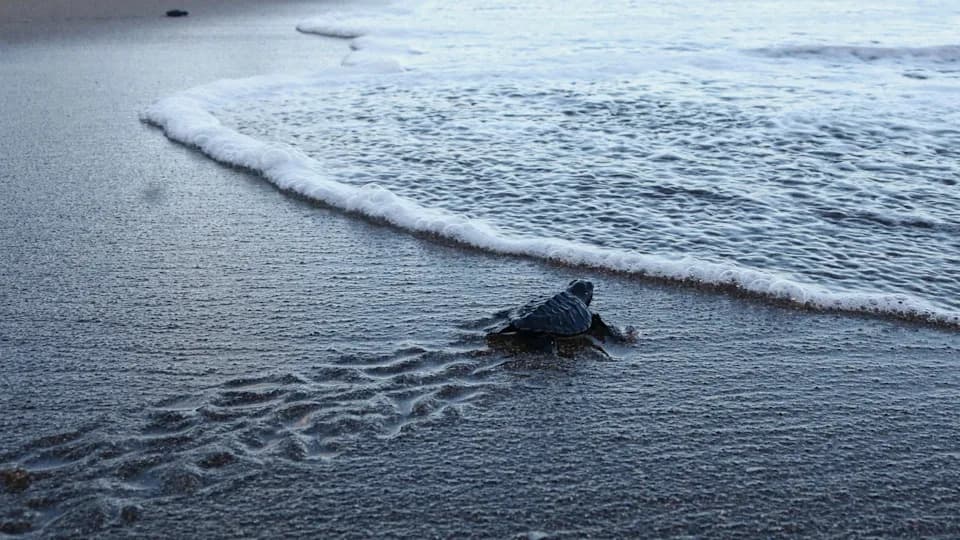
Virginia has recorded its first confirmed leatherback sea turtle nest on a security-controlled beach at Naval Air Station Oceana Dam Neck Annex in Virginia Beach. Officials and the U.S. Fish and Wildlife Service fenced the site to protect the eggs while they incubate. Leatherbacks normally nest from Florida through the Caribbean; adults can reach about 8 feet and weigh up to 2,000 pounds. Biologists will monitor the nest for a hatch, which would be a rare conservation success and may signal changing nesting patterns.
Virginia Records Its First-Ever Leatherback Sea Turtle Nest; Eggs Fenced on Military Beach
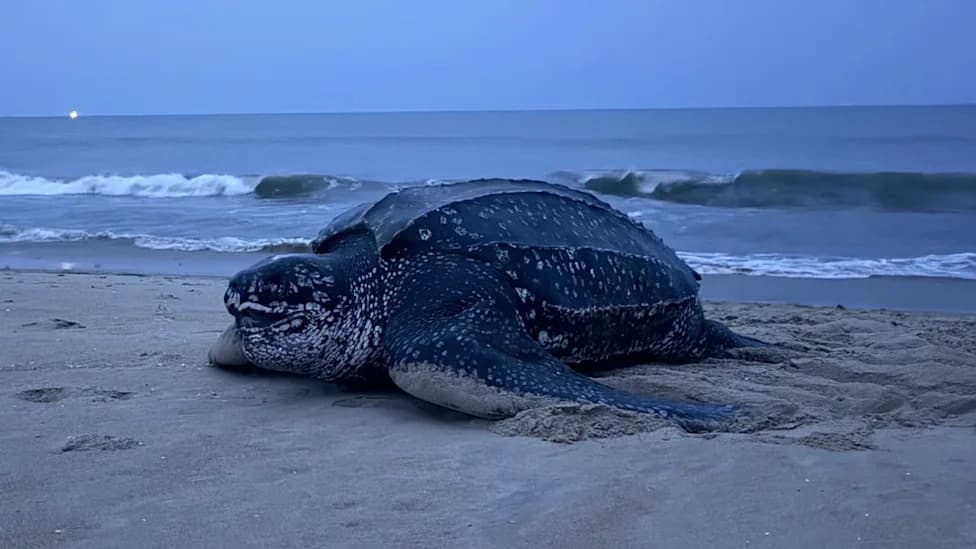
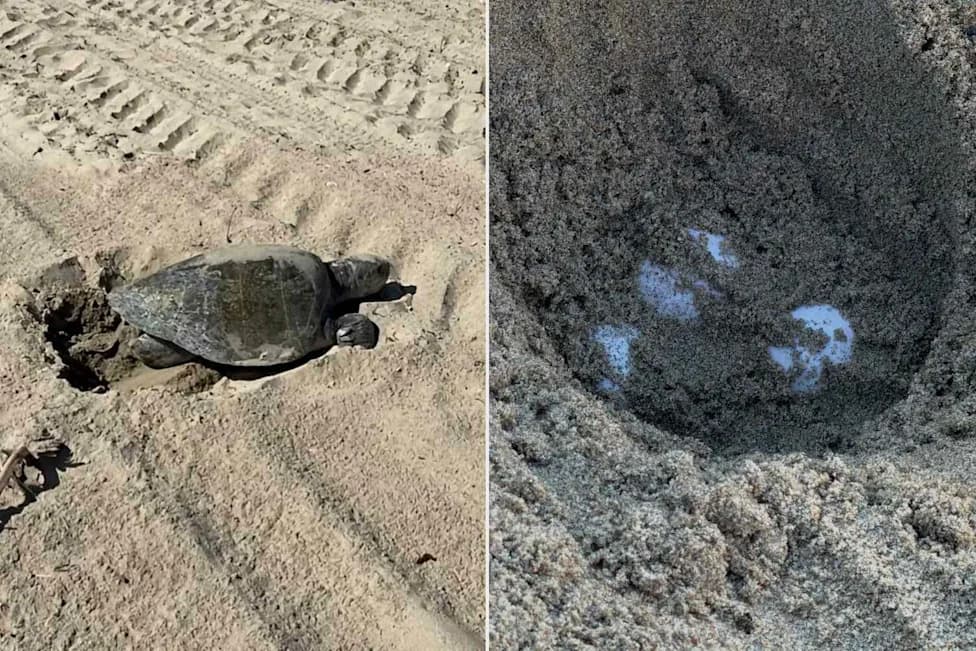
Photo Credit: Naval Air Station Oceana
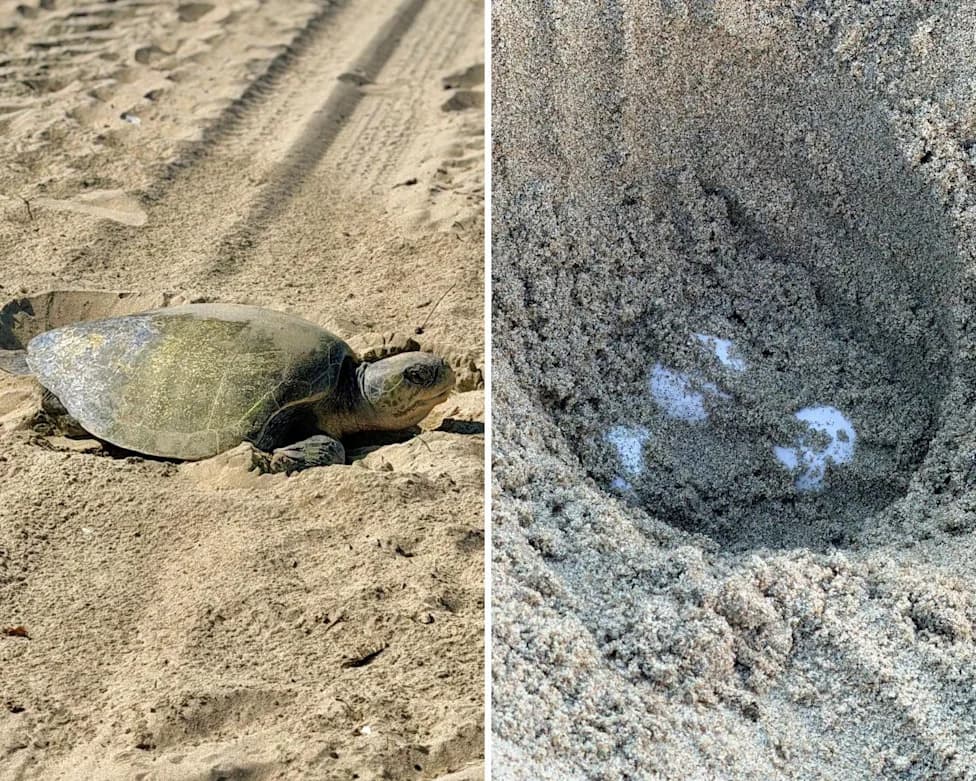
A leatherback sea turtle has laid Virginia's first confirmed nest of this endangered species, an unexpected milestone discovered on a security-controlled stretch of shoreline at Naval Air Station Oceana Dam Neck Annex in Virginia Beach.
Nest Discovery and Immediate Protection
Personnel at Naval Air Station Oceana located the nest and, with support from the U.S. Fish and Wildlife Service, quickly installed barriers around the site to protect the eggs and reduce disturbance. Because the nest sits on a military beach with restricted public access, the eggs are currently afforded a quieter environment than most public shorelines.
Why This Is Notable
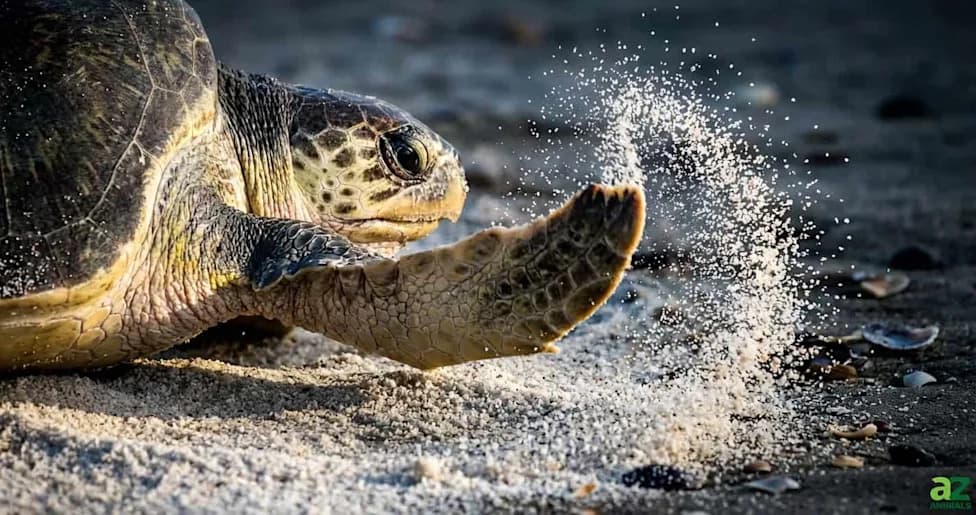
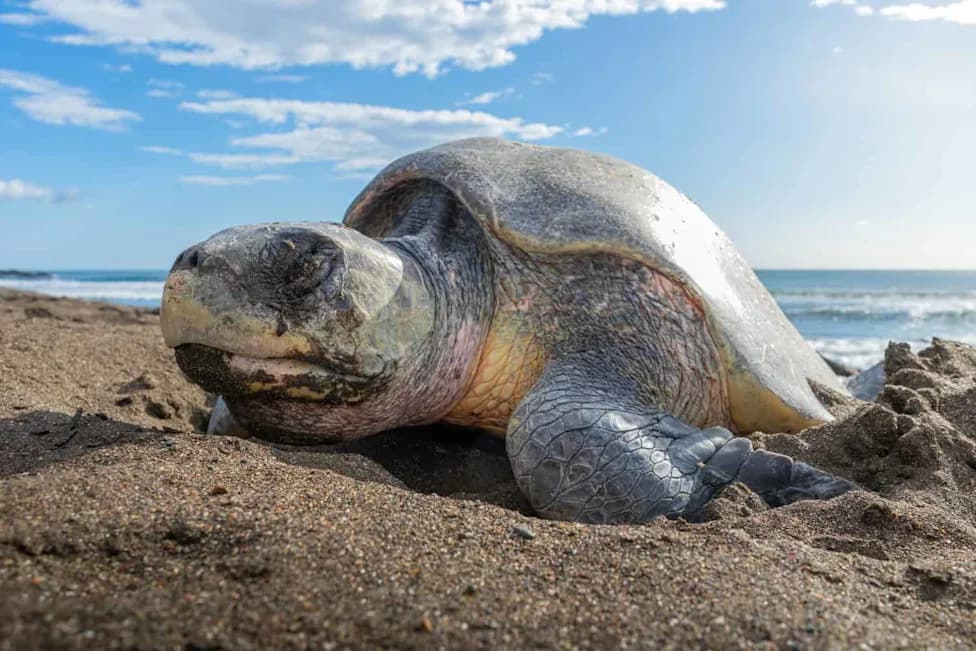
Leatherbacks typically nest much farther south—along beaches from Florida through the Caribbean—so a confirmed nest this far north draws scientific attention. Leatherbacks are the largest sea turtles: adults can reach about 8 feet (2.4 meters) in length and weigh as much as 2,000 pounds (900 kilograms).
Sea turtles are sensitive to beach conditions, artificial light, ocean health, and human activity. A nesting event outside the species' usual range can provide clues about changing behavior, shifting habitat use, or environmental factors that may influence future conservation planning.
Risks, Benefits, and Next Steps
Sea turtle nests are vulnerable to foot traffic, predators, light disturbance, and other avoidable threats. The controlled nature of the military beach reduces many of those risks, improving the eggs' chance to incubate undisturbed. Biologists and wildlife officials will monitor the site for signs of hatchlings emerging—the next key milestone.
If the eggs hatch successfully, Virginia's first recorded leatherback nest would be a rare conservation success and a reminder that protected or less-developed coastal areas—even those managed for nonconservation purposes—can provide important habitat for wildlife.
Note: Officials ask that the public avoid the fenced area and respect restrictions so the eggs can incubate safely.
Help us improve.