The study describes a population of Pdyn-expressing enteric neurons in the mouse colon that can both promote pellet propulsion in isolated tissue and elicit pain-like behaviors when activated in vivo. Ex vivo optogenetic stimulation sped forward movement of fecal pellets, while in vivo activation produced freezing and eye-tightening without altering stool output. The neurons express cytokine receptor subunits, suggesting potential responsiveness to inflammation, and similar cells have been identified in human tissue, though clinical relevance remains unproven. Findings are reported as a bioRxiv preprint and require peer review and further validation.
Gut Neurons Identified in Mice That May Link Constipation With Pain
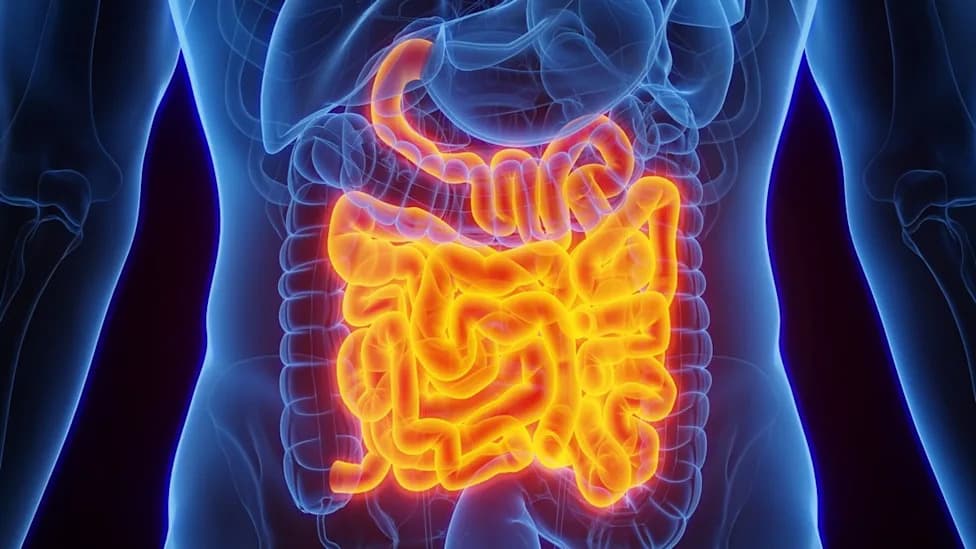
(Sebastian Kaulitzki/Science Photo Library/Getty Images)
Constipation and abdominal pain frequently occur together, but how the gut's own nervous system coordinates propulsion with internal sensations remains unclear. A new preprint study in mice identifies a distinct population of enteric neurons that can both promote fecal pellet propulsion in isolated colons and produce behaviors consistent with discomfort when activated in living animals.
What the Study Found
Using gene-expression databases, researchers selected Pdyn (the gene encoding prodynorphin) as a marker to distinguish sensory neurons embedded in the gut from those that relay signals between the intestine and the brain or spinal cord. Genetically modified mice allowed the team to trace Pdyn-expressing neurons, which they found concentrated in the colon's enteric nervous system and integrated into circuits that control gut movement.
YouTube Thumbnail
Electrophysiological recordings showed these Pdyn-positive neurons fire in brief bursts—one or two action potentials in response to stimulation, followed by a prolonged silence even if stimulation continued. The investigators then used optogenetics (light-activated stimulation) to probe the cells' function.
Ex Vivo Versus In Vivo Effects
In isolated colons (ex vivo), optogenetic activation of Pdyn neurons increased forward movement of fecal pellets, demonstrating that the intrinsic enteric network can drive propulsion independently of the brain and spinal cord. As one author, Daniel Verbaro, noted, these ex vivo experiments provide the clearest evidence that the gut's own neurons can promote movement.
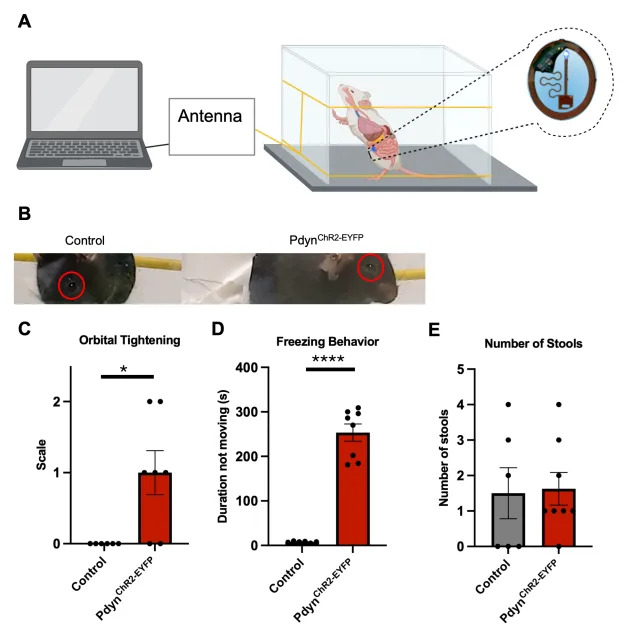
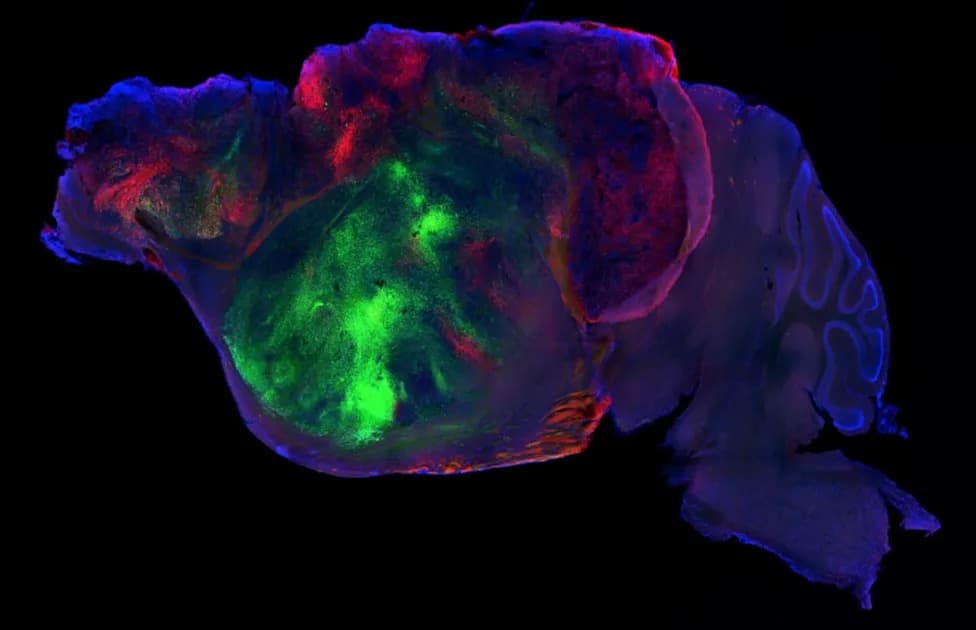
Pain behaviors were much greater in mice that had their Pdyn neurons stimulated than mice that didn't. Both produced similar numbers of stools, however. (Verbaro et al., bioRxiv, 2026)
In intact, living mice (in vivo), stimulating the same neurons did not change the amount of stool produced. The authors suggest this difference reflects the influence of extrinsic nerves: in a whole animal, motility is governed by combined signals from both the enteric nervous system and nerves that connect the gut with the central nervous system.
Behavioral Responses and Possible Sensory Role
Although stool output was unchanged in vivo, activation of Pdyn neurons triggered distinct behaviors—mice froze and tightened tissues around their eyes—responses commonly interpreted as signs of pain or discomfort in rodents. These pain-related behaviors were more pronounced in mice with Pdyn neuron stimulation than in control animals, despite similar stool counts between groups.

Subscribe to ScienceAlert's free fact-checked newsletter
Important caveat: The researchers emphasize they do not yet know precisely what the mice experienced or whether the Pdyn neurons directly generate pain. "We have not dissected how these functions are connected," the authors write.
Molecular Clues and Human Relevance
Molecular profiling revealed that Pdyn neurons express subunits of cytokine receptors even in healthy mice, which led the team to hypothesize these cells could respond directly to inflammation. This has not been demonstrated experimentally and remains speculative.
Similar Pdyn-expressing enteric neurons have been observed in human gut tissue, but their roles in human motility or visceral pain are unproven. The authors propose that if human enteric neurons mirror these mouse findings, targeting specific enteric neuron populations could eventually offer new ways to treat motility disorders and intestinal pain, such as chronic constipation and irritable bowel syndrome—though neither condition was directly studied here.
Status and next steps: The work is available as a preprint on bioRxiv and has not yet undergone peer review. Additional experiments are needed to confirm the findings, determine whether these neurons directly mediate pain, and test whether the same mechanisms apply in humans.
This article summarizes the authors' preprint results and includes direct quotes from the study team. As with all preprints, readers should interpret conclusions cautiously until peer review and independent replication are completed.
Help us improve.