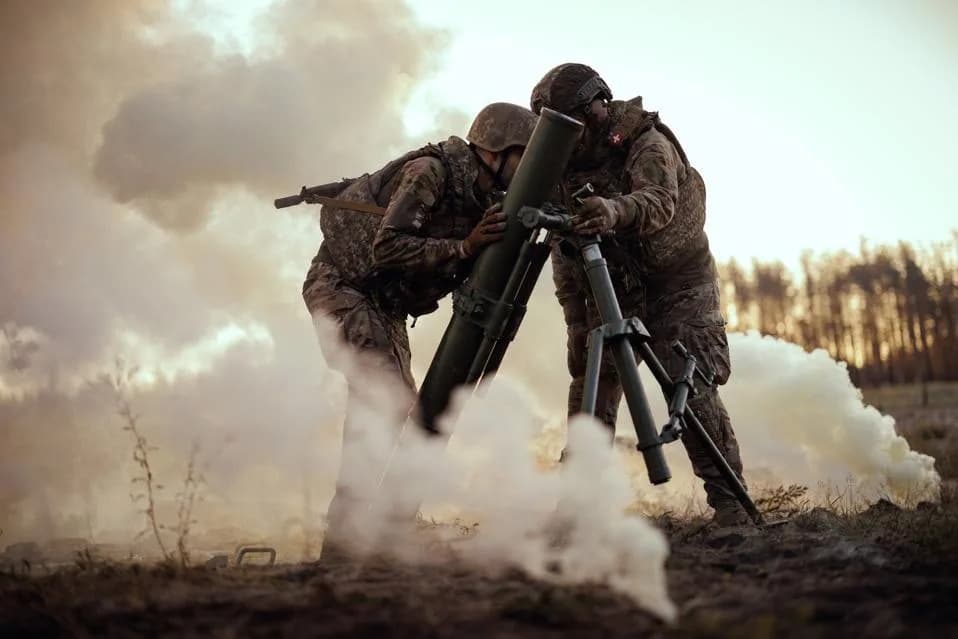
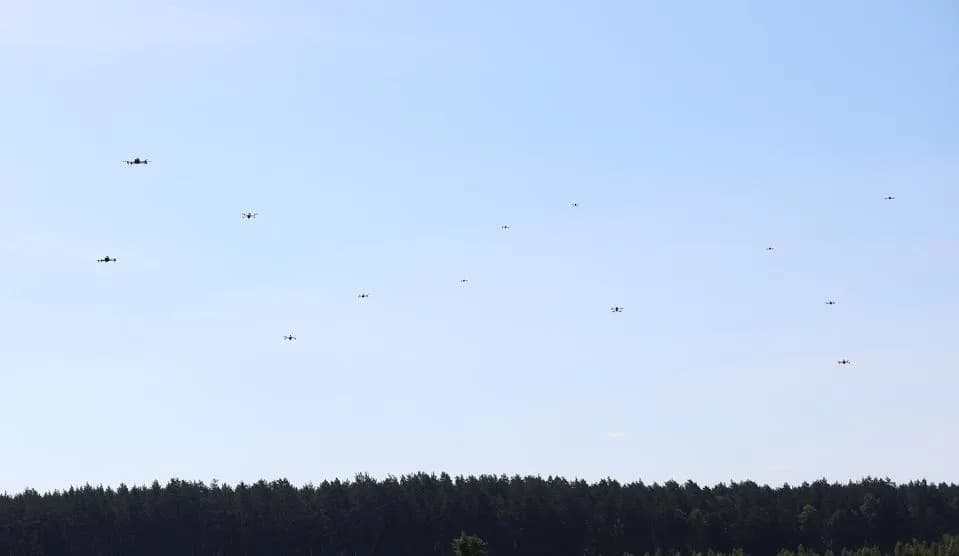
The 1st Battalion, Irish Guards, uses commercially available flight‑simulator games to teach soldiers FPV drone piloting before live flights. Trainees complete at least 30 hours in simulators followed by 30 hours of field flying; the U.S. Army follows a similar 20–30 hour simulator phase. The program, shaped by lessons from Ukrainian forces via Operation Interflex, aims to cut equipment loss, save money and accelerate readiness while recognizing simulators cannot reproduce combat stress.
From Controller to Cockpit: British Soldiers Use Commercial Video-Game Simulators to Train FPV Drone Pilots
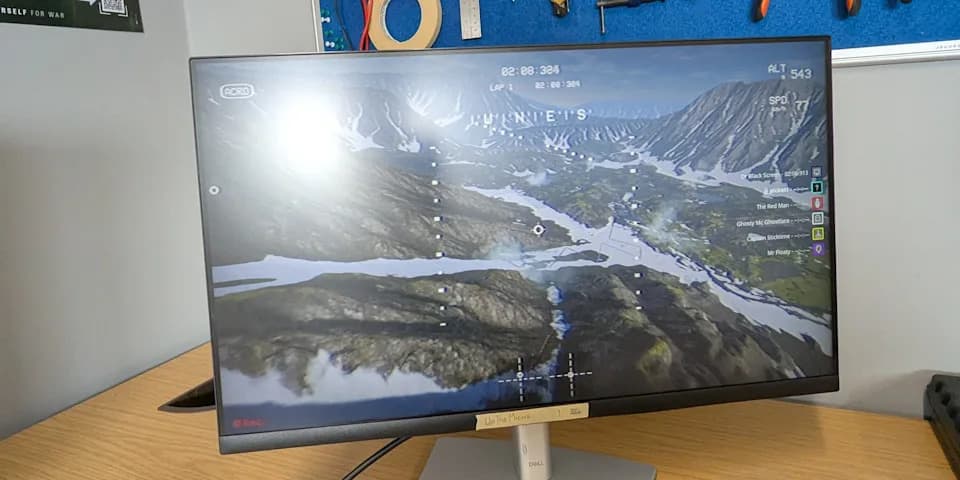
The simulation training includes flying through mountains.1st Battalion Irish Guards
An elite unit of the British Army is turning to off‑the‑shelf video‑game flight simulators to teach soldiers to pilot first‑person‑view (FPV) drones before they fly real aircraft.
How the Training Works
Members of the 1st Battalion, Irish Guards, spend substantial hours in publicly available simulation software that Capt. Pickett RM, the company's second‑in‑command, described as 'favoured by tactical and hobbyist pilots the world over.' For licensing and operational reasons the battalion declined to name the specific title.
Beginner‑friendly courses in the simulators guide pilots along race tracks, through mountain passes and varied environments to build the foundational skills needed for FPV flight. According to Pickett, virtual flying develops 'hand‑eye coordination, reaction times and understanding of how the system handles'—an experience he likens to 'driving a car in 3D.'
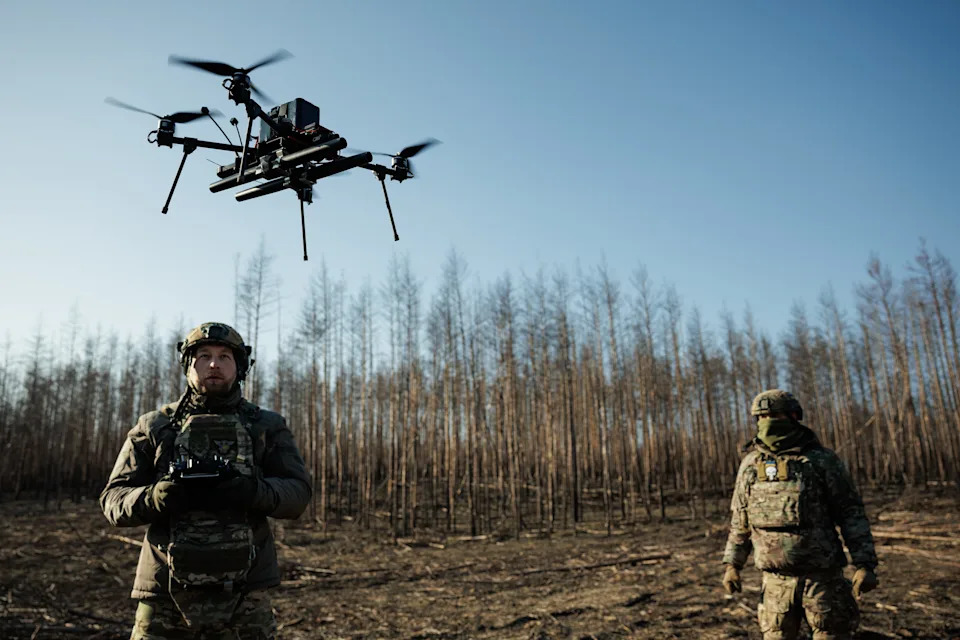
Allies are trying to learn as much as they can about drone warfare from Ukraine.Serhii Mykhalchuk/Global Images Ukraine via Getty Images
'Flying FPV drones is exceptionally hard to do and requires a significant time flying,' Pickett said. 'Simulation is the most effective way of achieving this.'
Hours, Hardware and Handoffs
The Irish Guards require a minimum of 30 hours on simulators, followed by at least 30 hours of live flying on field courses. The approach mirrors the U.S. Army's Unmanned Advanced Lethality Course at Fort Rucker, Alabama, where trainees spend roughly 20–30 hours on simulators before progressing to live flights.
Maj. Wolf Amacker, who leads the U.S. Army's Unmanned Aircraft Systems and Tactics Branch, noted that while FPV drones are inexpensive compared with other weapon systems, commanders want to avoid novices 'absolutely smash it and wreck it and lose $2,000.' He added that 'a $20 video game' can prepare operators to handle real aircraft safely and effectively.
Drone Hub, 3D Printing and Mobile Support
The battalion has built a dedicated 'drone hub' for simulation training, repairs and 3D printing of replacement parts, and is developing a mobile version that can operate closer to deployed forces. The unit also constructed a live drone obstacle course so trainees can practise field flying after simulator time.
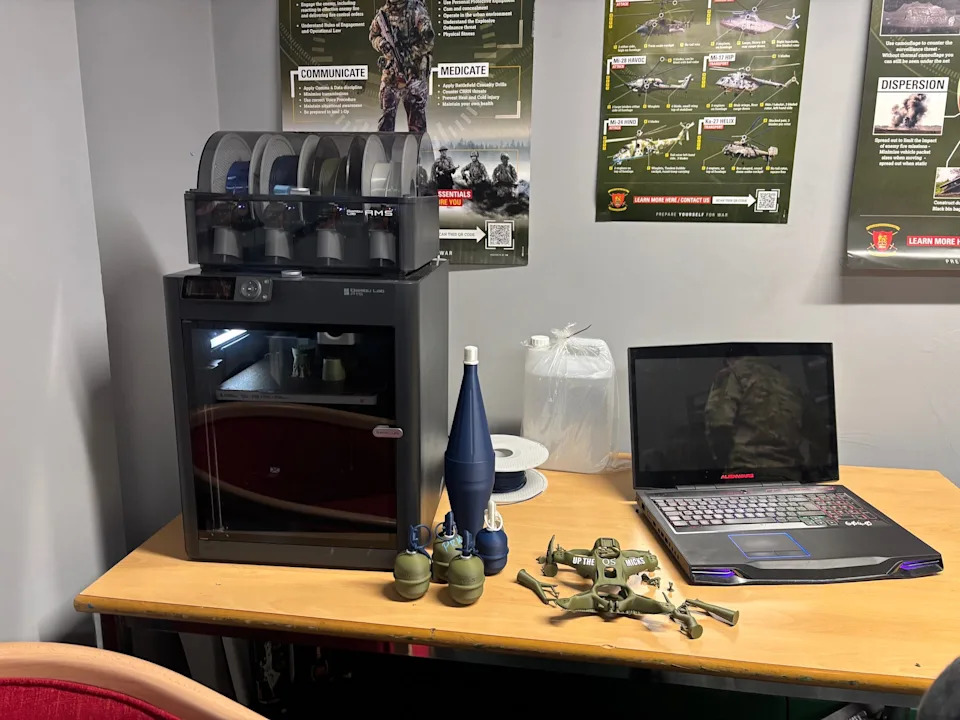
The 1st Battalion of the UK's Irish Guards has started a 'drone hub' that includes 3D printing of drone parts.Sinéad Baker
Lessons From Ukraine
The 30‑plus‑30 regimen was informed by advice from Ukrainian soldiers the Irish Guards trained under Operation Interflex. Lt. Col. Ben Irwin‑Clark, the battalion's commanding officer, said troops typically become 'pretty competent at being able to fly different types of drones' after the combined 60 hours. He added that Ukraine's battlefield use of drones has made expertise in their operation essential.
A Royal Marine collaborating with the battalion said the unit consciously adopted practices learned from Ukrainian partners: 'We've got the guys coming in, and they're playing video games, but they're learning a valuable tactical skill that they can use later down the line.'
Limitations and Context
Military officials acknowledge simulators cannot reproduce the life‑or‑death pressure of combat. A Ukrainian special drone operator warned that flying in conflict is not like playing a videogame such as 'Call of Duty'—'there is no restart option.' Nonetheless, defence forces increasingly view gaming technology as an efficient way to teach core handling, reactions and situational awareness before trainees operate real drones in the field.
Bottom line: Commercial simulators are a low‑cost, high‑value training step that saves equipment, money and time while preparing soldiers for live drone operations—though real combat experience remains an irreplaceable component of readiness.
Help us improve.