Vaccine skepticism persists because storytelling—more than facts—shapes how people interpret risk. Anti-vaccine narratives often use vaccines as symbols for autonomy, identity, and institutional distrust, making data-only rebuttals ineffective. Addressing hesitancy requires listening to lived experiences, acknowledging legitimate sources of mistrust, and combining clear science with empathetic, values-driven storytelling.
How Storytelling Fuels Vaccine Skepticism — And What Public Health Can Do About It

Vaccine skeptics have been around as long as vaccines have – for more than 200 years.Volanthevist/Moment via Getty Images
Vaccine skepticism has accompanied vaccines since their earliest use. In 19th-century England, riots opposed mandatory smallpox inoculation as an assault on civil rights and bodily autonomy, and in the United States organized opposition dates back to groups such as the Anti-Compulsory Vaccination League of Brooklyn (founded in 1894).
Today, vaccine hesitancy is visible across the political spectrum and amplified by high-profile voices and movements. Researchers generally use the term vaccine hesitant to describe people who delay or refuse some or all recommended vaccines. Public-health communicators have typically responded by providing clear, accurate information, but that strategy alone often falls short.
Why Facts Aren't Always Enough
Accurate, science-based messaging must reflect the incremental, often uneventful nature of medical research and safety monitoring. That careful reality, however, struggles to compete with emotionally charged narratives. Vaccine-skeptical groups are especially skilled at turning isolated incidents or speculative concerns into dramatic, memorable stories.
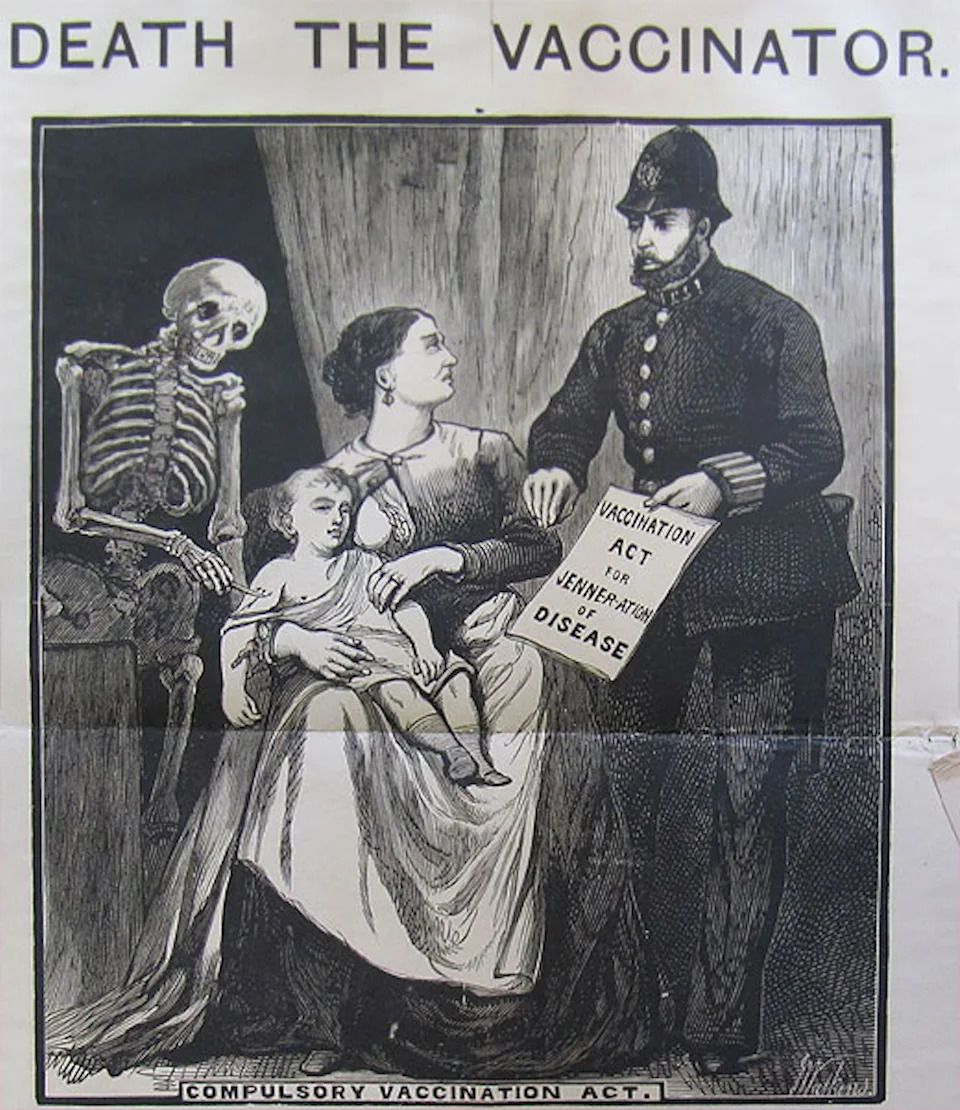
A drawing published by the London Society for the Abolition of Compulsory Vaccination in the late 1800s.Historical Medical Library of The College of Physicians of Philadelphia
Narrative, Symbolism, and Identity
Many anti-vaccine narratives do more than dispute a medical claim: they use vaccines as symbols for broader anxieties about autonomy, identity, and institutional distrust. In online forums and protest rhetoric, refusing a vaccine is sometimes framed as civil resistance against an allegedly overreaching state or as a marker of personal strength. By detaching vaccines from clinical detail and embedding them in moral or identity-driven stories, these narratives become powerful and sticky.
"Stories about doctors dismissing patient concerns or children harmed after vaccination"—even when anecdotal, rare, or unrelated—are emotionally persuasive in ways that raw data often is not.
Who Is Vaccine Hesitant?
Contrary to stereotypes, vaccine hesitancy is not limited to the poorly educated. It includes people with higher education and above-average health literacy. Motivations vary: distrust of medicine or government, a desire to protect one's child, religious convictions, or resonance with compelling narratives about freedom and bodily autonomy.
When Public Agencies Echo Skeptical Frames
Some policymakers and officials have at times used language that echoes vaccine-hesitant framings, emphasizing individual decision-making or autonomy in ways that can inadvertently validate symbolic concerns while downplaying population-level risk. These shifts in rhetoric can reinforce the idea that vaccination is primarily a personal threat to identity rather than a collective health measure.
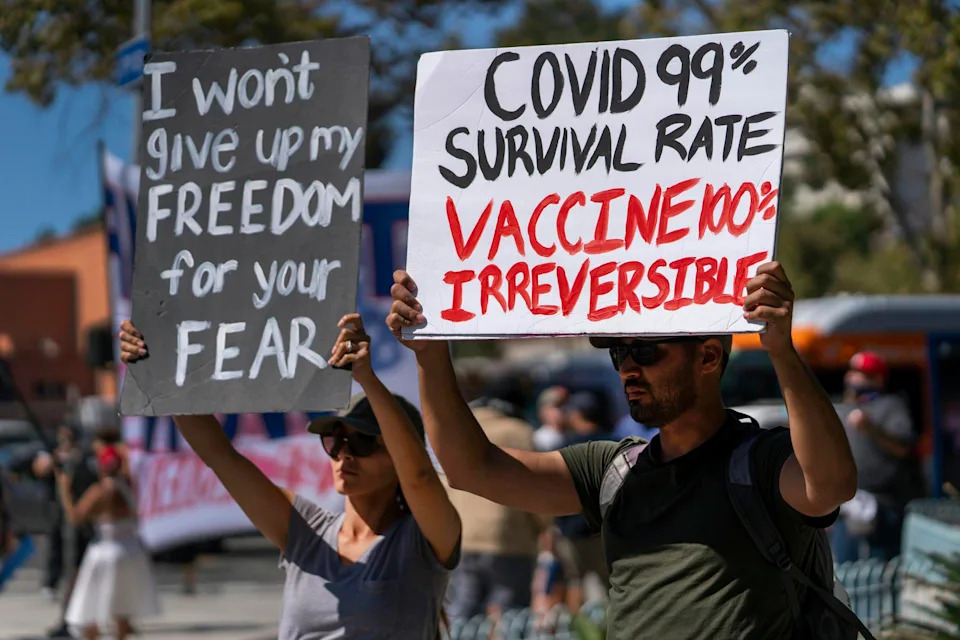
Resistance to vaccines is often framed in terms of individual liberty, as at this 2021 protest in Los Angeles against COVID-19 vaccine mandates. Damian Dovarganes/AP Photo
What Works Better Than Facts Alone
Addressing vaccine hesitancy requires treating it as a complex social problem rather than an information gap. Strategies that researchers and communicators recommend include:
- Listen First: Validate legitimate concerns and historical reasons for mistrust (for example, abuses experienced by marginalized communities).
- Use Narrative Wisely: Combine accurate data with relatable, empathetic stories that reflect people’s values and experiences.
- Address Symbolism: Acknowledge what vaccines represent for some people—autonomy, bodily integrity, or institutional power—and respond to those fears directly.
- Partner With Trusted Messengers: Work with community leaders and clinicians who already have credibility with hesitant groups.
- Be Transparent: Explain uncertainty honestly, describe monitoring systems, and show how risks and benefits are weighed.
Conclusion
Vaccine-skeptical messaging succeeds because it taps into stories, symbols, and social identities. Public-health efforts that combine factual clarity with narrative sensitivity—listening to lived experiences, acknowledging institutional failures, and addressing values—are more likely to rebuild trust and reduce hesitancy than facts alone.
This article is based on analysis by Katherine Shwetz (Rice University and University of Toronto) and was originally published by The Conversation.
Help us improve.