The Republican Party’s deference to President Trump has led to policies — notably an escalatory and costly approach to the Iran conflict — that conflict with broad public opinion. Polls show strong opposition to the war and growing economic anxiety as gas, grocery prices and inflation stay high. Democrats should shift strategy: stop chasing non‑MAGA Republicans and instead mobilize their base and independents with concrete economic and foreign‑policy alternatives.
GOP Has Drifted From Its Voters — Democrats Should Capitalize on the Opportunity
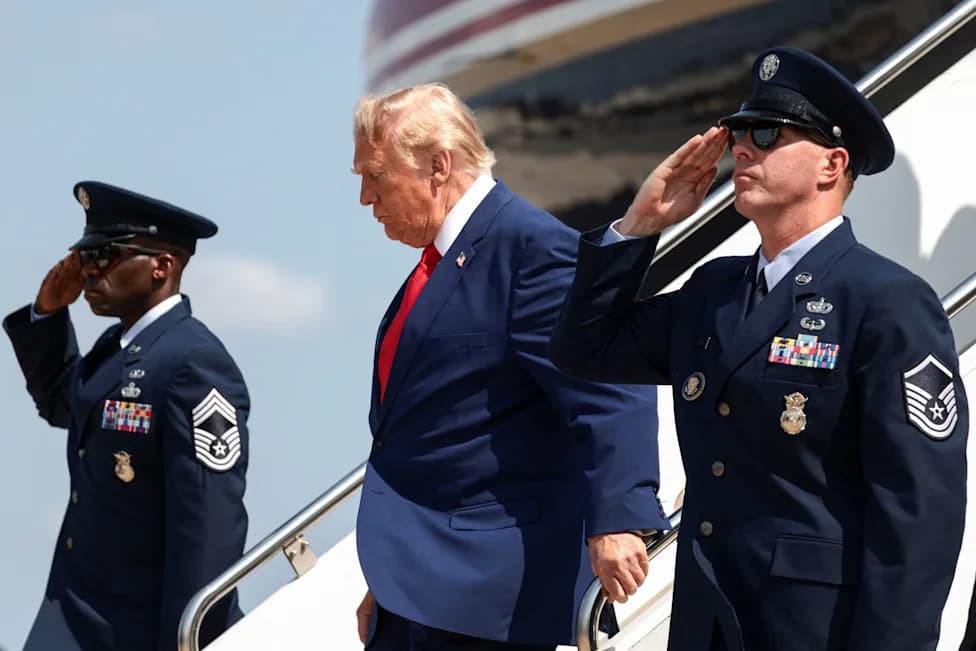
President Donald Trump arrives at Dover Air Force Base to attend the dignified transfer of U.S. Army service members killed in Jordan and Iraq, amid the Iran war, in Dover, Del., July 22, 2026. Hours before he arrived, President Donald Trump said theU.S. would escalate retaliatory strikesagainst Iran.(Evelyn Hockstein, REUTERS)
The Republican Party appears to have moved away from core voter concerns by deferring to President Donald Trump’s priorities — even as his administration pursues a costly and increasingly unpopular military campaign in the Middle East.
What We Know
Recent reporting by The New York Times indicates the Pentagon was unusually reticent about U.S. involvement in the Iran conflict over a five-month period, at times withholding information about service members’ injuries. On July 20 the Pentagon's chief spokesman said that "nearly 100 service members were deemed to have some degree of injury since July 7," and 17 U.S. military deaths have been confirmed since strikes began on Feb. 28.
President Trump attended a dignified transfer at Dover Air Force Base on July 22, 2026, and hours earlier signaled plans to escalate retaliatory strikes against Iran. Defense Secretary Pete Hegseth said the United States has spent an estimated $37.5 billion so far on the conflict while asking Congress to authorize additional funding. In April The New York Times also reported the Department of Defense had not fully disclosed how deeply U.S. munitions stocks were being drawn down.
Public Opinion and Party Priorities
Polling shows broad public opposition to continued escalation. A Washington Post-Ipsos poll found 68% of Americans do not believe the war with Iran is worth fighting, and an Economist/YouGov survey found 51% of Republicans unaffiliated with MAGA judged entering the conflict a mistake. Yet MAGA-aligned Republicans remain largely loyal to Mr. Trump, prioritizing electoral success over earlier party promises about limited government and fiscal restraint.
That loyalty helps explain why many Republicans have not publicly broken with administration policy: party unity and winning appear to outweigh policy disagreements for a significant portion of the GOP base.
Economic Fallout
The conflict has economic consequences at home. Consumers continue to face high gas and grocery prices and rising inflation, trends highlighted in the CNBC All-America Economic Survey showing elevated public concern about financial futures. Promises to cut federal spending have not materialized: initiatives like Elon Musk’s Department of Government Efficiency (DOGE), which pledged large savings, have produced legal costs instead, and the federal debt is approaching $40 trillion despite commitments to reduce deficits.
Political Implications And Strategy
While a small number of House Republicans voted with Democrats on July 23 to end the war, most GOP lawmakers remain aligned with the president. With Trump’s approval constrained — a Washington Post/Ipsos poll recorded a 61% disapproval rating — there is an opening for Democrats to highlight contradictions between Republican rhetoric and actions.
Bottom line: Democrats should stop expending scarce resources trying to convert non‑MAGA Republicans and instead focus on mobilizing their base and persuading independents with clear economic solutions and a credible plan to end the Iran conflict.
— Sara Pequeño (originally published in USA TODAY)
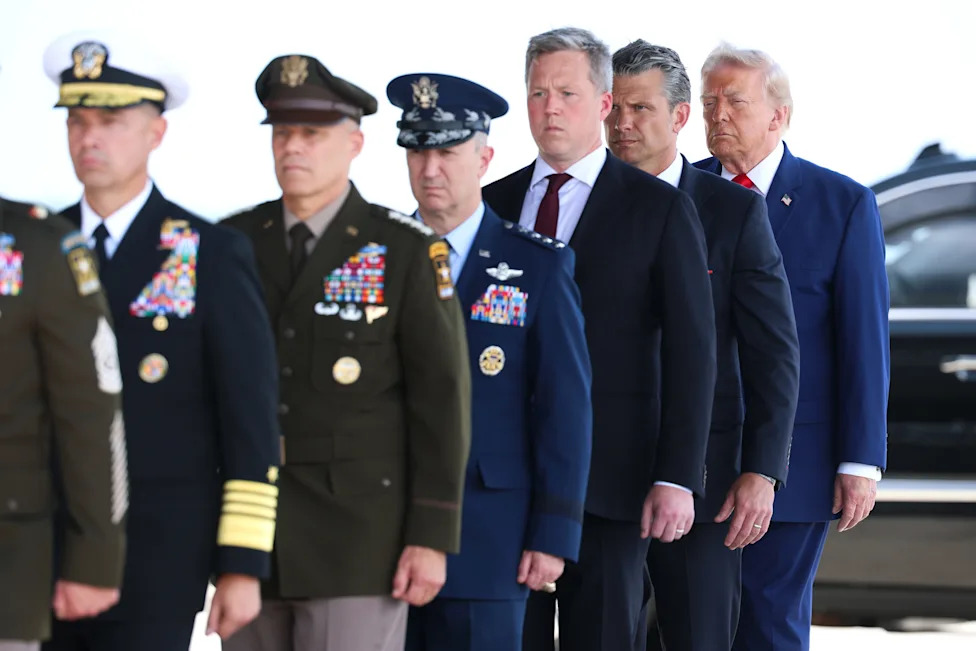
Defense Secretary Pete Hegseth and President Donald Trump attend a dignified transfer at Dover Air Force Base on July 22, 2026 in Dover, Del. of Army 1st Lt. Tyler James Feehan, Army Staff Sgt. Michael Emmanuel Swinton, Army Sgt. Angel S. Rampersad and Army Pvt. Isabella Gonzales who were killed in action in Iraq and Jordan. On Tuesday, Hegseth said theUnited States has spent an estimated $37.5 billion so far on the war with Iranas the Pentagon asks Congress to authorize billions more in taxpayer dollars.(Kevin Dietsch, Getty Images)
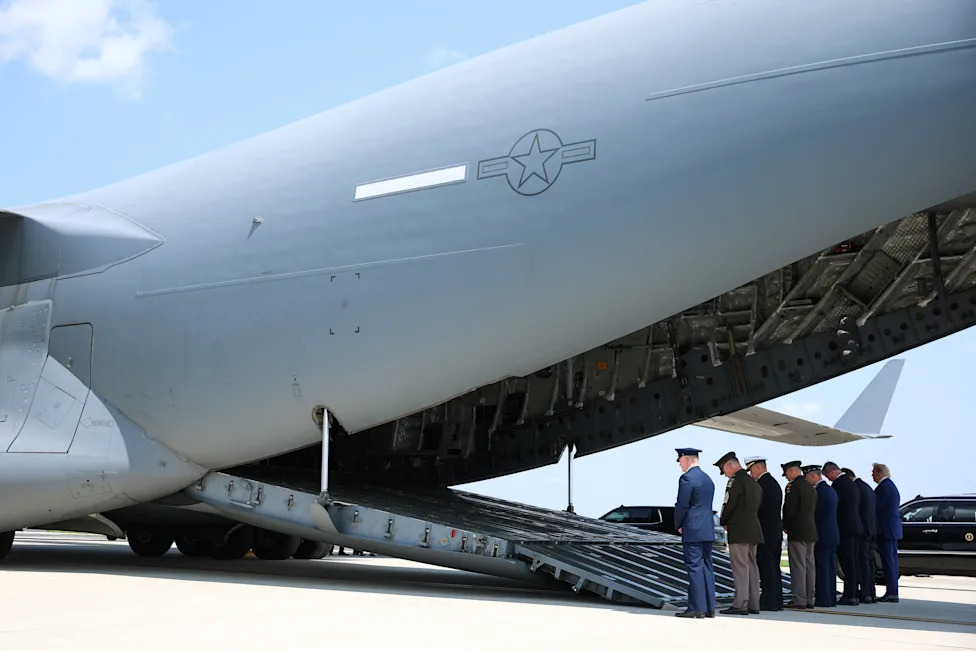
President Donald Trump attends a dignified transfer at Dover Air Force Base on July 22, 2026 in Dover, Del.(Kevin Dietsch, Getty Images)
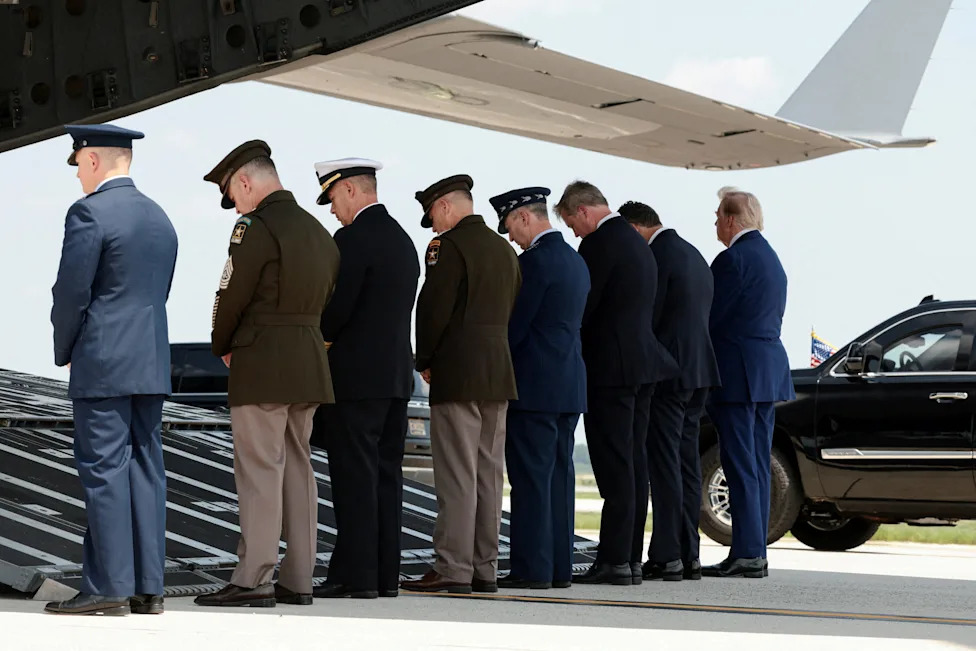
President Trump and U.S. officials pay their respects as they attend the dignified transfer of U.S. Army service members killed in Jordan and Iraq amid the Iran war, in Dover, Del., July 22, 2026.(Evelyn Hockstein, REUTERS)
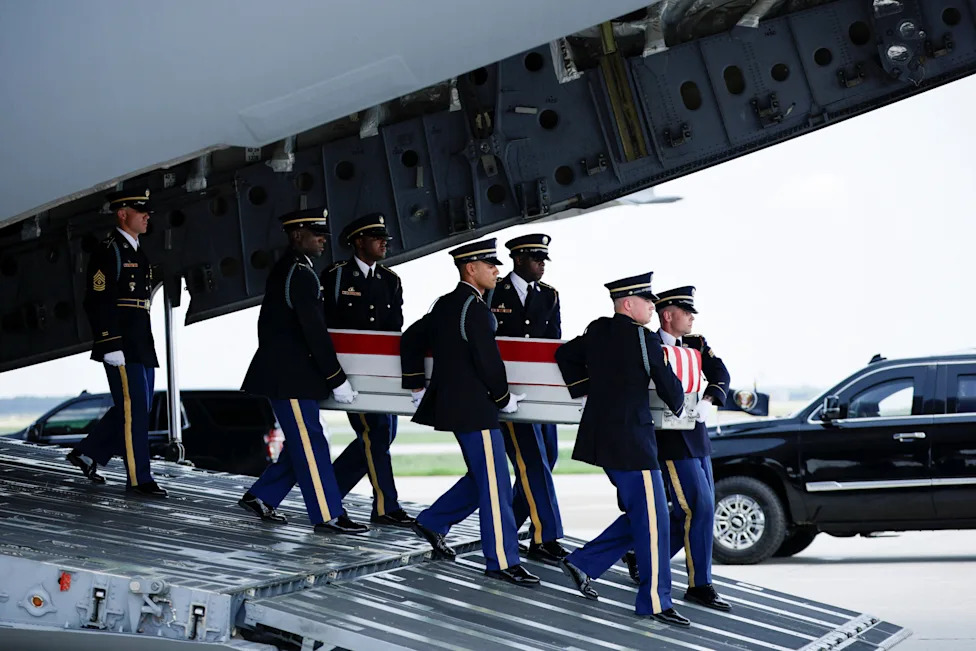
Members of the military carry the transfer case of U.S. Army Sgt. Michael Emmanuel Swinton of D Battery, 2nd Battalion, 55th Air Defense Artillery Regiment, 108th Air Defense Artillery Brigade, who was killed in action during a controlled detonation of a downed one-way unmanned aerial system at Erbil Air Base in Iraq, during a dignified transfer of his remains at Dover Air Force Base in Dover, Del., July 22, 2026.(Evan Vucci, REUTERS)
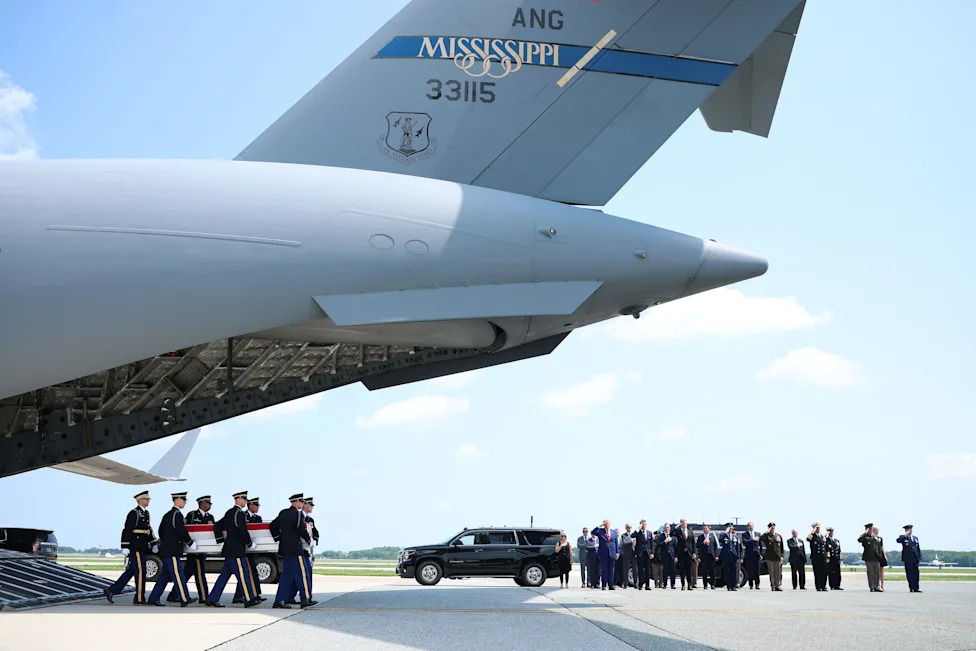
Members of a U.S. Army carry team move the flag-draped transfer case holding the remains of Army 1st Lt. Tyler James Feehan of Ewa Beach, Hawaii, during a dignified transfer at Dover Air Force Base on July 22, 2026 in Dover, Del. First Lt. Feehan, who was assigned to 2nd Battalion, 55th Air Defense Artillery Regiment, 32nd Army Air Missile Defense Command at Fort Bragg, North Carolina, was killed in action due to an enemy attack on July 17, 2026, at Muwaffaq Salti Air Base in Jordan.(Kevin Dietsch, Getty Images)
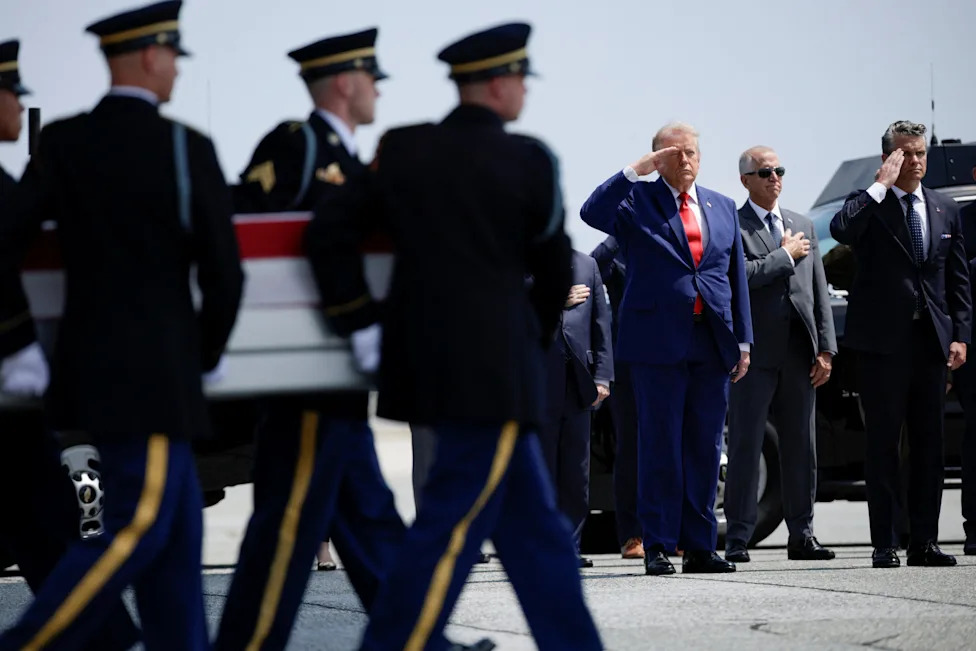
President Donald Trump and Secretary of Defense Pete Hegseth salute as members of the military carry the transfer case of U.S. Army 1st Lt. Tyler James Feehan of the 2nd Battalion, 55th Air Defense Artillery Regiment, 32nd Army Air Missile Defense Command, who was killed during an attack at Muwaffaq Salti Air Base in Jordan, during a dignified transfer of his remains at Dover Air Force Base in Dover, Delaware, July 22, 2026.(Evan Vucci, REUTERS)
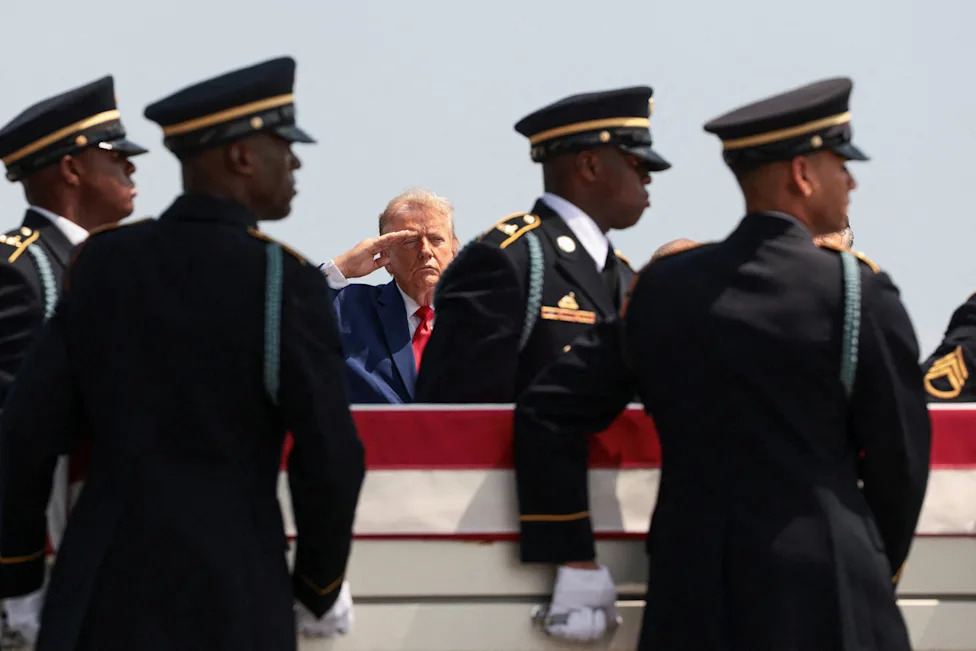
President Donald Trump salutes as members of the military carry the transfer case of U.S. Army Pvt. Isabella Gonzales of the 1st Battalion, 57th Air Defense Artillery Regiment, 52nd Air Defense Artillery Brigade, 10th Army Air Missile Defense Command, who was killed during an attack at Muwaffaq Salti Air Base in Jordan, during a dignified transfer of her remains at Dover Air Force Base in Dover, Del., U.S., July 22, 2026.(Evelyn Hockstein, REUTERS)
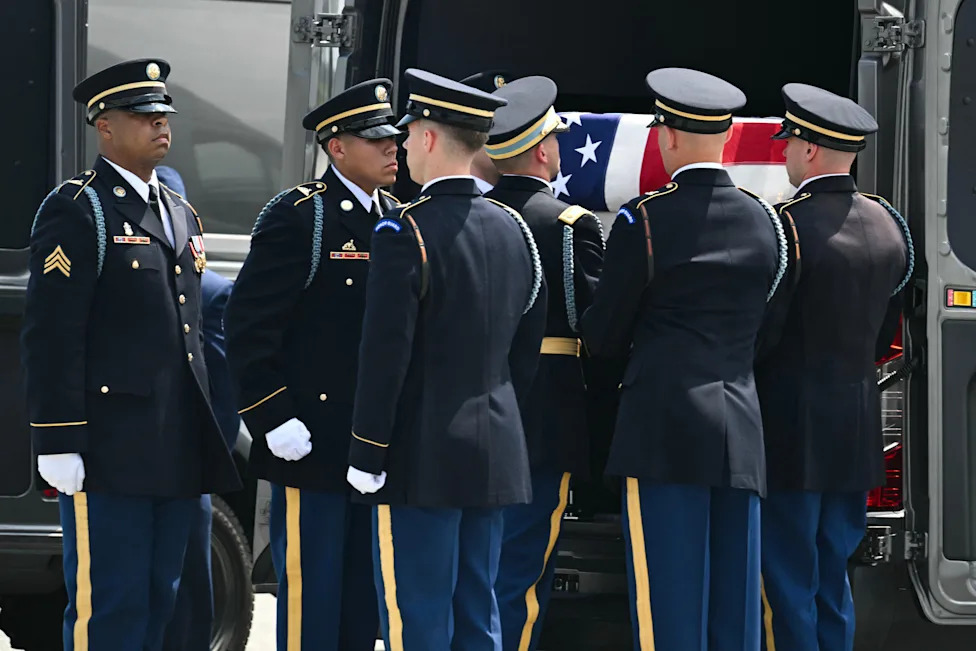
A U.S. Army carry team carries the flag-draped transfer case containing the remains of 1st Lt. Tyler James Feehan, 25, of Ewa Beach, Hawaii, during a dignified transfer solemn event for US service members killed during operations in the Middle East, at Dover Air Force Base in Dover, Del., on July 22, 2026. Feehan was killed in action on July 18 during an enemy attack at Muwaffaq Salti Air Base in Jordan.(SAUL LOEB, AFP via Getty Images)
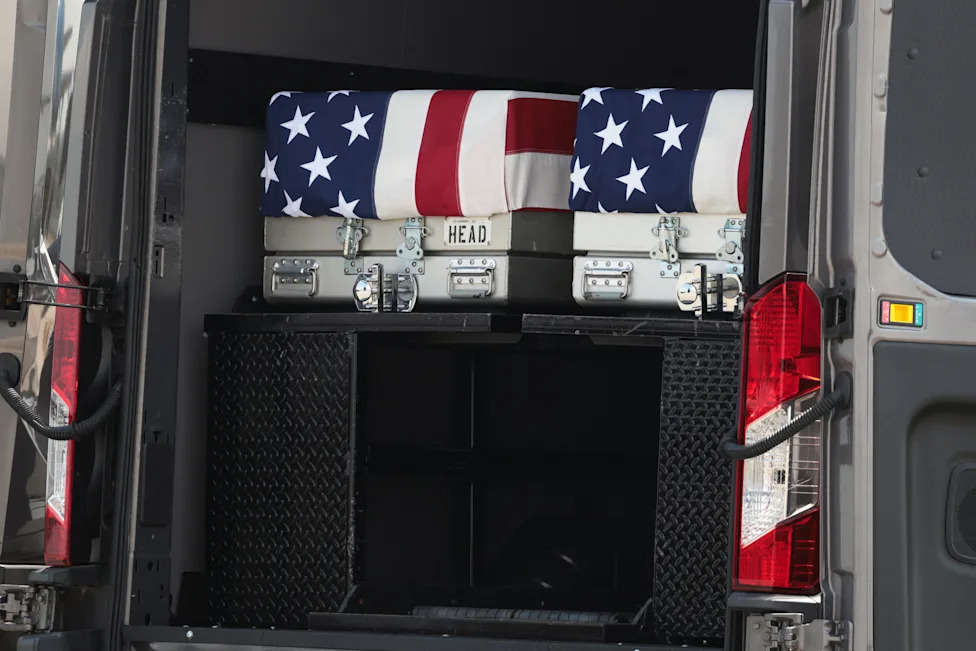
Two of four transfer cases rest in a transport van during a dignified transfer of the remains of U.S. Army service members Army 1st Lt Tyler James Feehan, Sgt. Angel S. Rampersad, Pvt. Isabella Gonzales, killed during an attack on Muwaffaq Salti Air Base in Jordan, and Sgt. Michael Emmanuel Swinton, killed in action during a controlled detonation of a downed one-way unmanned aerial system at Erbil Air Base in Iraq, at Dover Air Force Base in Dover, Del., July 22, 2026.(Evelyn Hockstein, REUTERS)
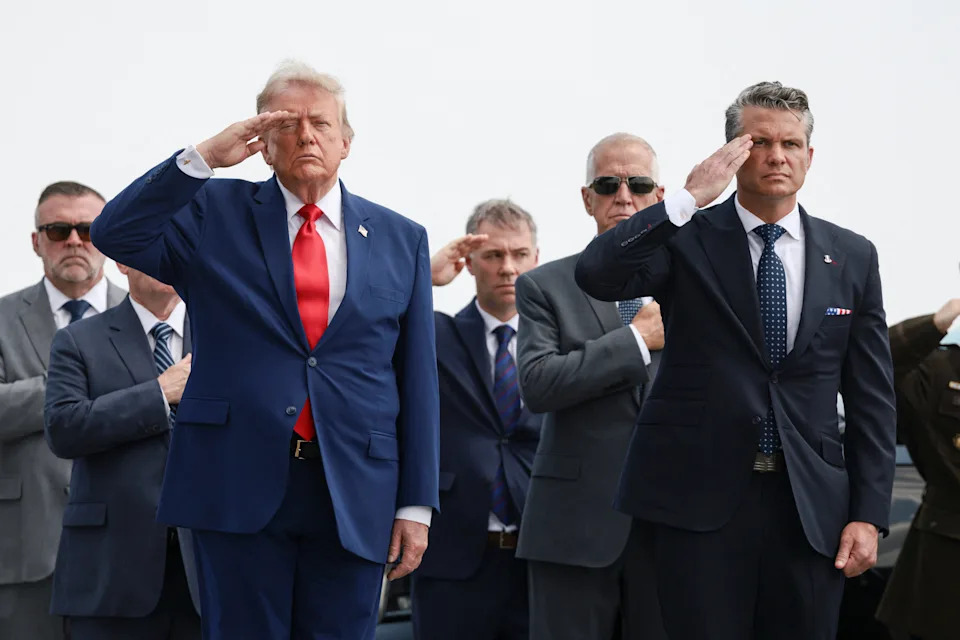
President Donald Trump and Secretary of Defense Pete Hegseth salute during a dignified transfer of the remains of U.S. Army service members at Dover Air Force Base in Delaware on July 22, 2026.
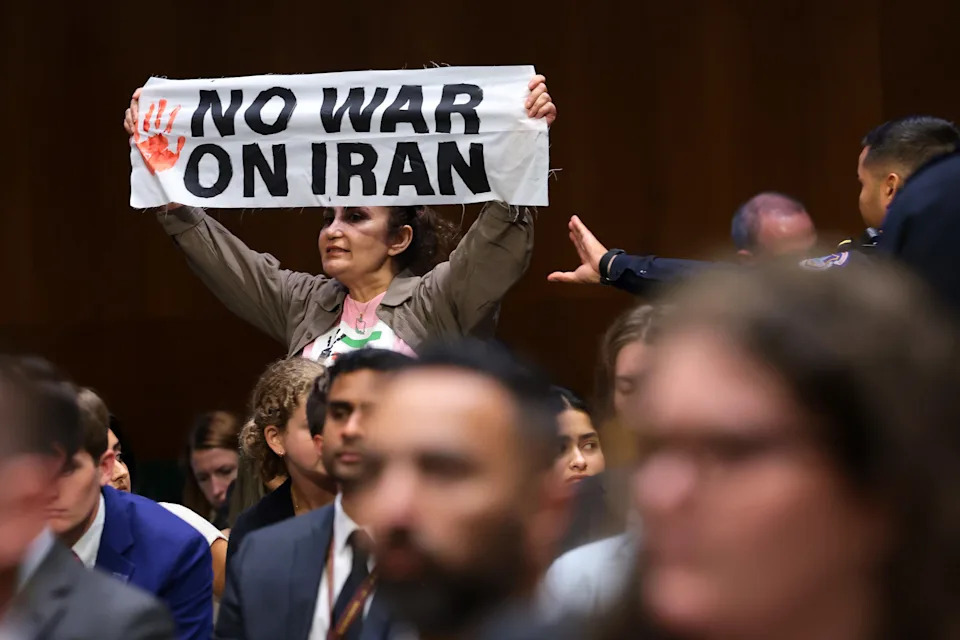
Anti-war protesters interrupt a Senate hearing on July 21, 2026, in Washington, DC.
Help us improve.