The COMPACT Act’s Emergency Suicide Crisis Benefit allows eligible veterans to get VA-funded emergency suicide care at VA and non-VA hospitals, even without VA enrollment. About 49,341 veterans have used the benefit since fiscal 2023, and VA spending on acute suicide crisis care reached nearly $110 million in FY2025. The benefit covers emergency evaluation, inpatient or crisis residential care, and up to 90 days of outpatient follow-up. Advocates warn awareness remains low and urge veterans in crisis to seek emergency care immediately; VA will confirm eligibility afterward.
Nearly 50,000 Veterans Have Used New COMPACT Act Emergency Suicide Benefit — Many Still Don’t Know It Exists
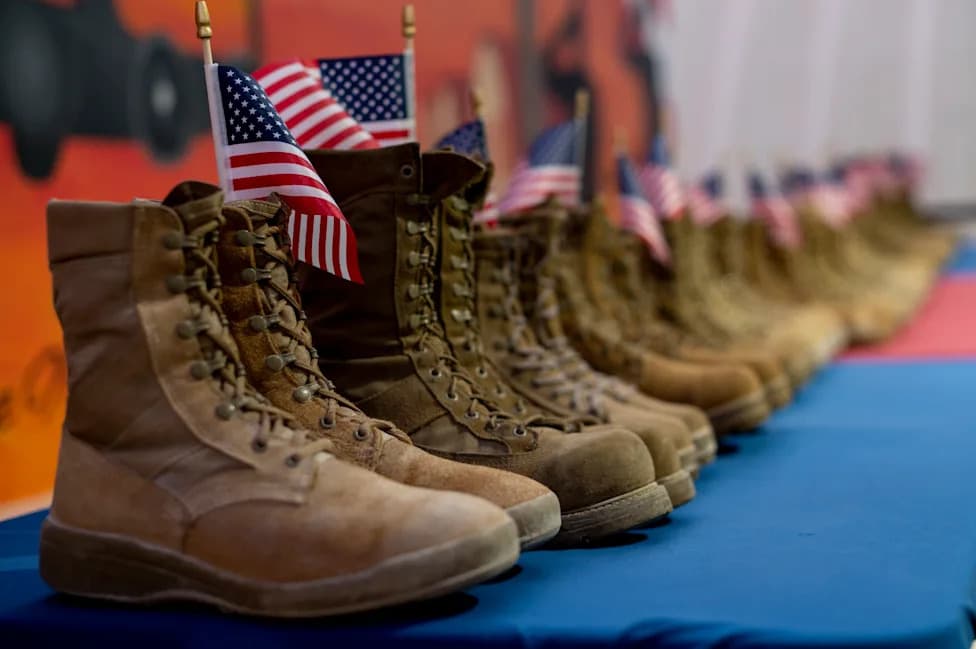
Boots displayed by the Air Force's 332nd Air Expeditionary Wing to honor the daily estimated number of veterans who take their own lives. (Karla Parra/U.S. Air Force)
Editor's note: This report includes discussion of suicide. Troops, veterans and family members experiencing suicidal thoughts can call the 24-hour Suicide and Crisis Lifeline at 988 (press 1 for Veterans), text 838255, or visit VeteransCrisisLine.net for immediate help.
The COMPACT Act's Emergency Suicide Crisis Benefit lets eligible veterans and certain former service members receive Department of Veterans Affairs–funded emergency suicide crisis care at VA facilities and community hospitals even if they are not enrolled in VA health care. According to VA-related data shared with Military Times, roughly 49,341 veterans have used the benefit since fiscal 2023. Yet veteran advocates and suicide-prevention professionals say many eligible people don't learn about the program until they are already in crisis.
One Veteran's Close Call
Retired Navy Master Chief David Hull said 2025 brought a devastating turn after he lost his job amid a government shutdown. He had rebuilt stability after leaving the military, but when his paycheck disappeared, so did his ability to provide for his three children. Facing homelessness, hunger and crushing stress, he researched ways to end his life.
"I didn't always consider taking my own life. It wasn't until I felt like I had no one and nowhere to go," Hull told Military Times.
As he prepared pills one night, an empty container fell to the floor and his 6-year-old daughter picked it up. "She looked up at me with her big brown eyes," Hull recalled. The moment stopped him. He left his children with a neighbor and went to Garrett Regional Medical Center, a community hospital in Oakland, Maryland.
Hull had no health insurance and was not enrolled in VA care. He said he had not heard of the COMPACT Act. At the hospital, a physician and social worker evaluated him, then explained that the VA would cover his emergency treatment and follow-up care under the program. The social worker helped him access the benefit that night.
What the Benefit Covers
Established under the Commander John Scott Hannon Veterans Mental Health Care Improvement Act (commonly called the COMPACT Act) and implemented by VA in 2023, the Emergency Suicide Crisis Benefit covers:
- Emergency evaluation and treatment for suicide crisis
- Inpatient or crisis residential care when clinically appropriate
- Up to 90 days of outpatient follow-up care
Since FY2023 the benefit has been used by nearly 50,000 veterans, including just over 10,000 in FY2023, 14,666 in FY2024, 15,218 in FY2025, and 9,434 in the first half of FY2026. VA reports it spent a record nearly $110 million on acute suicide crisis care in FY2025. The agency also says about 72% of beneficiaries later enrolled in VA health care.
Awareness Gaps and Barriers
Advocates say confusion about eligibility remains a major barrier. Organizations such as Disabled American Veterans (DAV) regularly encounter veterans who believe they must already be enrolled in VA care, have a service-connected disability, or seek treatment at a VA medical center to qualify. That uncertainty — and fear of medical debt — can prevent people from seeking emergency care when they most need it.
"DAV believes awareness of the safety net created by the COMPACT Act remains lower than it should be," said Jon Retzer, DAV's national legislative director.
Army Reserve Prevention Integrator David Arthur and other prevention specialists note that distance from VA medical centers and limited local emergency resources in rural areas add to confusion and delay. They emphasize a simple message: if you are in crisis, go to any emergency room — the VA can confirm eligibility afterward.
Outcome and Call to Action
Hull completed the full 90 days of follow-up care through the benefit and subsequently enrolled in VA health care. "I don't know if I could have afforded the treatment I received after that night without the VA," he said. "I wish so many of my brothers and sisters knew that this was an option. There are no strings attached. No barriers to being seen."
The rising use of the Emergency Suicide Crisis Benefit shows the program is reaching veterans in need, but advocates urge more outreach so eligible veterans learn about it before a crisis. If you or someone you know is thinking about suicide, seek emergency care or contact the Veterans Crisis Line at 988 (press 1), text 838255, or visit VeteransCrisisLine.net.
Help us improve.