The University of California San Diego team published an open-access genome-scale atlas linking the effects of 11,692 expressed genes to human iPSCs, using CRISPR interference across roughly 2.5 million cells. The dataset groups genes by shared molecular and functional signatures and uncovers new metabolic and self-renewal regulators. Designed as a searchable 'hypothesis engine', the map helps researchers prioritize targets, build virtual cell models, and speed regenerative-medicine and disease-research efforts.
Genome-Scale Gene Atlas Maps 11,692 Genes’ Effects on Stem Cells — A Breakthrough for Regenerative Medicine
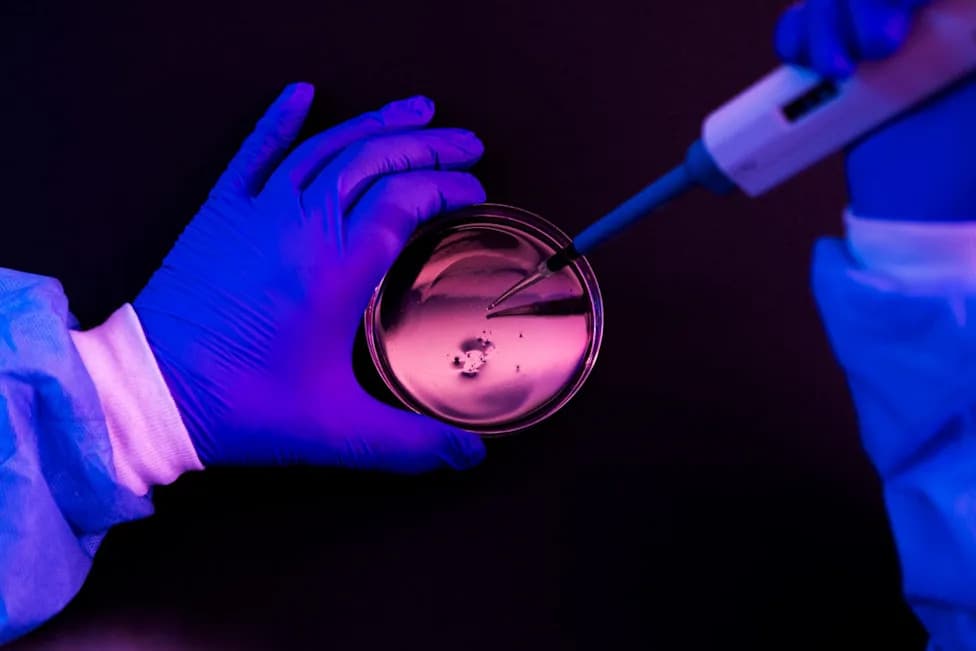
Experts Made a Revolutionary Genetic DictionaryDBenitostock - Getty Images
A team led by researchers at the University of California San Diego has released an open-access, genome-scale reference map that records how 11,692 expressed genes influence human-induced pluripotent stem cells (iPSCs). Published in Nature Biotechnology, the dataset is designed as a searchable atlas to help scientists predict gene function in stem-cell states and accelerate disease modeling and regenerative-therapy research.
Pluripotent stem cells can be coaxed into nearly any cell type — heart muscle, neurons, retinal tissue and more — making them central to regenerative medicine, drug testing, and patient-specific disease studies. Yet understanding which genes drive specific cell behaviors has been slow because cellular regulation is complex and context-dependent. This new reference map links systematic gene perturbations to whole-transcriptome responses in iPSCs, closing a major gap between DNA sequence and cellular function.
To build the atlas, the researchers used CRISPR interference (CRISPRi) to transiently repress target genes without permanently editing DNA. They applied CRISPRi across roughly 2.5 million individual cells to profile 11,692 expressed genes, then grouped genes by shared molecular signatures and functional effects. The effort revealed previously underappreciated classes of genes, including distinct metabolic regulators and factors involved in self-renewal.
'The map we generated works as a hypothesis engine — it's a starting point for what a given gene does and which genes might be worth pursuing as targets to drive differentiation into cell states of interest,' said Yesh Doctor, a PhD student at UCSD and co-first author.
Prashant Mali of UCSD described the resource as 'a kind of reference atlas' that lets researchers look up how perturbing nearly any gene affects a stem cell's behavior by measuring its impact on the whole transcriptome. In practical terms, the atlas lets labs form targeted hypotheses and prioritize experiments instead of running months of one-off gene screens.
Potential Applications and Limitations
Immediate applications include prioritizing drug targets, screening candidates with fewer animal experiments, identifying genetic triggers of degenerative diseases, and guiding engineering of replacement tissues. The atlas also supports building virtual cell models that can speed discovery and reduce bench time.
However, the map is best understood as an experimental starting point: gene effects can be context dependent (different cell types, developmental stages, or environmental conditions may alter outcomes), and follow-up validation in specific model systems or patient-derived cells will still be necessary.
Why This Matters
Sequencing the human genome was a foundational milestone; this atlas extends that work from sequence to function at scale. By compressing years of single-gene experiments into a searchable resource, the map can substantially shorten the path from discovery to therapeutic hypotheses and help democratize access to complex functional genomic data.
'This resource will let scientists form better hypotheses faster,' the authors note, 'and accelerate efforts to translate stem-cell biology into clinical applications.'
Help us improve.