The Marines contracted Allen Control Systems to prototype the AI‑linked Bullfrog M240 on L‑MADIS vehicles for $6.2M. The roughly 300‑lb system can fire up to 850 rounds per minute with an effective range near 800 meters and claims engagement costs as low as $10 using 7.62mm ammo. Company footage reportedly shows the AI moving from aerial tracking to acquiring ground targets, and public materials do not clearly demonstrate software guardrails preventing person‑level targeting. That gap raises urgent questions about whether a single operator keystroke satisfies DoD Directive 3000.09’s requirement for "meaningful" human judgment over the use of force.
Marines Test AI‑Linked Bullfrog Gun That Can Track Drones — And Potentially People
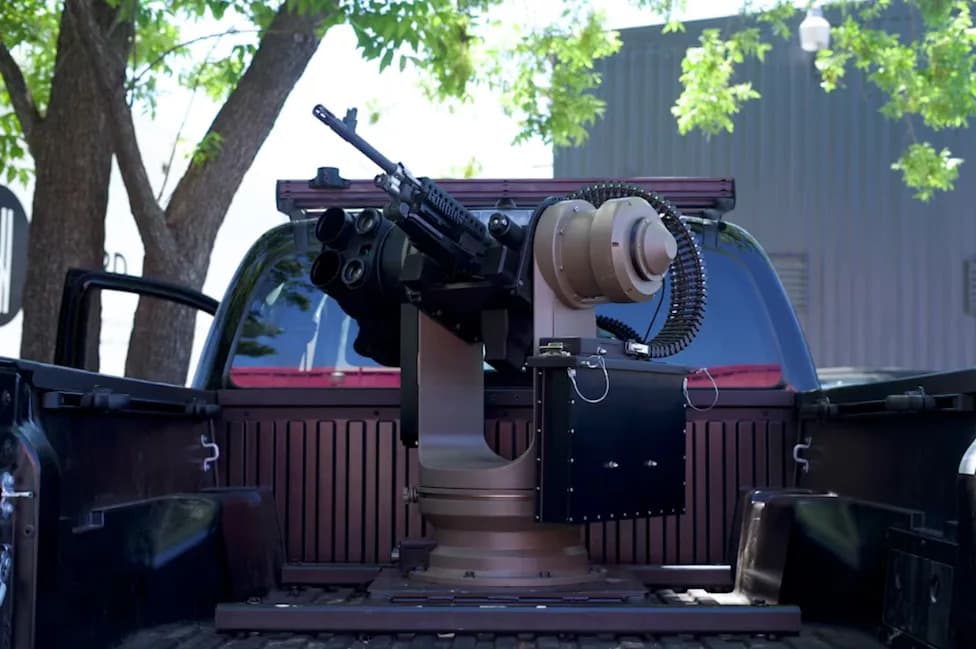
Image: Allen Control Systems
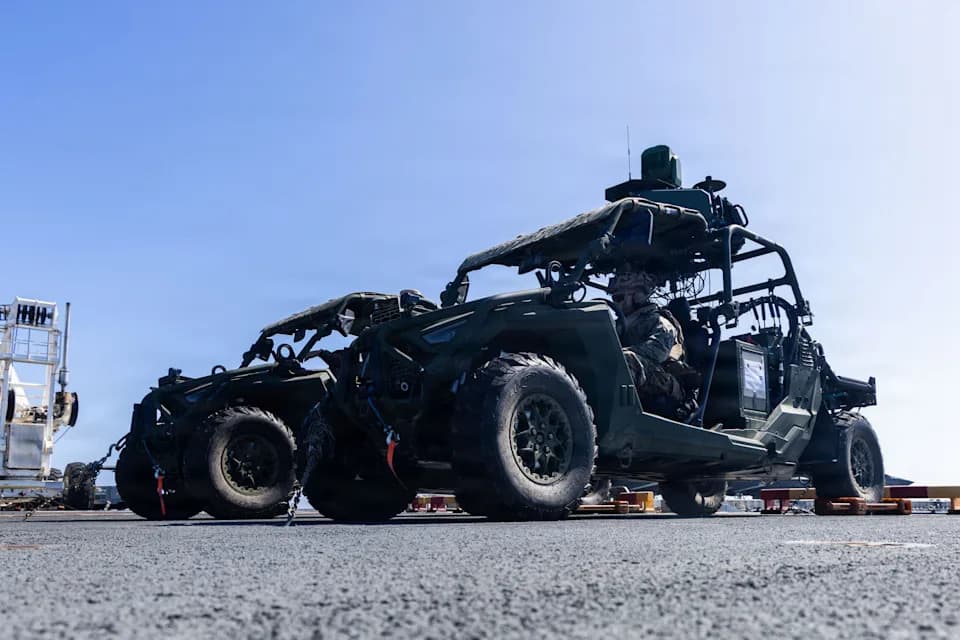
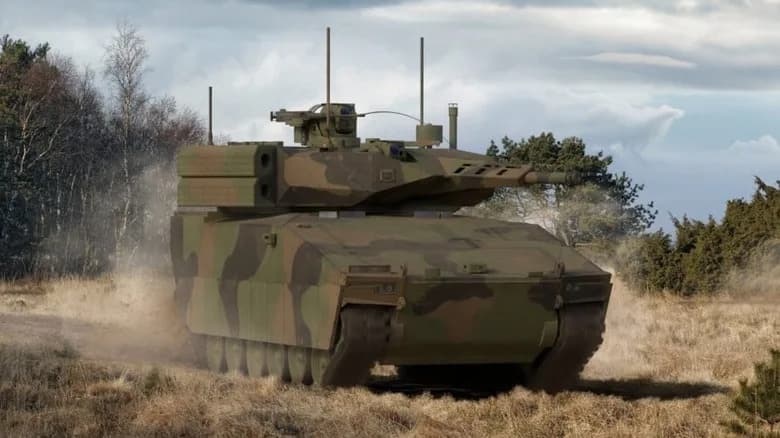
The U.S. Marine Corps has awarded a $6.2 million prototype contract to Allen Control Systems to integrate the Bullfrog M240 — an AI‑enabled, turreted machine‑gun system — onto its L‑MADIS mobile counter‑drone vehicles built on paired Polaris MRZR platforms. The system promises low‑cost drone engagements using standard ammunition and an automated target‑detection pipeline, but publicly available footage and specifications raise urgent policy and safety questions.
How the System Is Presented
Allen Control Systems markets the Bullfrog M240 as a “human on the loop” platform: the AI detects, classifies, tracks and acquires targets, then presents a firing recommendation to a human operator who must authorize each shot. The company highlights a claimed cost per engagement of roughly $10 when firing conventional 7.62mm rounds, and published figures list the system at about 300 pounds with a maximum cyclic rate up to 850 rounds per minute and an effective engagement envelope near 800 meters against Group 1–3 unmanned aerial systems (UAS).
What Company Footage Appears To Show
Video attributed to the manufacturer reportedly shows Bullfrog transitioning from tracking aerial objects to acquiring ground targets. In those clips, there are no visible software guardrails demonstrating that the system will treat people differently from drones, nor has Allen Control Systems publicly explained whether or how it prevents the AI from classifying or recommending human targets.
Weapons Variants And Scalability
Bullfrog is presented as a modular platform. Beyond the 7.62mm M240, variants displayed include heavier mounts such as the M2 .50‑caliber, the M230 chain gun and the M134 minigun. That modularity increases the system’s lethality and broadens the operational and ethical stakes: a workflow that may be arguable for small‑caliber rounds becomes far more consequential with heavier weapons.
Policy And Ethical Concerns
DoD Directive 3000.09 requires autonomous and semi‑autonomous weapon systems to allow "appropriate human judgment over the use of force."
That requirement invites a hard question: does a single operator keystroke — made under stress after an AI flags a target — constitute “appropriate human judgment”? In a worst‑case scenario, one keystroke could authorize sustained fire from a weapon cycling at roughly 14 rounds per second, a dynamic critics compare to the controversial responsibility gap seen in debates over advanced driver‑assist systems like Tesla Autopilot. The human remains the formal decision‑maker, while the AI handles sensing and candidate selection.
What’s Missing Publicly
Public reporting and company materials leave several gaps: detailed descriptions of software safeguards, rules‑of‑engagement integration, target‑classification confidence thresholds, operator workload studies, and third‑party testing results. Allen Control Systems has not publicly addressed whether their model explicitly prevents person‑level targeting or how it validates classification accuracy in cluttered, mixed aerial/ground environments.
Why This Matters
The Bullfrog platform shows how autonomy can cut costs and speed responses against small UAS, but those same attributes can complicate accountability and compliance with DoD policy when the system’s perception and authorization pipelines are opaque. As Bullfrog scales across calibers and roles, procurement officials and commanders will need clearer standards and evidence that human judgment remains meaningful in practice — not only in theory.
Bottom Line
The Bullfrog M240 may offer an economical counter‑UAS capability, but footage suggesting the AI can shift to acquiring ground targets — combined with limited public disclosure on safeguards — makes answering policy and safety questions essential before wider deployment.
Help us improve.