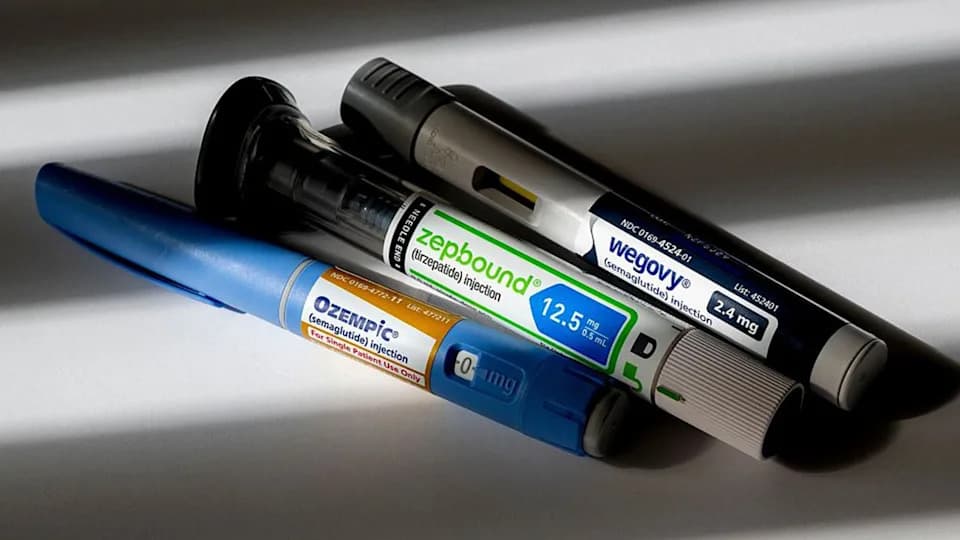
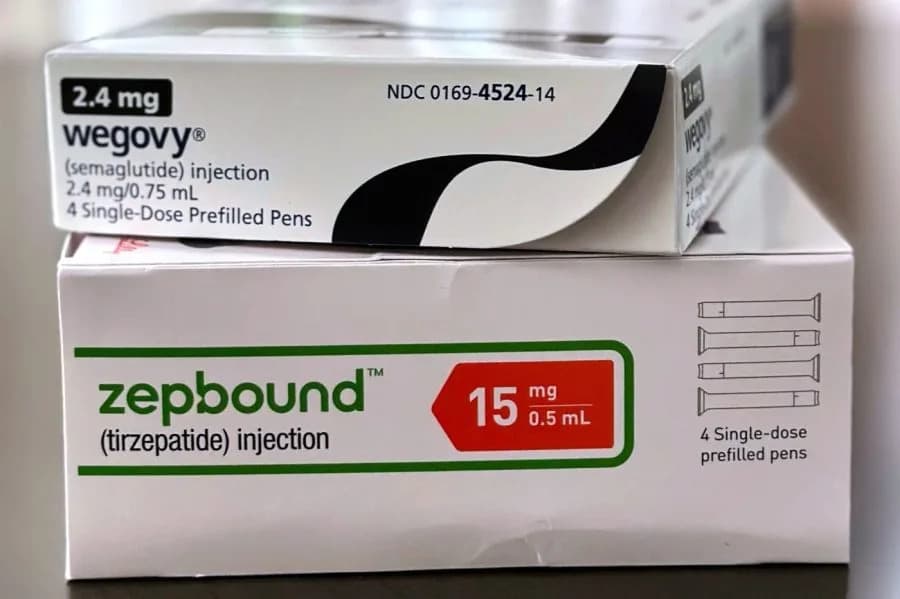
Recent studies indicate a small but statistically significant association between GLP‑1 medications and new-onset hair loss. In a BMJ analysis, GLP‑1 users had 37% higher odds of alopecia versus SGLT‑2 users and 68% higher odds versus DPP‑4 users at two-plus years, though absolute rates remained low (about 3–9 per 1,000 person‑years). A global dermatology study and a large preprint comparing tirzepatide and semaglutide suggest tirzepatide may carry a higher risk. Researchers note hair loss often coincides with weight loss and is often reversible, but hormonal or autoimmune factors may also contribute, supporting individualized counseling and monitoring.
Small But Real Risk: Studies Link GLP‑1 Diabetes and Obesity Drugs to Hair Loss — Tirzepatide May Carry Higher Risk
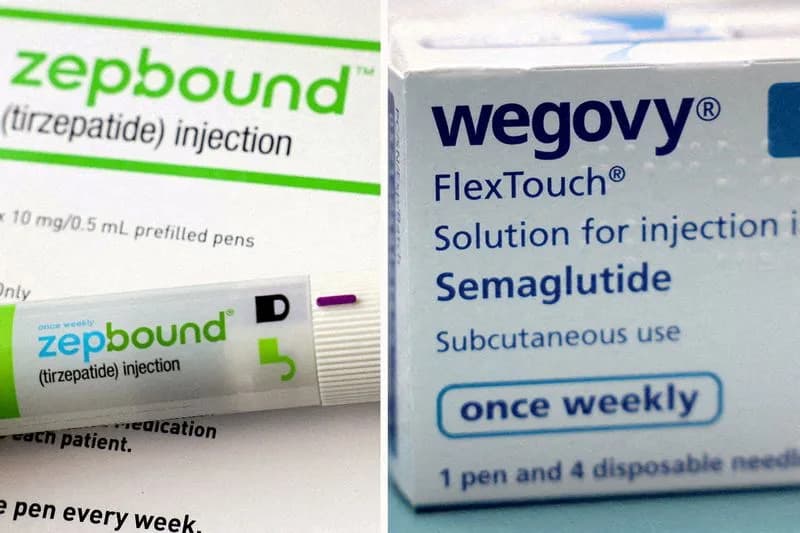
FILE PHOTO: A combination image shows an injection pen of Zepbound, Eli Lilly's weight loss drug, and boxes of Wegovy, made by Novo Nordisk. REUTERS/Hollie Adams/Brendan McDermid/Combination/File Photo/File Photo
New research shows that hair loss (alopecia) is an uncommon but measurable side effect of GLP‑1 receptor agonists used to treat obesity and type 2 diabetes. Multiple studies — including a BMJ analysis, a global dermatology study, and a direct comparison published as a preprint — report higher odds of new-onset alopecia in GLP‑1 users than in patients taking some other diabetes medications.
Key Findings
Higher Relative Odds, But Low Absolute Rates: In a University of Pennsylvania study reported in The BMJ, patients on GLP‑1 drugs had 37% higher odds of a new alopecia diagnosis than users of SGLT‑2 drugs and 68% higher odds than users of DPP‑4 inhibitors at two or more years after starting treatment. Despite these relative increases, absolute rates were low — roughly 3 to 9 cases per 1,000 people per year.
Large Cohorts and Supporting Analyses: Each drug-class comparison in the BMJ study included about 11,000–15,000 patients. A separate analysis published in the Journal of the American Academy of Dermatology, drawing on data from more than one million people worldwide, also found higher risks for several alopecia subtypes among GLP‑1 users compared with metformin.
Comparing Drugs Within the GLP‑1 Class
A Cambridge, Massachusetts analytics firm, nference, compared tirzepatide (marketed as Mounjaro and Zepbound) and semaglutide (marketed as Wegovy and Ozempic). In that preprint, new-onset alopecia occurred in 4.24% of tirzepatide patients versus 3.33% of semaglutide patients; among female users the rates were 5.44% versus 3.63%, respectively. The nference team noted the increased risk with tirzepatide persisted regardless of amount of weight lost or drug dose, suggesting mechanisms beyond weight-loss–related shedding may be involved.
Possible Explanations and Clinical Implications
All three papers emphasize that hair shedding often accompanies rapid weight loss and is frequently reversible. However, the nference analysis also found higher alopecia likelihood in patients with thyroid disease or other endocrine disorders, raising the possibility that baseline hormonal, autoimmune or dermatologic factors could contribute.
“This supports more individualized counseling and surveillance rather than a generic message that weight loss itself inevitably causes hair loss,” said Venky Soundararajan, who led the nference study.
What This Means For Patients and Clinicians: The overall risk of hair loss with GLP‑1 drugs is low, but clinicians should discuss the possibility with patients, especially those with known thyroid or autoimmune disorders. If hair loss occurs, it often improves as weight stabilizes or after stopping the medication; clinicians may consider assessing for other causes of alopecia before attributing it solely to GLP‑1 therapy.
Study Limitations
Not all findings are peer-reviewed (the tirzepatide vs semaglutide report is a preprint), and observational analyses cannot prove causation. Differences in patient populations, dosing, follow-up time, and how hair loss was diagnosed or recorded may affect results. Further prospective research is needed to clarify mechanisms, estimate risk across specific agents and doses, and identify susceptible patient groups.
Bottom Line: Hair loss with GLP‑1 drugs appears uncommon but more likely than with some other diabetes medications; tirzepatide may show a somewhat higher association than semaglutide. Patients should be counseled individually, especially if they have preexisting endocrine or autoimmune conditions.
Help us improve.