The Confederate submarine H.L. Hunley sank the Union warship USS Housatonic but was lost with its eight-man crew. When the Hunley was raised in 2000, each crewman was found seated at his station, not attempting escape. A 2017 PLOS One study from researchers affiliated with Duke used experiments on a 1/6-scale model to show that the 135-lb spar-mounted black powder charge could have produced a lethal secondary blast inside the Hunley. While the lung-blast hypothesis plausibly explains the crew’s seated positions, the Navy and conservation groups have not universally endorsed it.
How the H.L. Hunley’s Own Torpedo Likely Killed Its Crew — The Mystery of the Silent Submarine

The Navy Found a Sunken Sub's Dead Crew.Marcoriveroph - Getty Images
The Confederate submarine H.L. Hunley made history as the first combat sub to sink an enemy warship, but it vanished along with its eight-man crew the same night it attacked the Union sloop USS Housatonic in Charleston Harbor. When the iron vessel was raised more than a century later, conservators found the crew eerily seated at their stations, not clustered at exits or attempting escape. A scientific study published in 2017 offers a compelling explanation.
Discovery and Recovery
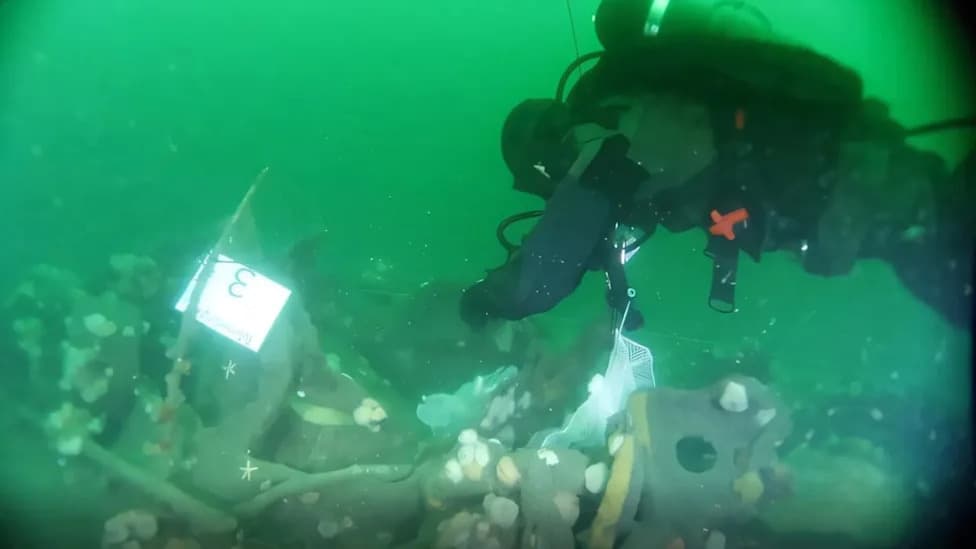
After more than 100 years on the seafloor, the Hunley was located in 1995 by a civilian search led by the National Underwater and Marine Agency (NUMA) and field-directed by underwater archaeologist Ralph Wilbanks. The submarine was raised in 2000, and during conservation researchers revealed the remains of Lieutenant George E. Dixon and seven crewmen still seated at their posts.
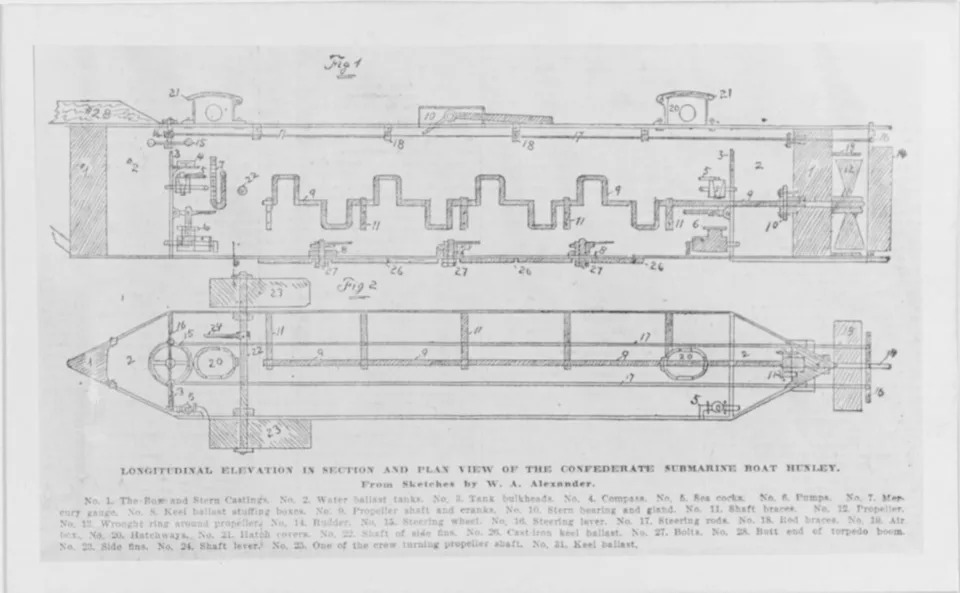
Inboard profile and plan drawings from sketches by W.A. Alexander, who directed theHunley's constructionU.S. Naval History and Heritage Command
The Unsettling Arrangement
Conservators expected frantic scenes of men clustered around hatches as seen in many modern submarine disasters. Instead, each crewman was found upright and immobile at his station. Smithsonian Magazine reported the scene as almost serene, a discovery that deepened the mystery: if the Hunley was sinking, why did none of the men try to escape?
The 2017 Study and the Lung-Blast Hypothesis
Researchers affiliated with Duke University proposed an answer in a PLOS One paper (2017). The Hunley used a 135-lb black powder charge mounted on a spar roughly 16 feet ahead of its bow rather than a self-propelled torpedo. When that charge detonated against the Housatonic, it produced a powerful underwater blast that could travel back through the water and into the Hunley’s hull.
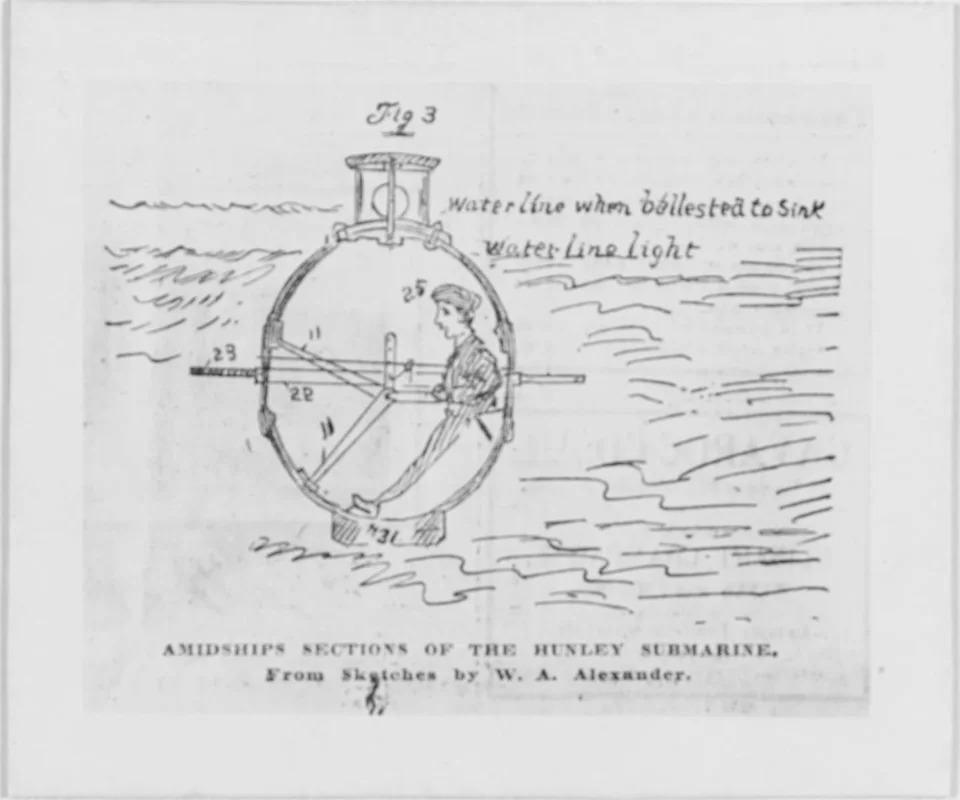
Midships section drawing from sketches by W.A. Alexander, who directed theHunley's constructionU.S. Naval History and Heritage Command
Graduate student Rachel M. Lance built a 1/6-scale model of the Hunley to measure underwater blast effects and hull flexion. Combining those measurements with archival data, the team concluded the secondary blast likely produced a very strong pressure wave inside the submarine — a lung-impacting shock (often described as a 'lung blast') — sufficient to render the crew unconscious or kill them almost instantly. The researchers estimated survival odds of under 16% for each crew member in that scenario.
Debate and Cautions
Not everyone accepts the lung-blast hypothesis as definitive. The U.S. Navy and organizations involved with the Hunley’s conservation have not formally endorsed it as the sole cause of death. Alternative theories exist, and the limited physical evidence combined with uncertainties in blast modeling mean the explanation, while plausible, is not universally settled.
“Each man was still seated peacefully at his station,” Smithsonian Magazine observed — a scene the lung-blast model can plausibly explain by showing the crew incapacitated before any escape attempts could be made.
Conclusion
If the 2017 findings are accurate, the Hunley’s crew died instantly as a direct consequence of the weapon they used to sink the Housatonic — men who secured a grim but important place in naval history by perishing at their posts. The debate remains open, but the lung-blast hypothesis provides the clearest explanation to date for one of the Civil War’s most haunting mysteries.
Help us improve.