The SS Richard Montgomery sank in the Thames Estuary in 1944 while carrying around 7,000 tonnes of wartime stores and is still believed to contain roughly 1,400 tonnes of explosive material. A recent £9.5m operation removed the ship's last decaying masts to reduce the short‑term risk, but authorities stress the danger from unexploded ordnance has not been eliminated. The Maritime and Coastguard Agency continues regular monitoring, while experts remain divided on the potential scale of any explosion.
SS Richard Montgomery: Masts Removed From Bomb‑Laden Wreck — Risk Persists
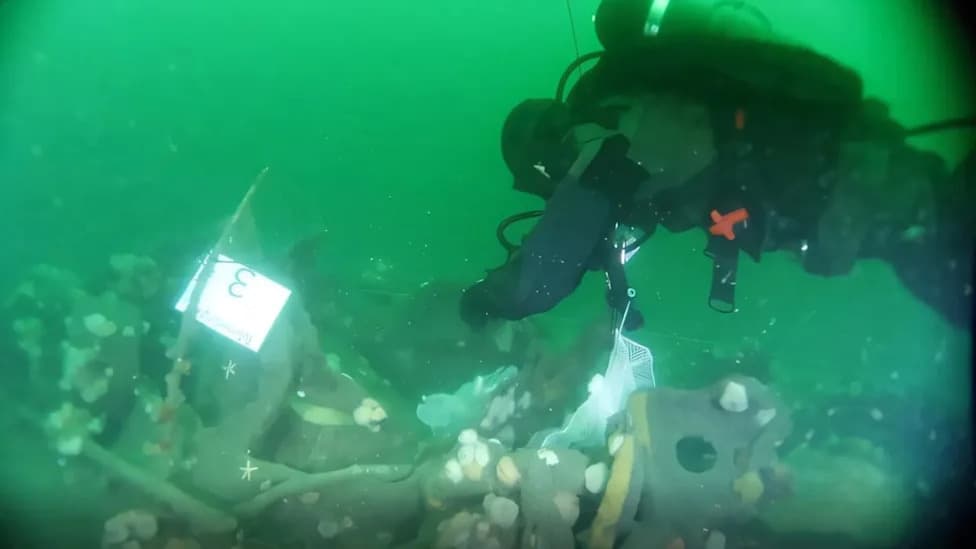
Engineers worked underwater to remove the masts from the wreck in September [PA Media]
Shipwrecked in the Thames Estuary since 1944, the SS Richard Montgomery remains one of the most striking and unsettling relics of the Second World War: a Liberty ship that sank while carrying thousands of tonnes of munitions and is still believed to contain a large explosive load.
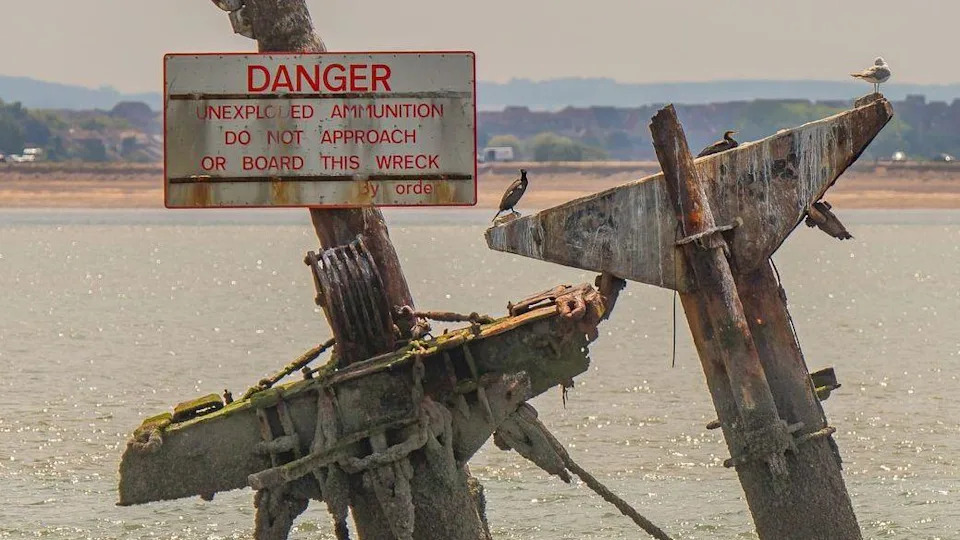
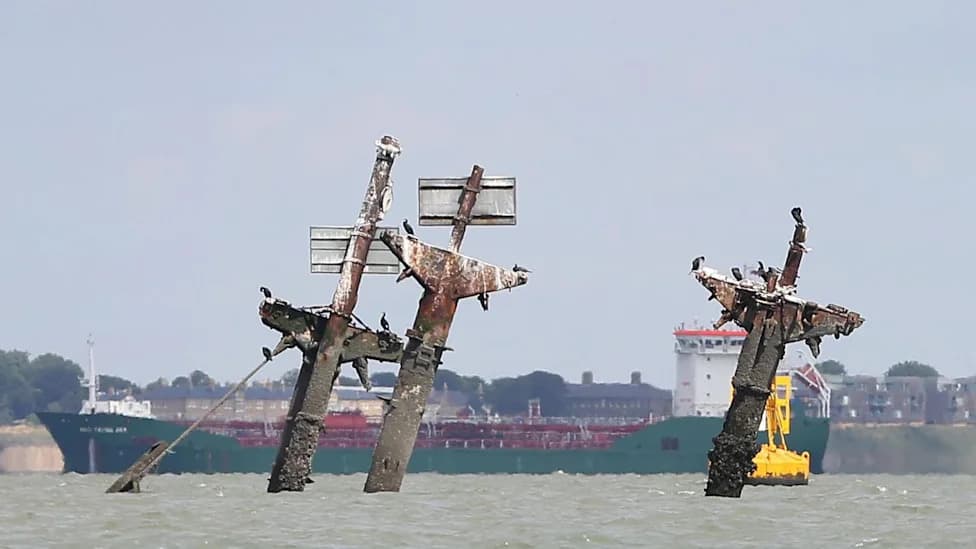
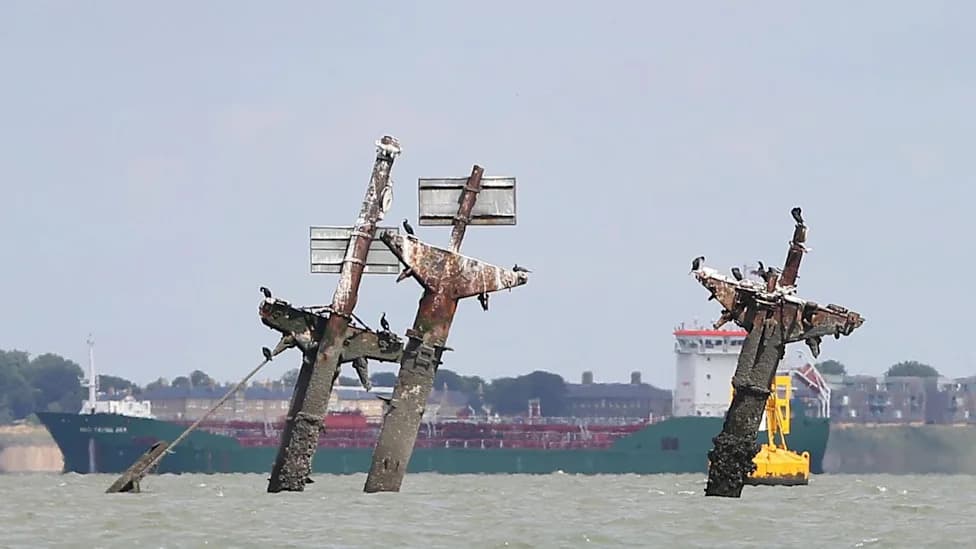
The wreck remains surrounded by an exclusion zone in the Thames Estuary [Getty Images]
Background
The Montgomery was a US-built "Liberty" ship completed in 1943 to transport supplies for Allied forces. In August 1944 she arrived in the Thames Estuary bound for Cherbourg loaded with about 7,000 tonnes of wartime stores. Ordered to anchor off Sheerness, Kent, she dragged anchor overnight on 20 August and grounded on a sandbank. The hull split and salvage teams were forced to abandon complete recovery after flooding made further operations unsafe.
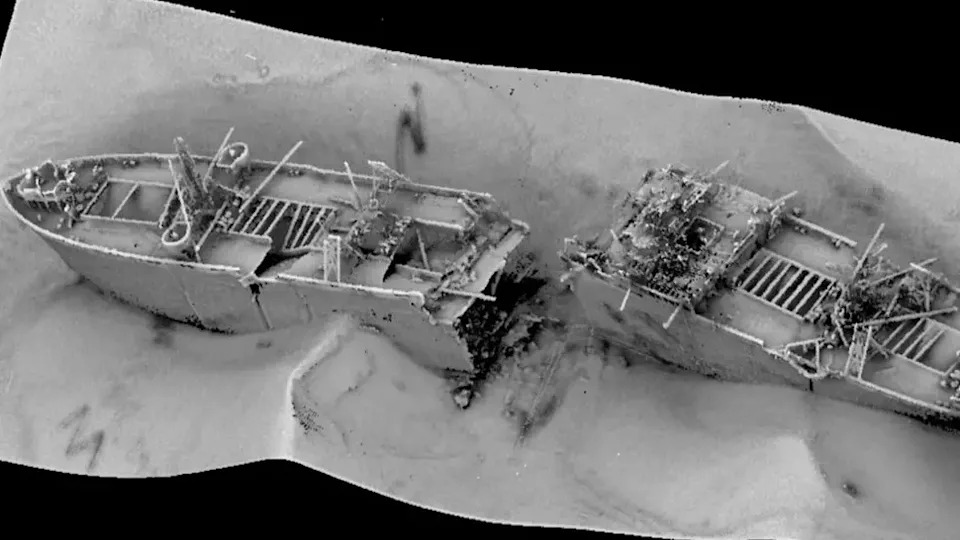
The impact of striking the sandbank caused the hull to split in half [Maritime & Coastguard Agency]
What Remains Aboard
Official inventories and historical reports indicate the wreck still holds a substantial and varied explosives load. Estimates commonly cited include roughly 1,400 tonnes of explosive material within the wider 7,000 tonnes of ordnance and stores. The cargo reportedly included about 2,000 cases of cluster munitions, nearly 600 bombs of 500lb each and more than 1,000 bombs of 1,000lb, alongside other military equipment.
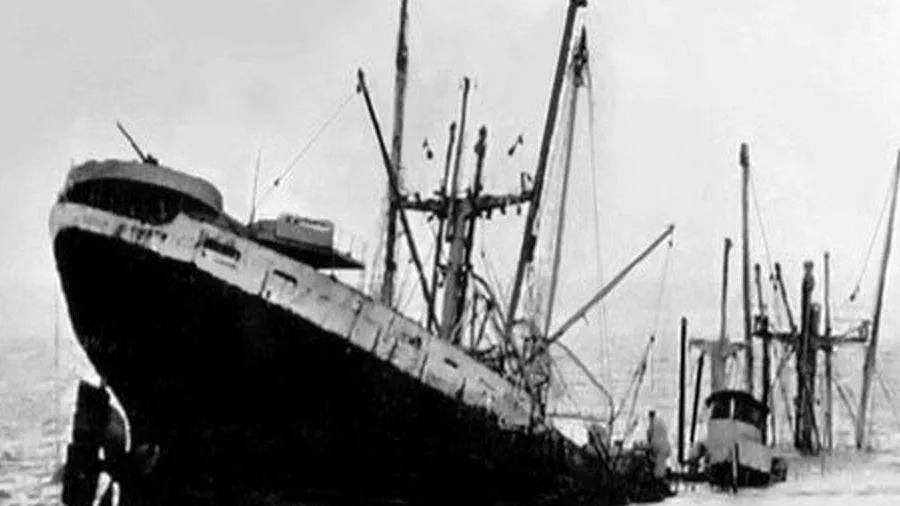
The ship's final moments were captured in this photograph [Supplied]
Recent Removal of Masts
This week engineers completed a long‑planned £9.5m project to remove the ship's last masts, which had been visibly protruding from the water and were deteriorating. Crane-supported teams cut and lifted the poles onto a barge after warning they might topple and risk disturbing the explosives below. Nolan Colan, the project lead, said acting before structural failure was "really important."
Historian Margaret McEwan: "The masts might be gone, but the problem still exists."
Risk Assessments and Monitoring
The Maritime and Coastguard Agency (MCA) describes the chance of a major detonation as "remote" and conducts regular surveys of the wreck and its environment. Past modelling — including government tests in 1970 and later scientific analyses — suggested that a very large explosion could hurl debris and mud hundreds of metres and create a powerful shock wave capable of breaking windows in nearby towns and producing significant waves. However, outcomes are uncertain and experts disagree about the likely scale of any blast.
Heritage, Tourism and Exclusion Zone
The wreck remains ringed by an exclusion zone marked with yellow buoys, but it continues to draw attention. Commercial skippers run sightseeing trips close to the site, and local residents remember the masts as a familiar landmark. While the mast removal reduces one near‑term risk, authorities and historians warn the underlying hazard — the unexploded ordnance within the wreck — continues to require monitoring and caution.
What Comes Next: Regular MCA surveys will continue and officials say any change in the wreck's condition will be investigated promptly. For now, the wreck stands as both a heritage site and a long‑term safety challenge for coastal communities and maritime authorities.
Help us improve.