The hatching of two scarlet macaw chicks in Brazil's Atlantic Forest is the first confirmed breeding there in over 200 years, signaling a major conservation milestone. Rescued birds were rehabilitated to relearn survival skills and carefully reintroduced into restored habitat. As keystone seed dispersers, macaws can help regenerate fragmented forest, but lasting recovery requires protected corridors, continued monitoring, and action against habitat loss and wildlife trafficking.
Hope Returns: Scarlet Macaws Breed in Brazil’s Atlantic Forest After 200 Years
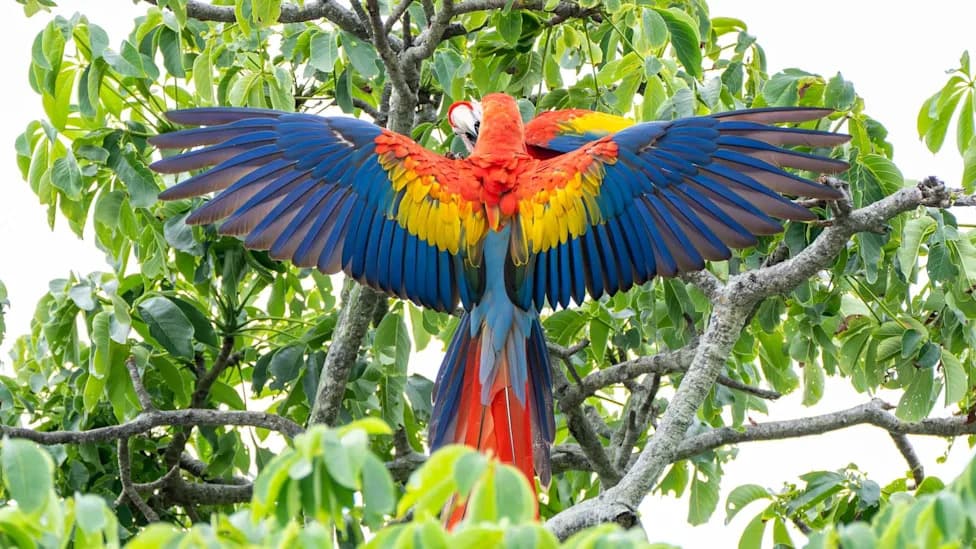
Photo Credit: iStock
The recent hatching of two scarlet macaw chicks in Brazil's Atlantic Forest marks a landmark conservation success: for the first time in more than 200 years, these iconic birds are breeding again in this region.
A Fragile but Promising Rebound. Although only two chicks have been confirmed so far, their births indicate that reintroduced macaws are not merely surviving—they are resuming natural behaviors such as nesting and rearing young. That shift is the clearest signal yet that restoration efforts can re-establish self-sustaining populations.
Rescue, Rehabilitation, Release
Many of the macaws now in the forest were originally seized from the illegal wildlife trade and spent years in captivity before joining a reintroduction program. Conservation teams carried out intensive rehabilitation so the birds could relearn core survival skills: long-distance flight, locating and recognizing natural foods, responding to predators and human threats, and social behaviors typical of wild macaws.
Why the Return Matters
Scarlet macaws are keystone frugivores: by carrying and dropping seeds across large areas, they help regenerate forest patches, support plant diversity, and strengthen ecosystem resilience. In the highly fragmented Atlantic Forest, improved seed dispersal can help restore habitat connectivity, boost biodiversity and sustain ecosystem services that local communities depend on—such as clean water, fertile soils and shade that reduces heat stress.
Conservation Actions Still Needed
Release is only the first step. Conservationists are rebuilding and protecting green corridors so birds and other wildlife can move, feed and breed without becoming isolated. Ongoing monitoring tracks survival and breeding success, while habitat protection and stronger efforts against trafficking address the root causes that drove macaws from the region.
"Two chicks do not erase two centuries of loss, but they offer concrete evidence that recovery is possible when coordinated conservation, habitat restoration and community support come together."
When reintroduction programs succeed, benefits ripple outward—supporting local economies, offering education opportunities, and fostering community pride in protecting native wildlife. The macaws' return is therefore both an ecological and social milestone for the Atlantic Forest.
Source note: Conservation teams and public reporting, including documentary coverage, have highlighted the role of rescued birds and targeted restoration work in making this breeding success possible.
Help us improve.