The study presents a patient-derived Colon Chip that recreates key features of inflammatory bowel disease by integrating epithelial cells, stromal fibroblasts, immune cells and peristalsis-like mechanical forces. Fibroblasts from IBD patients were sufficient to induce barrier breakdown, inflammation and fibrosis in otherwise healthy epithelial tissue. Mechanical stretching and pregnancy-related hormones amplified these disease responses, and exposure to a carcinogen revealed stronger early cancer-associated changes in IBD-derived chips.
Patient-Derived 'Colon Chip' Recreates IBD — Fibroblasts Identified As Key Drivers Of Inflammation And Early Cancer Risk
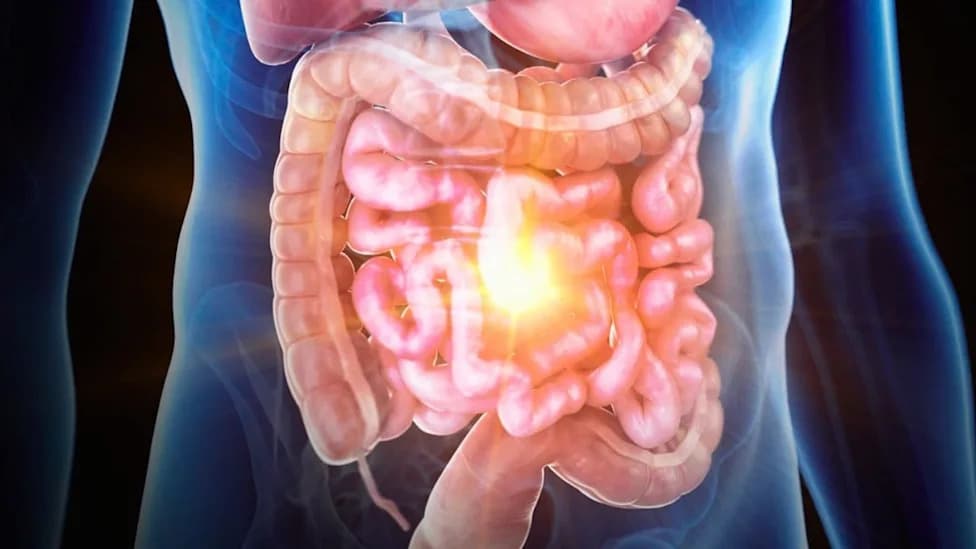
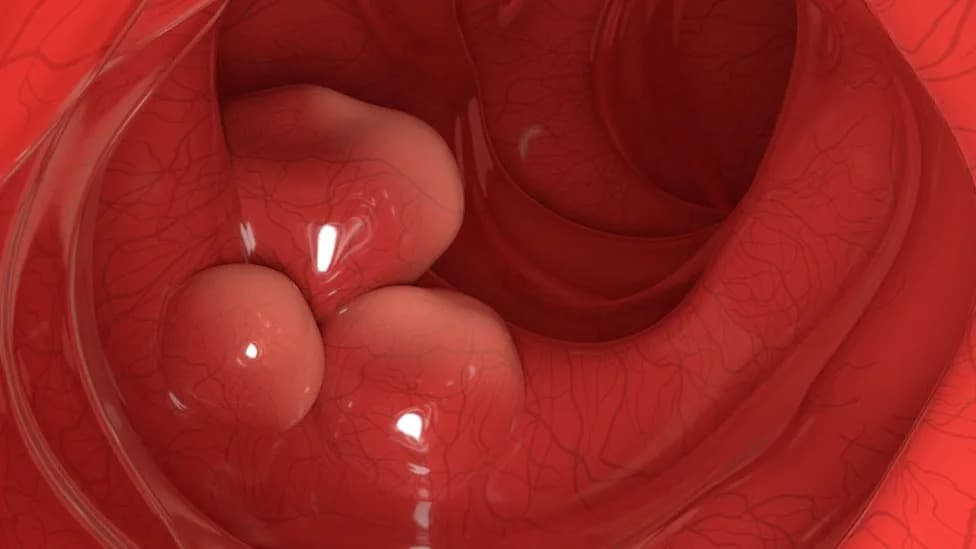
A computer illustration of an inflamed digestive system. (Science Photo Library/Canva)
Inflammatory bowel disease (IBD) affects millions worldwide, yet researchers still lack a clear, integrative model to explain how chronic gut inflammation begins, progresses and increases colorectal cancer risk. A study published in Nature Biomedical Engineering introduces a patient-derived microdevice — a Colon Chip — that combines matched human epithelial cells, stromal fibroblasts, circulating immune cells and peristalsis-like mechanical forces to recreate many hallmarks of IBD in vitro.
Led by bioengineer Alican Özkan at Harvard University, the team built chips using cells donated by people with Crohn's disease and ulcerative colitis. The device reproduced disease exacerbations reported in certain clinical settings (including pregnancy-related flare-ups) and permitted experiments that are difficult or impossible with conventional organoids or animal models.
Fibroblasts Drive Disease-Like Changes. One surprising finding was the active role of fibroblasts — connective-tissue cells typically associated with structural support and repair. Fibroblasts isolated from IBD patients induced disease-like behavior when co-cultured with otherwise healthy intestinal epithelial cells from the same donors. Exposed epithelial layers showed a leakier barrier and heightened inflammatory responses, implicating stromal fibroblasts as important drivers of tissue dysfunction in IBD.
Mechanical Forces And Hormones Amplify Responses. By recreating gentle stretching that mimics peristalsis, the researchers observed stronger inflammatory and fibrotic responses in chips derived from IBD tissue. Exposure to pregnancy-related hormones similarly intensified inflammation and increased collagen deposition, linking mechanical and hormonal factors to worsening tissue scarring (fibrosis) in susceptible samples.
Early Cancer Signals Are Stronger In Diseased Chips. To probe cancer susceptibility, the team treated both healthy- and IBD-derived chips with the carcinogen N-ethyl-N-nitrosourea (ENU). While both responded, chips built from IBD donors displayed substantially stronger early cancer–associated molecular changes. Crucially, healthy epithelial tissue only began expressing early cancer markers when grown alongside fibroblasts from IBD patients, suggesting stromal cells contribute to elevated colorectal cancer risk in IBD.
Implications And Future Directions. The Colon Chip offers a flexible, fully human platform for isolating and combining disease drivers — epithelial, stromal and immune components under physiological mechanical conditions — enabling mechanistic studies and drug testing that better reflect human biology. The findings highlight fibroblasts as potential therapeutic targets to limit inflammation, barrier breakdown and fibrosis, and to reduce long-term cancer risk. Further work will be needed to validate these results across larger patient cohorts and to translate them into clinical interventions.
Study Source: Nature Biomedical Engineering. Corresponding author and lead statements quoted from Alican Özkan and related ScienceAlert coverage.
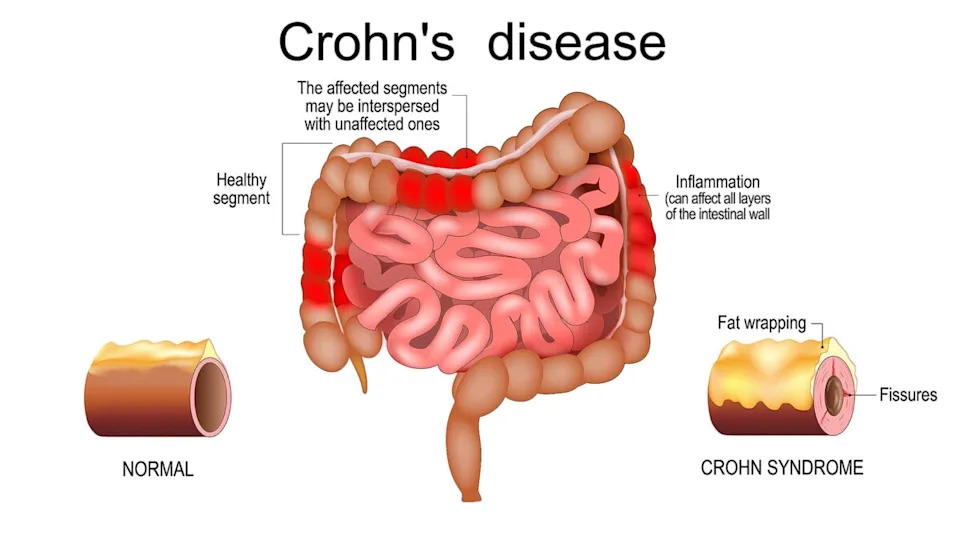
Crohn's disease is an inflammation of the intestinal wall, and one of the two main types of IBD. (CDC)

YouTube Thumbnail
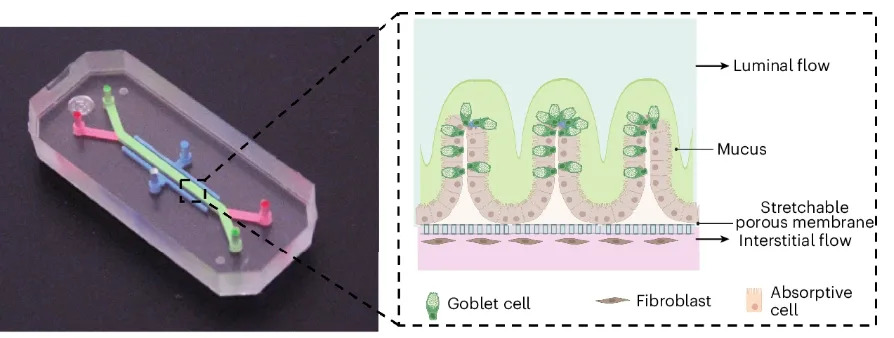
The researchers added patient-derived cells to a commercially available chip device (left) to recreate features of IBD in the lab. (Özkan et al.,Nat. Biomed. Eng., 2026/Wyss Institute at Harvard University)

YouTube Thumbnail
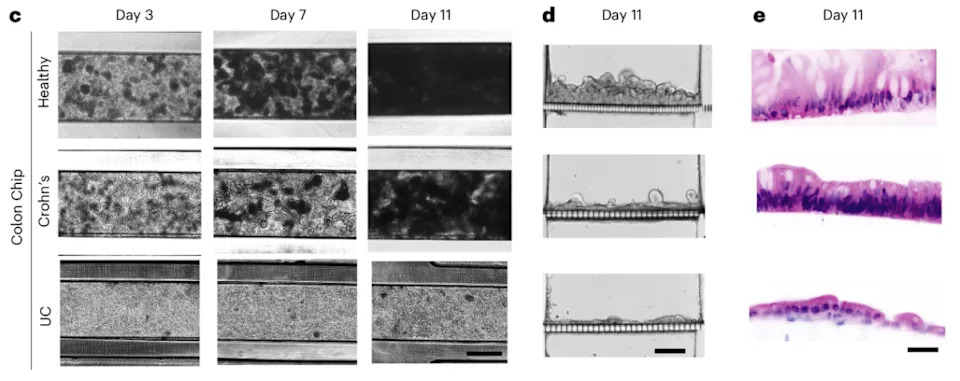
Compared with healthy cells, Colon Chips made using cells from individuals with Crohn's disease and ulcerative colitis produced less protective mucus (c) and had a thinner cell layer (e), mimicking features of IBD. (Özkan et al.,Nat. Biomed. Eng., 2026)

Subscribe to ScienceAlert's free fact-checked newsletter
Help us improve.