The Australian Army modified an M1A2 Abrams to resemble a Chinese Type 99 tank for OPFOR training at the School of Armour in Puckapunyal, Victoria. B Squadron, 3rd/4th Cavalry Regiment applied PLA-style digital camouflage, dummy turret fuel tanks and a pop-culture "Bing Chilling" slogan as part of the ROBC capstone exercise, Tungsten Forge/Gauntlet Strike. The conversion is visual only and supports target recognition and battlefield observation training as Australia fields 75 new M1A2 SEPv3 tanks under a ~$2.5 billion program.
Australian Army Paints M1A2 Abrams To Look Like Chinese Type 99 For OPFOR Training
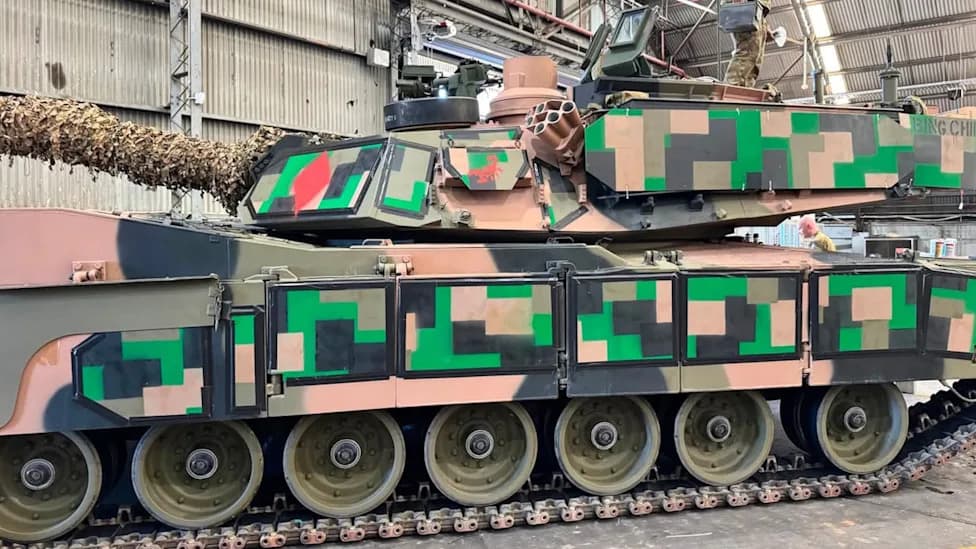
The Australian Army has shared photos showing one of its M1A2 Abrams outfitted as a surrogate enemy platform, specifically to represent a People’s Liberation Army main battle tank.
The Australian Army has published photographs showing an M1A2 Abrams visually modified to represent a People's Liberation Army (PLA) main battle tank for Opposing Force (OPFOR) training at the School of Armour in Puckapunyal, Victoria.
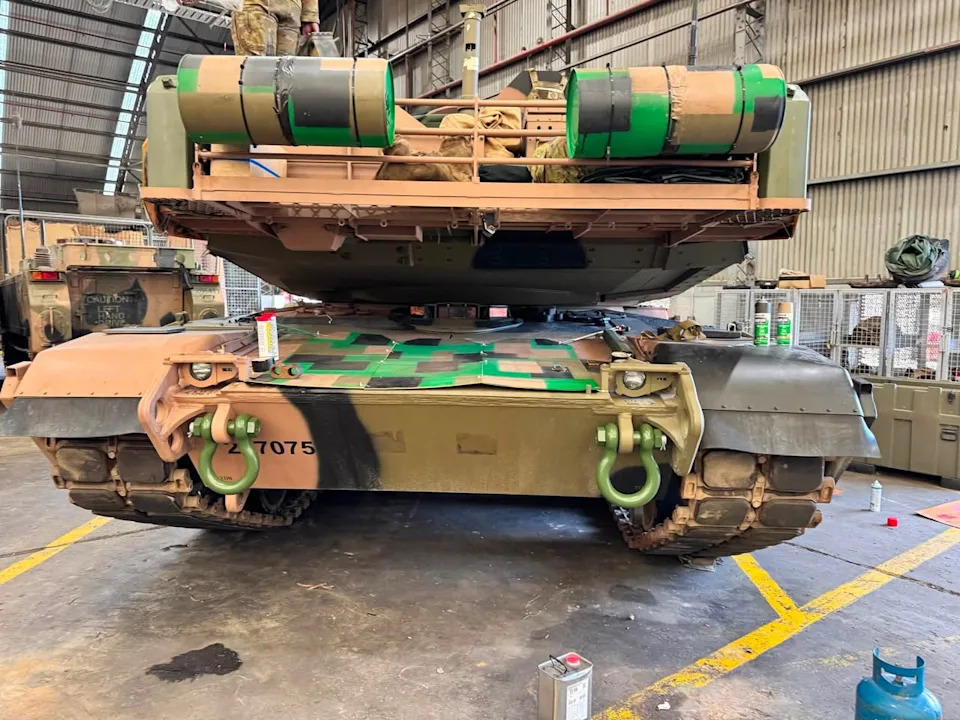
A view of the OPFOR Abrams showing the turret rear with dummy external fuel tanks.Australian Army School of Armor
What Was Done
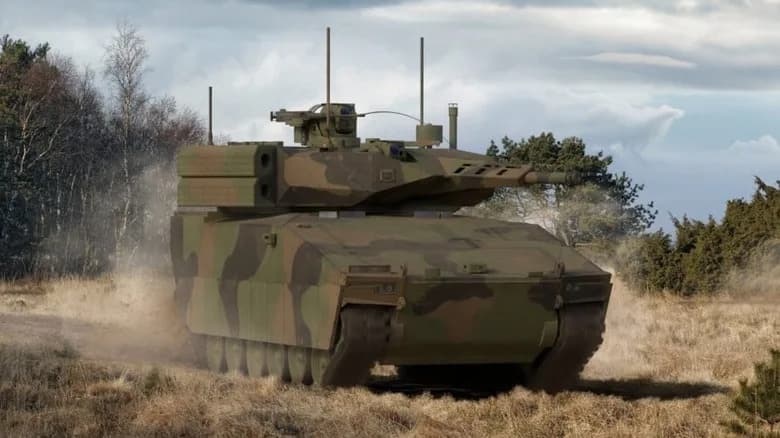
Soldiers from B Squadron, 3rd/4th Cavalry Regiment prepared the vehicle as the OPFOR element for the Royal Australian Armoured Corps Officer Basic Course (ROBC). The conversion is primarily cosmetic: a PLA-style digital camouflage pattern composed of large square blocks in four colours (including a bright green) has been applied over the Abrams’ standard three-tone paint, and dummy external fuel tanks have been mounted on the rear of the turret to evoke common Russian and Chinese stylistic cues. The turret side also appears to bear the phrase "Bing Chilling," a pop-culture reference to a viral John Cena video that jokingly uses the Mandarin words for "ice cream."
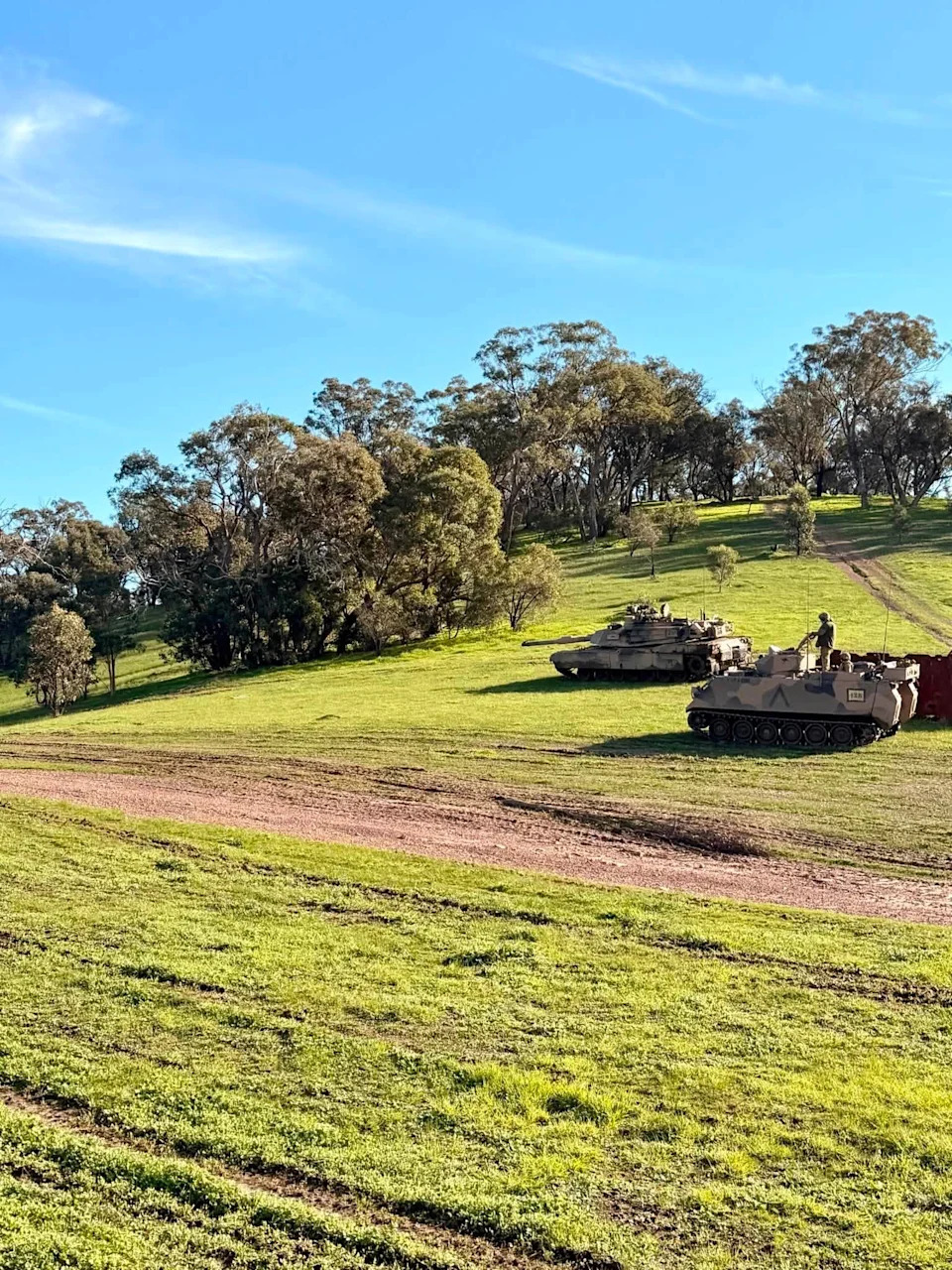
An Abrams and an M113 during the latest Tank Regimental Officers Basic Course (ROBC) and Mechanised Regimental Officers Course (MROC) recently conducted an integrated training activity in preparation for Exercise Tungsten Forge/Gauntlet Strike 2026.
Training Purpose
Surrogate platforms like this are designed to replicate the visual profile of potential adversary vehicles rather than their exact capabilities. Visually representative vehicles improve realism for target recognition, vehicle identification and battlefield observation during exercises. They can also be fitted with training systems — for example, the Instrumentable—Multiple Integrated Laser Engagement System (I-MILES) — to simulate firing effects and vulnerabilities without live rounds.
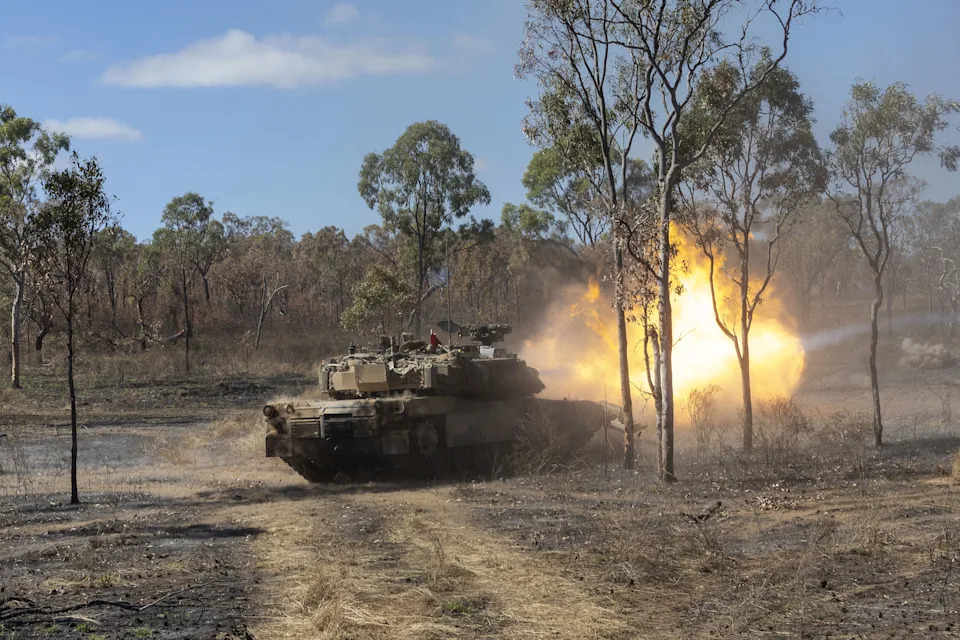
Australian Army soldiers from the 2nd Cavalry Regiment fire the M1A2 Abrams during Exercise Southern Jackaroo at Townsville Field Training Area, Queensland.Australian Department of DefensePTE Alli Craig
Exercise Context and Deliveries
The modified Abrams will appear in ROBC events that culminate in Exercise Tungsten Forge/Gauntlet Strike, a combined-arms tactical capstone for junior officers learning mechanized warfare and tank command. Australia is procuring 75 M1A2 SEPv3 Abrams tanks and associated armoured support vehicles under the Main Battle Tank Upgrade (LAND 907 Phase 2), a roughly $2.5 billion program. The first SEPv3 deliveries arrived in 2024. Australia previously acquired 59 M1A1 (AIM) tanks second‑hand from U.S. forces, and has also agreed to transfer 49 M1A1s to Ukraine.
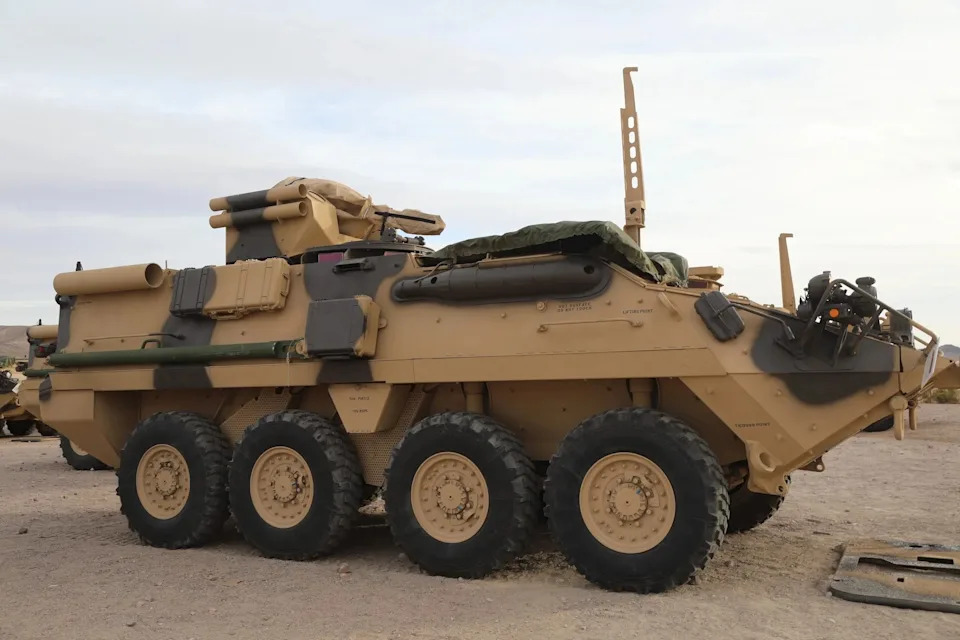
A U.S. Army Stryker-series vehicle meant to emulate a Russian BTR-87.11th Armored Cavalry Regiment
Strategic Significance
The use of a "Chinese-look" Abrams underscores Australia’s shift toward preparing for high-end conflict in the Indo-Pacific and training against peer threats. Australia’s 2023 Defence Strategic Review and subsequent National Defence Strategy emphasize deterrence by denial, long-range strike and interoperability with U.S. and regional partners. Modernization programs — from AUKUS submarine plans to investments in long-range and hypersonic strike and enhanced northern basing — are oriented around countering the PLA’s growing capabilities.
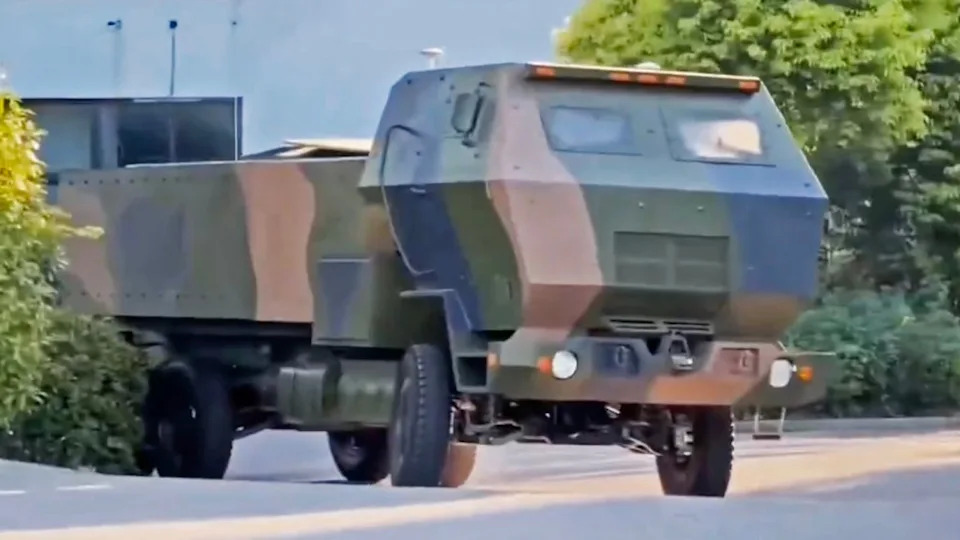
The Chinese HIMARS surrogate is built on an unidentified three-axle truck chassis and includes the distinctive HIMARS armored cabin as well as the six-round rocket launcher pod at the rear.via Xvia X
Global Practice
Using domestic platforms as VISMOD (visually modified) surrogates is standard practice worldwide. The U.S. Army’s National Training Center, for example, adapts M113s and Humvee-type vehicles to portray Russian-style T-72s and BTRs. The PLA also employs mock-ups and surrogate vehicles to rehearse scenarios involving Western systems; recent reports noted Chinese mock-ups resembling the U.S. M142 HIMARS shortly after HIMARS deliveries to Taiwan.
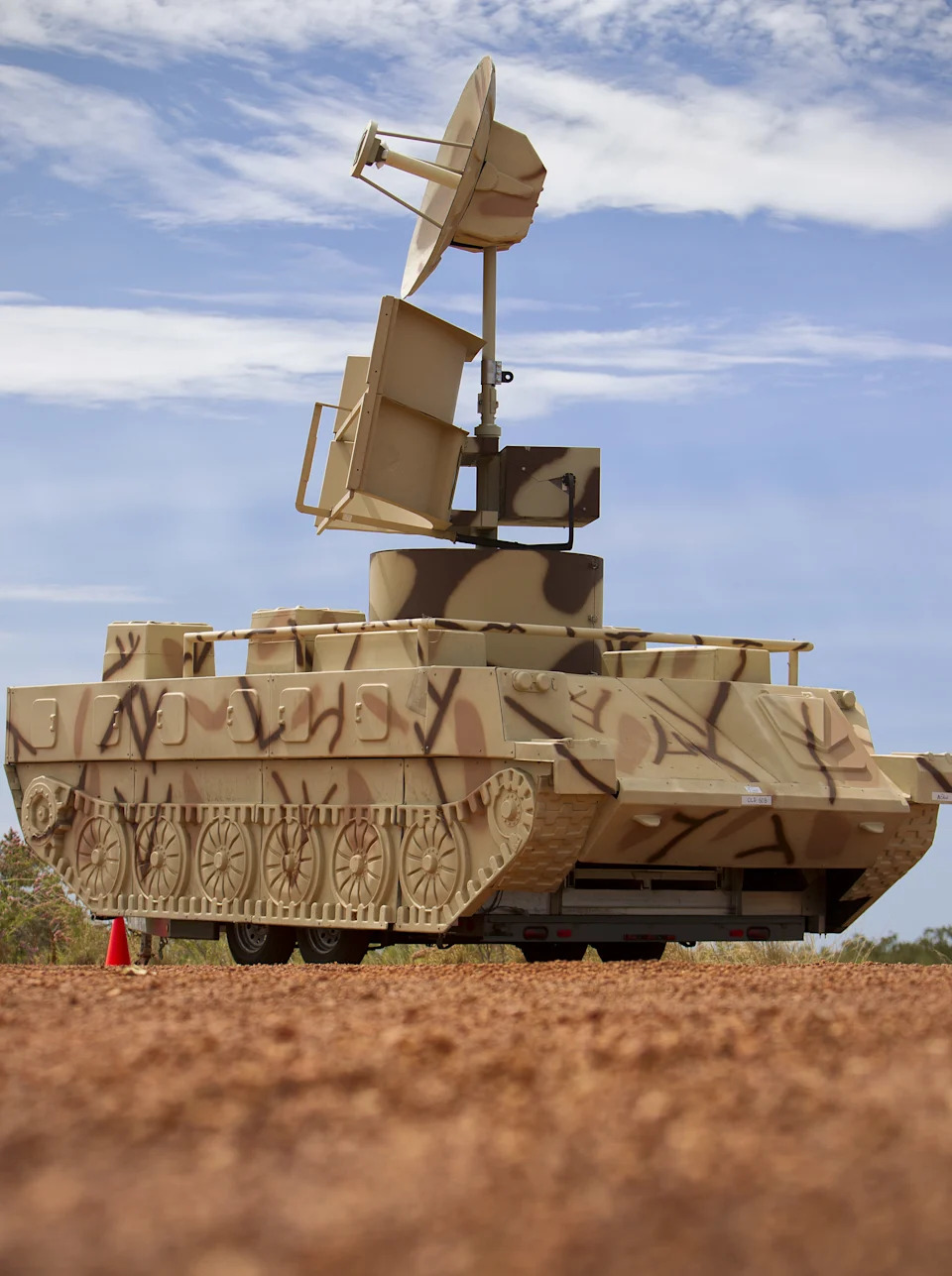
An Advanced Ground Threat Targeting System (AGTTS) used to simulate the radar from an SA-6 Gainful air defense system during Exercise Pitch Black 2010 in Australia.Australian Department of DefenseLAC Glynn Jones
Bottom line: The Australian Army’s cosmetic conversion of an M1A2 Abrams to a Type 99 look‑alike is a low‑risk, high‑benefit training measure that enhances visual realism in OPFOR exercises while allowing rapid restoration of frontline tanks to service.
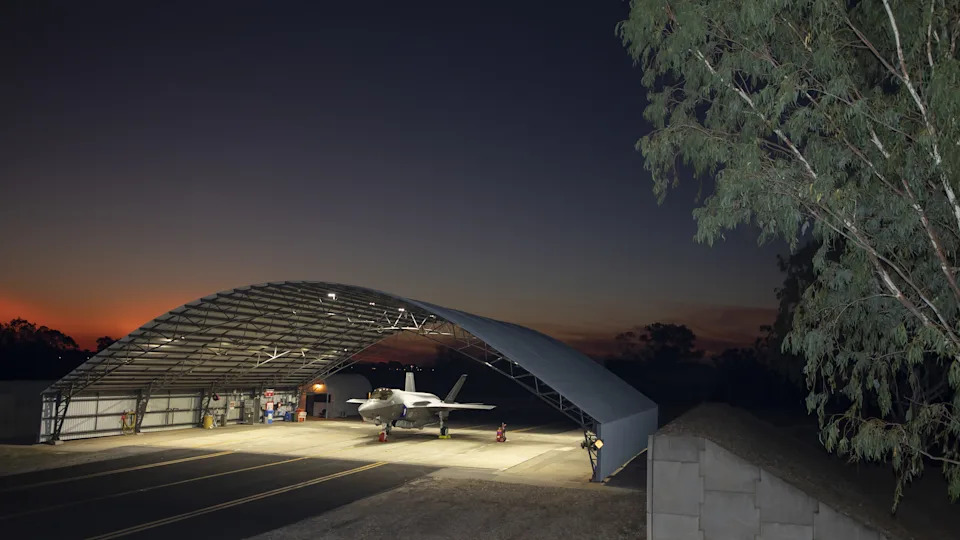
A Royal Australian Air Force F-35A in the hangar at sunset during Exercise Arnhem Thunder held at RAAF Base Tindal in the Northern Territory.Australian Department of DefenseSGT Pete Gammie
Contact the author: [email protected]
Help us improve.