Experts say President Trump and several aides use profanity publicly as a deliberate political tactic rather than mere private lapses. They argue coarse language signals authenticity, creates group identity, and channels supporters' anger while simplifying complex issues into emotional binaries. Scholars warn that overuse can desensitize the public, normalize contempt, and weaken language's ability to signal real crisis.
Why Trump’s Team Uses Profanity Publicly, Experts Say — And What It Achieves
Why Do Trump And Those In His Admin Curse So Much? Experts Have A Theory.
President Donald Trump and several senior aides have made coarse language a regular part of public communication, appearing across Truth Social posts, televised interviews, and statements by administration officials. Rather than isolated "hot mic" slips, experts tell HuffPost that this pattern looks deliberate and functions as a political strategy.
Public Swearing vs. Private Slips
Scholars note that many presidents have had private moments of profanity — Barack Obama and Joe Biden both had widely reported lapses, and Lyndon Johnson famously swore often. But Elvin Lim, founding dean of the College of Integrative Studies and a political science professor at Singapore Management University, emphasizes a key distinction: those cases were typically private or inadvertent, while the current pattern is front-stage and intentional.
What Experts Say It Does
Sam Martin, chair of the Frank Church Institute and a professor of political communication at Boise State University, argues that the Trump administration has made cursing a way of communicating directly with a chosen public. By using coarse language in public forums, leaders and aides can signal authenticity and align themselves with supporters who feel alienated by conventional elites.
“Swearing itself creates intimacy, and when it does that, it reinforces group identity,” Martin said, comparing the effect to adolescents bonding over taboo language.
Lim adds that profanity serves both personal and political functions for populist figures. It underscores an anti-establishment persona and channels the anger of a political base into a focused, emotional force. In this sense, profanity can operate as a personal political weapon.
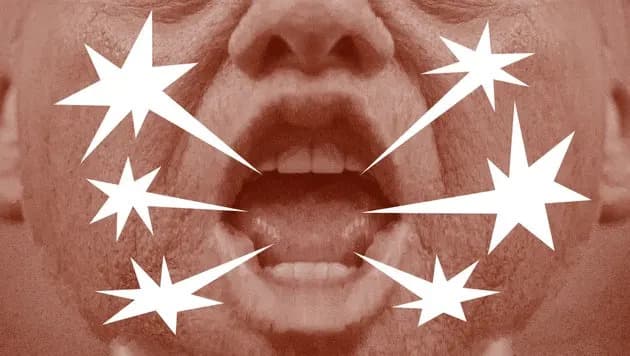
Trump's profanity serves a number of purposes, but is ultimately a way to galvanize his base.Illustration: HuffPost; Photos: Getty
How Profanity Shapes Political Messages
Experts say swearing compresses argument into emotion: four-letter words and blunt phrasing convey urgency, allegiance, and moral clarity while often sidestepping nuance. For example, a profane post about a complex foreign policy situation can reduce it to a simple binary of "us vs. them," eliding subtleties and discouraging deeper analysis.
That rhetorical compression can be effective for mobilization, but it has costs. Overuse of coarse language risks desensitizing the public to genuine crises and normalizing contempt and personal degradation as routine tools of presidential communication.
Historical Context And Modern Visibility
Lim draws a historical parallel to 19th-century partisan pamphlets and presses, which traded harsh personal attacks as a matter of course. What has changed is social tolerance for profanity and the erosion of the boundary between private and public registers: language once confined to informal settings now appears in professional, high-visibility spaces.
Bottom Line
Interviewed scholars conclude that Trump and some aides deploy profanity deliberately to project authenticity, reinforce group bonds, and simplify complex issues into emotionally charged messages. While this approach can strengthen partisan cohesion and energize supporters, it also risks weakening the communicative power of language and making contempt an accepted presidential tactic.
Reported examples cited by HuffPost include Trump's frequent use of explicit language on social media and in interviews, comments from aides such as JD Vance and Steven Cheung, and academic commentary from Lim and Martin. The analysis focuses on the rhetorical effects and democratic implications rather than endorsing or condemning specific language.
Help us improve.