The University of Pisa team built "Project Icarus," a paper glider nearly 23 feet long with a wingspan of just over 65 feet that flew about 200 feet on a single glide, earning a Guinness World Record. Constructed only from paper and glue, the craft debuted at the We Make Future expo on June 25 and beat a record held since 2013 by Germany's Braunschweig Institute of Technology. The project combined CAD design, extensive testing, and teamwork, and was documented by Science YouTuber Jakidale in Italian videos. Hobbyists can still try smaller, NASA‑endorsed paper plane designs.
University of Pisa Students Build World's Largest Paper Airplane — 65‑Foot Wingspan, 200‑Foot Glide
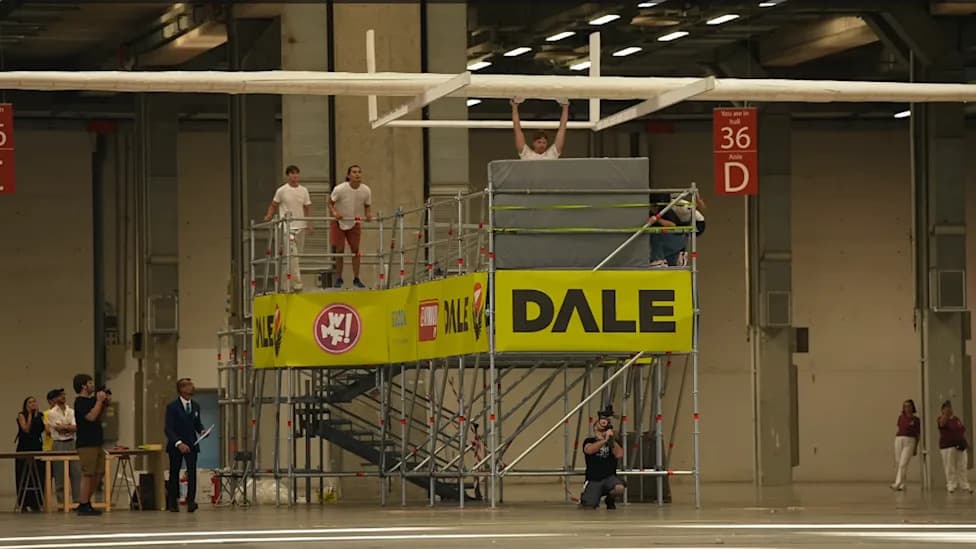
The students broke a previous record held for 13 years by Germany's Braunschweig Institute of Technology.
A team of students from the University of Pisa has constructed the largest paper airplane on record: a nearly 23‑foot‑long glider with a wingspan of just over 65 feet that flew roughly 200 feet in a single glide. Built only from paper and glue, the aircraft made its public debut at Italy's We Make Future expo on June 25 and earned recognition as a Guinness World Record.
From Classroom Joke to Record Breaker
What began as a pastime of folding paper between lessons evolved into "Project Icarus," a carefully engineered effort that combined hours of trial and error, CAD modeling, and repeated test flights. "We were students convinced that, with the right method, even a piece of paper could become real engineering," the team said. Their work surpassed a record that had stood since 2013, previously held by the Braunschweig Institute of Technology in Germany.
Design and Build
The giant plane was assembled using only paper and adhesive, and measured nearly 23 feet from nose to tail with a wingspan exceeding 65 feet. The team used CAD renderings and incremental testing to refine balance, lift, and structural strength so the lightweight craft could survive launch and sustain a long glide.
Documentation: Science YouTuber Jakidale recorded the design and testing phases in a pair of Italian‑language videos, tracking the many iterations that led to the final launch.
Although the project required engineering know‑how and a lot of material, smaller aerodynamically sound paper plane designs are readily available for hobbyists — including a well‑known model that has received NASA endorsement.
What It Means: The achievement showcases how basic materials, disciplined engineering, and collaborative creativity can produce surprising, record‑setting results.
Help us improve.