The FAA has granted Bye Aerospace a Special Airworthiness Certificate for the two‑seat eFlyer 2, clearing the way for formal flight testing after a detailed inspection at Centennial Airport. Bye completed the structural assembly in July and validated its electric propulsion system using a truck‑mounted test rig called "The Beast." The company is now conducting final inspections and preparing a phased flight test program as it advances toward full certification, with order commitments exceeding 1,000 aircraft across the eFlyer family.
FAA Clears Bye Aerospace’s All‑Electric eFlyer 2 for Flight Testing With Special Airworthiness Certificate
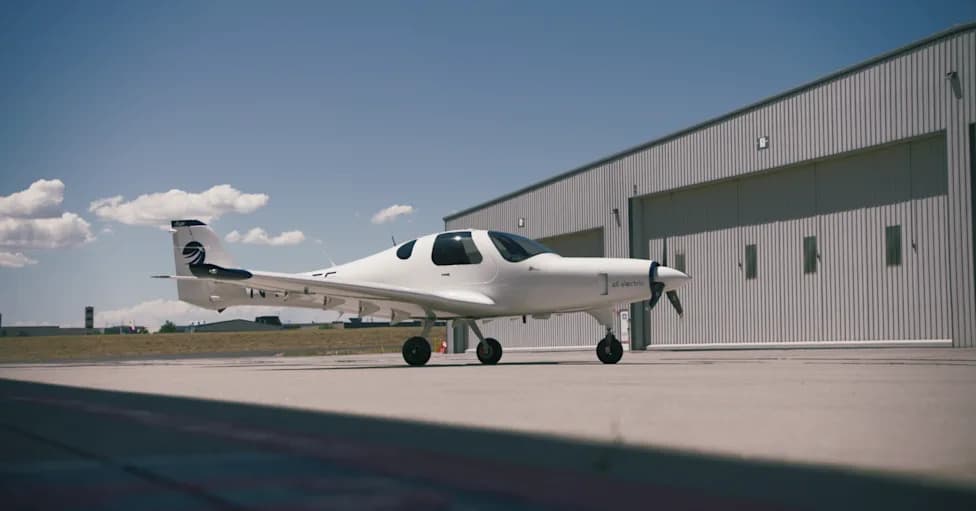
Bye eFlyer 2 Gets FAA Special Airworthiness Certificate
The Federal Aviation Administration (FAA) has awarded Bye Aerospace a Special Airworthiness Certificate for its flagship two‑seat electric airplane, the eFlyer 2, authorizing the program to begin official flight testing.
Special Airworthiness Certificates allow aircraft with nonstandard or experimental operating requirements to fly under controlled test conditions. Bye Aerospace said the certificate follows a detailed FAA inspection at Centennial Airport (KAPA) near Denver, Colorado, where the company is finalizing pre‑flight work.
Company officials reported that FAA engineers reviewed the eFlyer 2's airframe, electric propulsion architecture, cockpit instruments and associated systems to verify they meet safety expectations for the planned flight test program. The project has been under development for several years and accelerated in recent months.
Testing, Validation and Readiness
Bye Aerospace completed the structural assembly of the eFlyer 2 in July after an extended program of structural testing and propulsion validation. Engineers used a truck‑mounted test fixture nicknamed "The Beast" to exercise and validate the electric propulsion system under realistic loads and scenarios.
Data from ground and rig testing was used to refine systems integration, validate electrical subsystems and streamline ground operational checks ahead of a phased flight test campaign. Company teams are now focused on final airframe inspections, operational readiness and staged expansion of the aircraft's flight envelope.
Rod Zastrow, CEO of Bye Aerospace: "Every major milestone in an aircraft program is earned, and this one is the result of intense effort and dedication from a talented team. We've worked hand in hand with the FAA since 2016 to advance the certification framework for electric aircraft. Receiving the Special Airworthiness Certificate validates our progress and allows us to begin flight testing as we move toward full certification."
Elliot Seguin, Chief Test Pilot: "Planning for a first flight is all about expectations. Months of simulator work, procedure development and rehearsals help us recognize deviations early and ensure limitations and emergency procedures are sound and well‑rehearsed."
Market Interest and Orders
As the program advances, Bye Aerospace says its order commitments for the eFlyer family exceed 1,000 aircraft across the two‑seat eFlyer 2 and four‑seat eFlyer 4 models. Flight training organizations—including Skyborne Academy, Spartan College of Aeronautics & Technology, Flex Air Flight School and KLM Academy—are among the named customers showing strong interest in electric trainer aircraft.
Bye Aerospace positions the eFlyer series as a lower‑cost, lower‑emissions option for flight training and general aviation, aiming to reduce operating expenses and carbon output compared with conventionally powered piston aircraft while improving the training environment and safety.
Help us improve.