Democrats must revive a pragmatic, results-oriented approach to win back swing voters. The article argues for a modern revival of Bill Clinton's "Third Way": fiscal responsibility, progressive social investments tied to personal responsibility, and cultural moderation. It urges congressional leaders to make room for a new national voice — a cohort of 24 Democratic governors — who can credibly sell centrist, solution-focused policies to working families.
Time For Democratic Leaders To Step Up — And Step Aside: Reviving The Third Way
AP
Despite President Trump's persistently low approval ratings, Democrats still struggle with a negative brand that polls consistently show. Local popularity for progressive figures does not erase a national message problem. The party does not need another diagnostic report to see what went wrong — the reasons and remedies are in plain sight.
The Third Way: A Tested Template
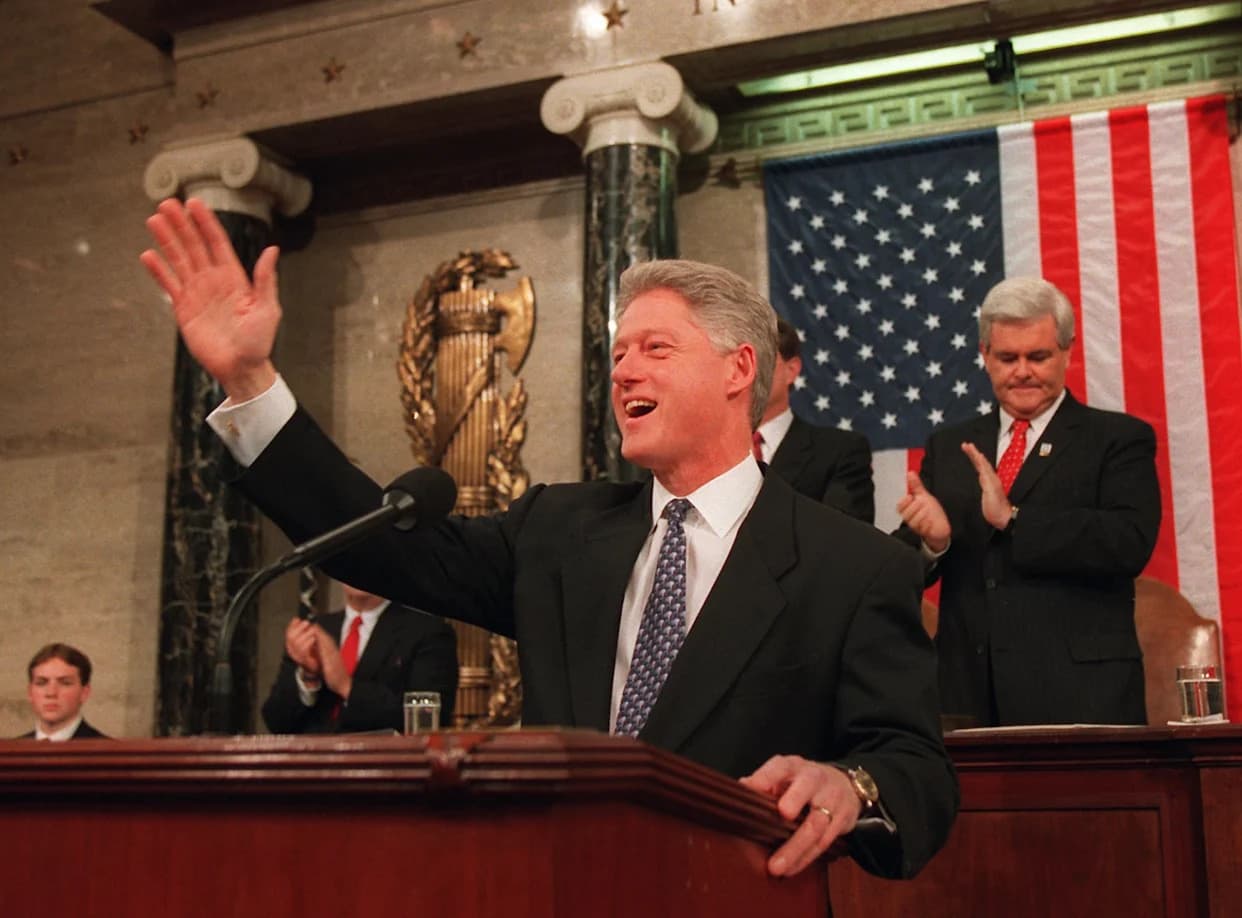
Three decades ago, President Bill Clinton outlined a practical governing philosophy in his 1995 State of the Union address: the "New Covenant," rooted in what he called a "third way" — a reformed liberalism that sought results rather than rigid ideology. That approach combined fiscal discipline, targeted social investments tied to personal responsibility, and cultural moderation. It produced political success: Clinton left office with strong approval ratings and a budget surplus.
1. Fiscal Responsibility
Clinton prioritized balanced budgets and worked across the aisle with congressional leaders to rein in deficits. By FY 2001 the government posted a surplus, an accomplishment no subsequent president has fully replicated. Today the national debt sits roughly around $39.2 trillion (about $114,650 per person), raising a fundamental question for progressives: is it responsible to finance today's programs by saddling future generations with rising debt? The Third Way argues that fiscal stewardship is a core part of responsible governance.
2. Progressive Social Policy Paired With Responsibility
The Clinton–Gore platform expanded investments in health care, early childhood programs, and the Earned Income Tax Credit, while the 1995 "New Covenant" attached expectations of personal and civic responsibility to public assistance. That included work requirements for some programs, time limits and streamlining for long-term welfare, and investments in national service — policies intended to broaden opportunity without creating permanent dependency.
3. Cultural Moderation And Sequencing
On social and cultural issues, Clinton emphasized pragmatism and the art of the possible. As Representative Barney Frank and other pragmatic progressives argued, the party should avoid making its least popular proposals litmus tests and instead sequence major cultural changes thoughtfully. Promoting tolerance while dismissing large groups of voters as irredeemably hostile risks turning the party's values into political liabilities.
Why Leadership Matters Now
The immediate task for Democrats is not merely to attack the opposition but to present a positive, results-oriented alternative that persuades swing voters and working-class Americans who left the party. Washington is often captured by entrenched interests, identity-based litmus tests, and an older generation of leaders who can be out of step with voters' daily concerns.
Instead of relying exclusively on House and Senate leaders for the party's public face, the Democratic National Committee should elevate a new generation of state executives. There are two dozen Democratic governors who govern under fiscal constraints and have built centrist, solution-driven brands in diverse states. These governors can credibly articulate a message that blends fiscal responsibility with progressive investments — the modern Third Way — and reach voters beyond the coastal political bubbles.
A Practical Media Strategy
The DNC should make a deliberate effort to position these governors as national spokespeople: regular guests on cable and Sunday shows, trained media surrogates for policy rollouts, and visible leaders in messaging campaigns focused on working-family solutions. Doing so would refresh the party's public voice, highlight successful state-level policies, and give voters tangible examples of effective governance.
Bottom line: Democrats need a positive, centrist message that sells results — fiscal discipline, social support tied to responsibility, and culturally inclusive but pragmatic change — delivered by fresh, electable leaders who can win in competitive states.
About The Author
Lanny Davis is the founder of the Washington, D.C. law firm Lanny J. Davis & Associates, which operates at the intersection of law, media, and politics. He served as Special White House Counsel to President Bill Clinton from 1996 to 1998 and was appointed by President George W. Bush in 2006–07 to advise on privacy and civil liberties. He has written six books and, in April 2026, will publish his seventh, "Finding the Third Way: Lessons in the Politics of Decency From My Journey Through History," coauthored with Carl Cannon (RealClearPolitics/Amplify Publishing).
Help us improve.