The MQ-28 Ghost Bat is participating in Valiant Shield 2026, its first appearance in a large multinational exercise, with photos showing the drone at Rota on June 21 equipped with an IRST nose sensor. The deployment follows Boeing test flights from Point Mugu (ATS-008) and includes embedded Australian aviator observers working with U.S. MQ-28 teams. Valiant Shield’s large, multi-domain scenarios and Agile Combat Employment operations will test how CCAs integrate with crewed platforms and allied command-and-control networks ahead of RAAF service planned for 2028.
MQ-28 Ghost Bat Debuts at Valiant Shield 2026 — First Large-Scale Multinational Test for Collaborative Combat Aircraft
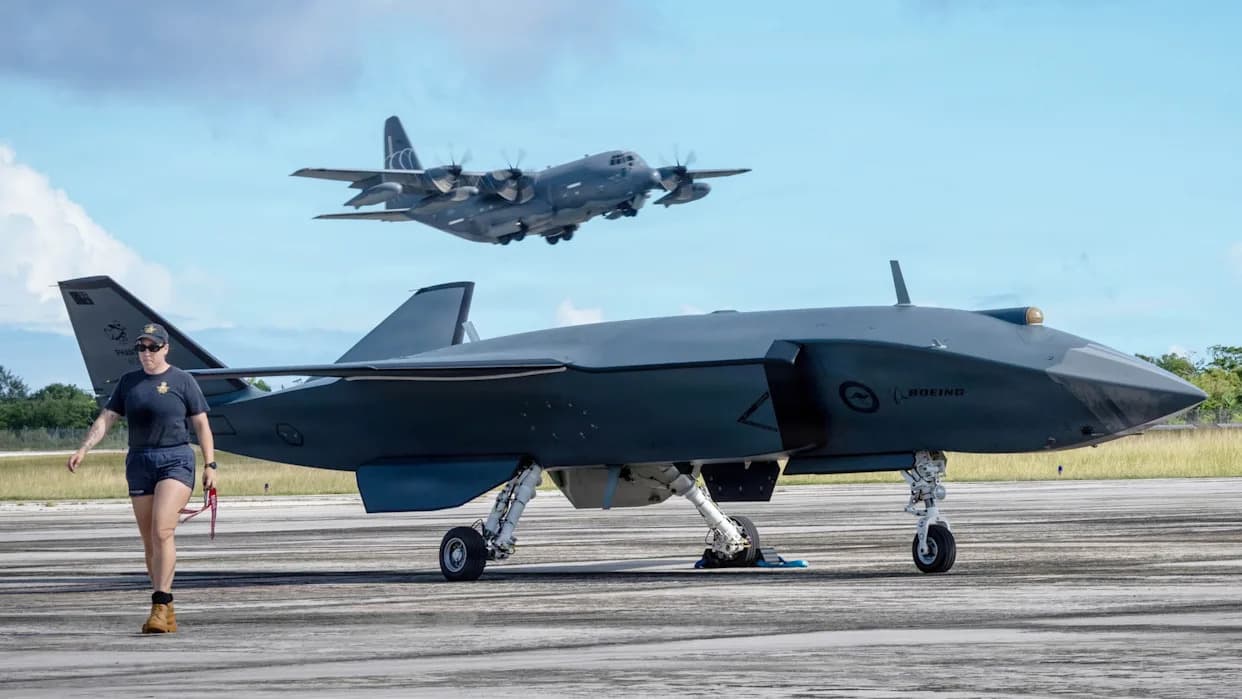
U.S. Air Force HC-130J Combat King II assigned to the 79th Rescue Squadron takes off behind a Boeing Defence Australia’s MQ-28 Ghost Bat, a production representative test aircraft, during Exercise Valiant Shield 2026 at Rota, Commonwealth of the Northern Mariana Islands, June 21, 2026. U.S. forces are integrating Collaborative Combat Aircraft into Exercise VS26 to advance human-machine teaming.
The MQ-28 Ghost Bat unmanned aircraft is taking part in Exercise Valiant Shield 2026, marking its first appearance in a large, multinational combat exercise. Photographs released by the U.S. Air Force show an MQ-28 operating from Rota in the Northern Mariana Islands on June 21, equipped with an infrared search-and-track (IRST) nose sensor. The deployment follows recent test flights conducted by Boeing off southern California from the Navy’s Point Mugu base (aircraft ATS-008).
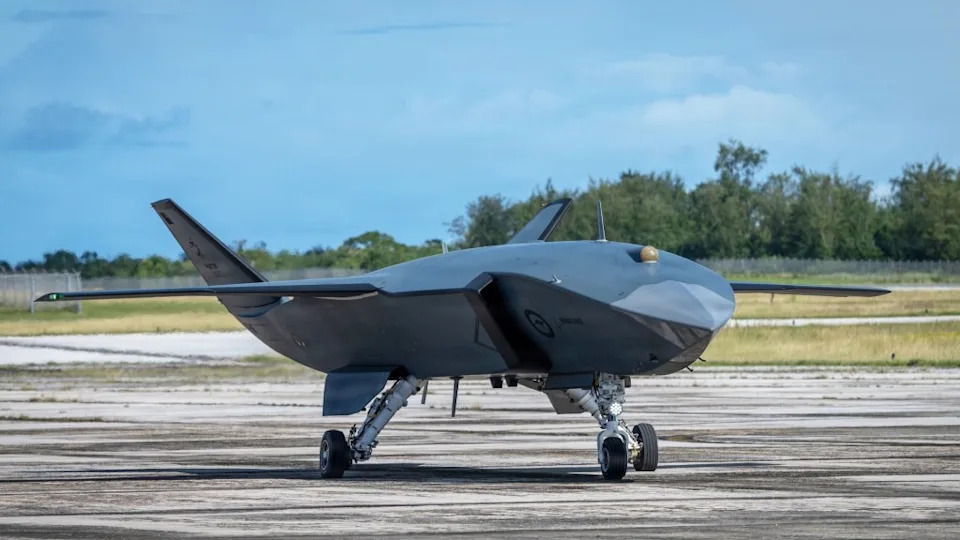
An MQ-28 prepares to conduct a taxi test during Exercise Valiant Shield 2026 at Rota, Commonwealth of the Northern Mariana Islands, June 21, 2026.U.S. Air Force Senior Airman Adrien TranU.S. Air Force photo by Senior Airman Adrien Tran
Deployment, Roles, and Human-Machine Teaming
Australia has embedded Defence Force aviator observers with a U.S.-led MQ-28 component so Australian personnel can work directly with operators and planners as the uncrewed system is employed in a complex multi-domain environment. The Air Force says the Ghost Bat will be used to advance human-machine teaming and to fly alongside crewed fighters, acting as a force multiplier by extending reach, awareness and survivability for crewed platforms in contested environments.
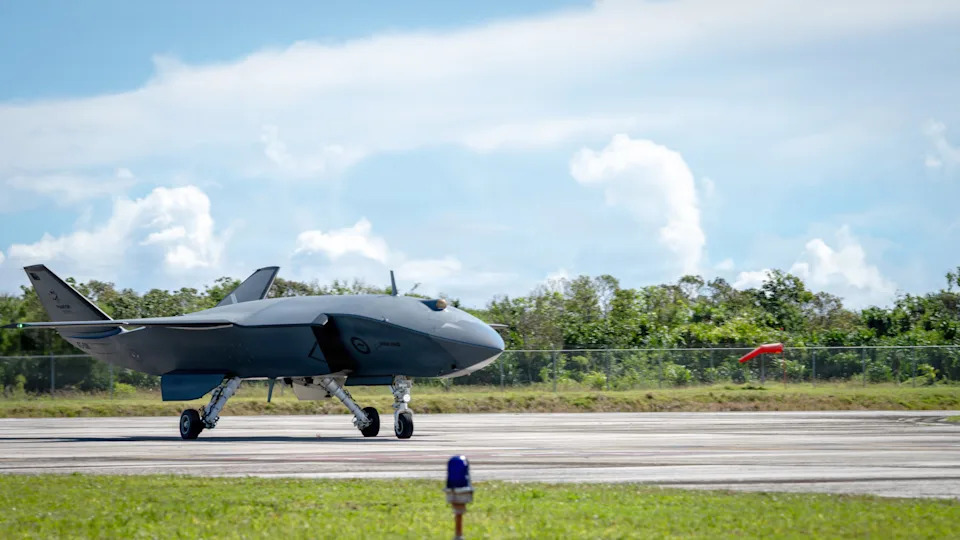
An MQ-28 returns from a taxi test during Exercise Valiant Shield 2026 at Rota, Commonwealth of the Northern Mariana Islands, June 21, 2026.U.S. Air Force Senior Airman Adrien Tran
Exercise Context
Directed by U.S. Indo-Pacific Command, Valiant Shield 2026 runs through July 1 and brings together forces from the United States, Australia, Japan, Canada and New Zealand. The exercise spans a wide geographic area — Japan, Guam, Hawaii and Australia — and trains participants to detect, track and respond to coordinated threats across maritime, air, land, cyber and space domains.
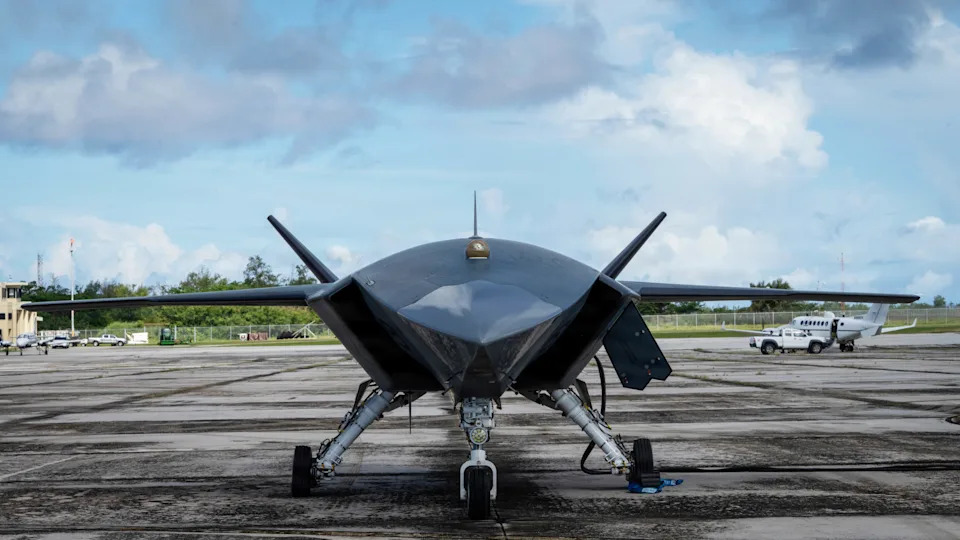
An MQ-28 undergoes preflight checks during Exercise Valiant Shield 2026 at Rota, Commonwealth of the Northern Mariana Islands, June 21, 2026. Note the IRST sensor mounted above the nose.U.S. Air Force Senior Airman Adrien Tran
Adm. Steve Koehler, U.S. Pacific Fleet: "Valiant Shield demonstrates our enduring commitment to a free and open Indo-Pacific. Exercising advanced multidomain capabilities with our allies ensures we continue to seamlessly innovate and operate together, project combat power together, and prevail over any challenge — together."
Platform Details and Test Background
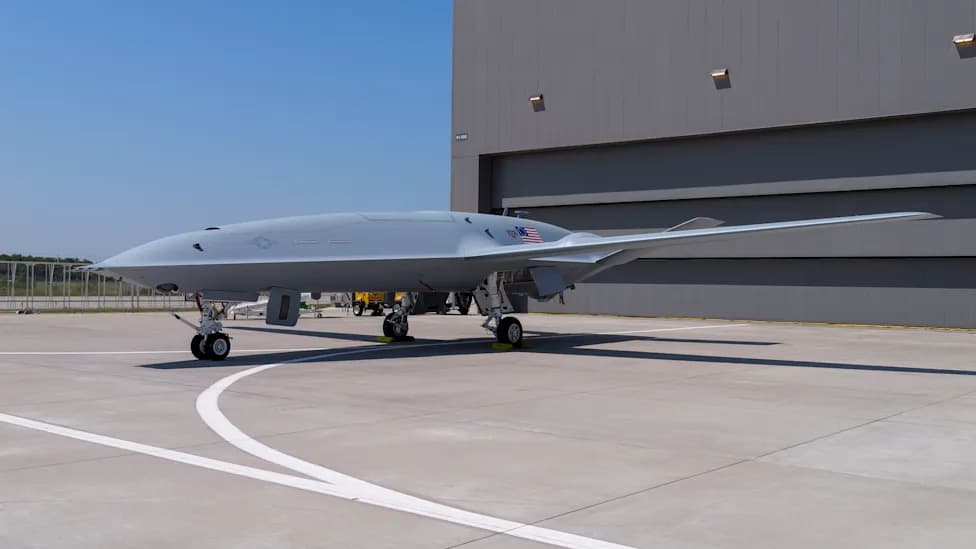
The Ghost Bat seen at Rota features a modular nose fitted with an IRST sensor; the aircraft’s modular design allows quick swaps of sensors and equipment. Boeing previously flew the same airframe (ATS-008) from Point Mugu as part of a test program intended to validate autonomous operations, demonstrate rapid deployability from allied locations and show maturation of the design.
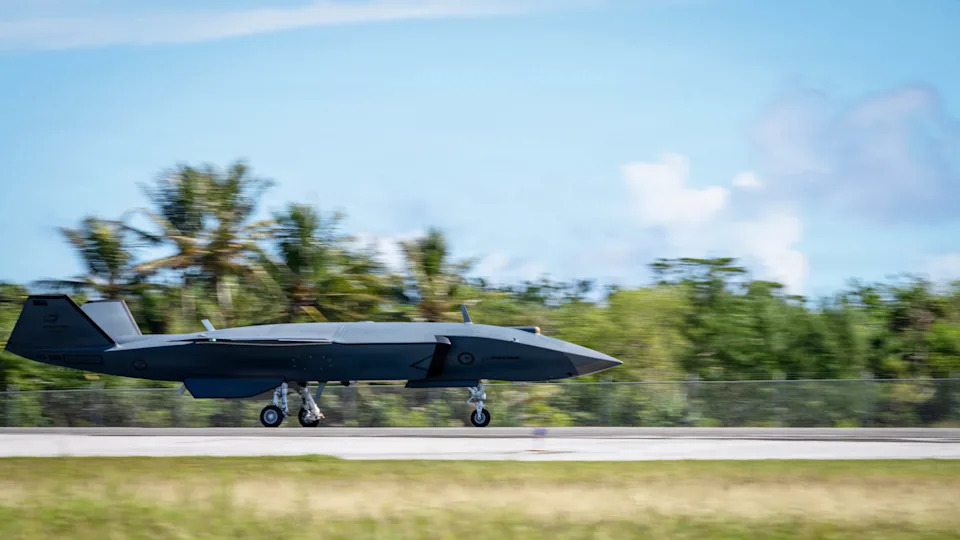
An MQ-28 conducts a taxi test during Exercise Valiant Shield 2026 at Rota, Commonwealth of the Northern Mariana Islands, June 21, 2026.U.S. Air Force Senior Airman Adrien Tran
Australia has flown the MQ-28 in testing since 2021. The Royal Australian Air Force (RAAF) received eight pre-production Block 1 Ghost Bats for development and experimentation. Boeing is building the first of nine Block 2 aircraft for the RAAF as an intermediate step to a larger Block 3 that will have greater range and an internal weapons bay sized to carry either one AIM-120 AMRAAM, two GBU-39/B Small Diameter Bombs, or similar stores.
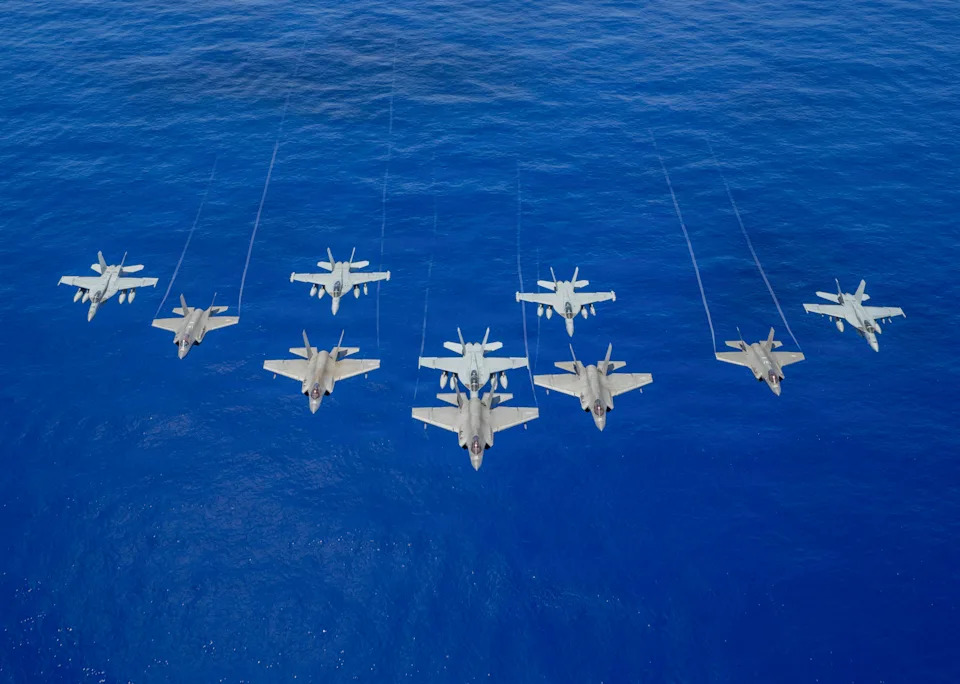
U.S. Navy aircraft, attached to Carrier Air Wing 5, and U.S. Air Force F-35As during joint operations with U.S. Navy George Washington Carrier Strike Group and Japan Maritime Self-Defense Force, as part of Valiant Shield 2026, while underway in the Philippine Sea, June 21, 2026.U.S. Navy photo by Mass Communication Specialist 3rd Class Estrella VelardePetty Officer 2nd Class Bruce Morgan
Testing, Concepts, and Coalition Integration
Valiant Shield is a relevant proving ground for collaborative combat aircraft (CCA) concepts. The Ghost Bat’s exposure to coalition operations — including Agile Combat Employment (ACE) operations from austere airfields — will help determine how CCAs integrate with allied command-and-control and air-defense networks. Defense reporting notes the deployment includes operations from an austere ACE airfield, reflecting the emphasis on distributed and disaggregated employment for future conflicts in the Indo-Pacific.
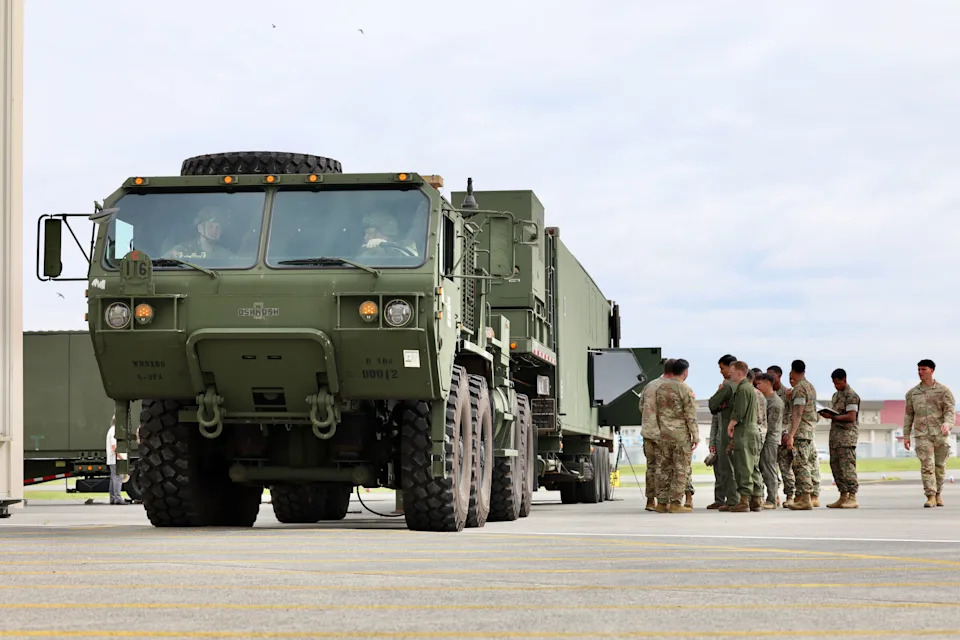
U.S. Marines and sailors observe and familiarize themselves with the U.S. Army’s Typhon missile system during a training opportunity at Marine Corps Air Station Iwakuni, Japan, September 12, 2025.U.S. Army photo by Sgt. Perla AlfaroSgt. Perla Alfaro
The U.S. Air Force has been testing how CCAs operate in contested and distributed environments and has used MQ-28s to support autonomy development. Early U.S. CCA testing also includes platforms such as the YFQ-44 Fury prototype, flown out of Edwards AFB, that demonstrate concepts for deploying and sustaining uncrewed wingmen.
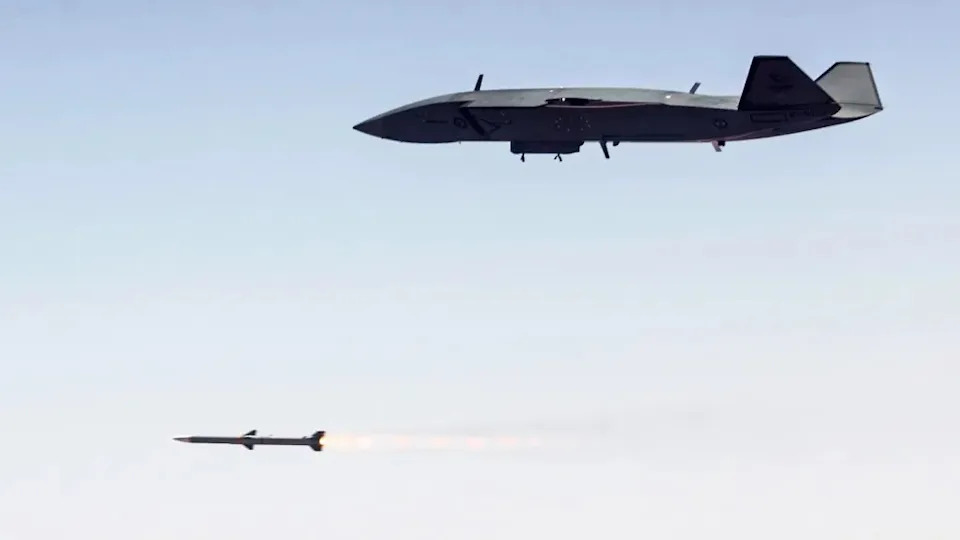
An AIM-120 is launched from a Block 1 MQ-28 Ghost Bat during Trial Kareela at RAAF Base Woomera, South Australia.Australian Department of Defense
Wider Exercise Highlights
Other U.S. participants in Valiant Shield 2026 include the George Washington Carrier Strike Group (USS George Washington and Carrier Air Wing 5), the cruiser USS Robert Smalls and destroyers including USS Benfold and USS Shoup. Japan will host the containerized Typhon missile system and HIMARS for joint integrated anti-ship warfare training around Kanoya and Amami Oshima (no live firing planned). Typhon, capable of launching Tomahawk and SM-6 missiles, has become a more visible element of U.S. Indo-Pacific deployments.
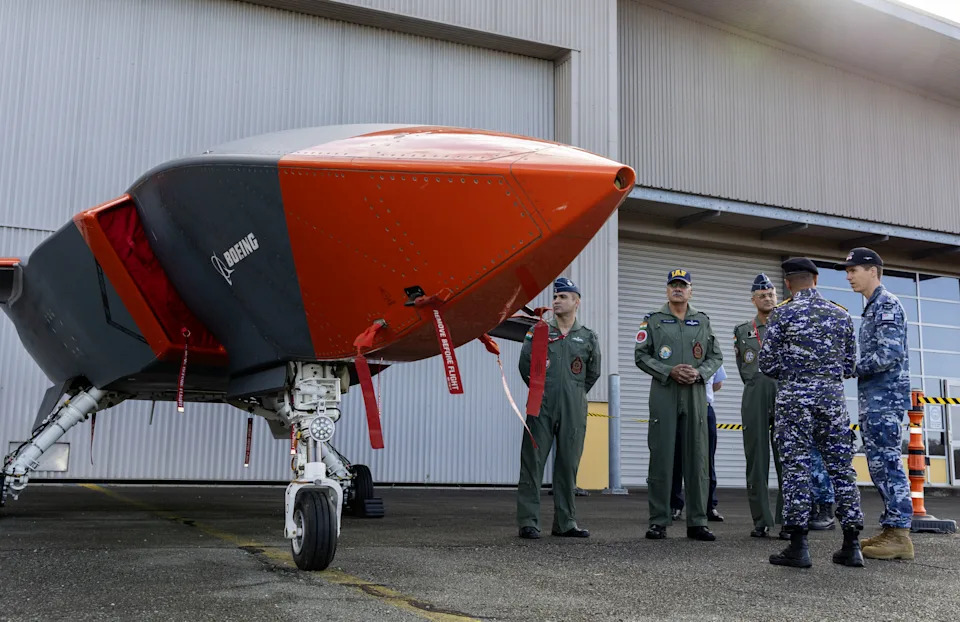
Personnel from the Indian Air Force receive a briefing about the MQ-28 Ghost Bat during a visit to RAAF Base Amberley, Queensland.Australian Department of Defense
Implications and Outlook
For the Ghost Bat program, participation in Valiant Shield provides valuable coalition-level data on how CCAs perform alongside allied crewed platforms and command networks. The results will inform Australia’s timeline to field operational collaborative combat aircraft — the MQ-28 is currently slated for RAAF service in 2028, which could make it the world’s first operational CCA if schedules hold.
The exercise will also be observed by potential export customers; Boeing has publicly identified Japan as a potential buyer and is exploring other opportunities across the Indo-Pacific. How the MQ-28 performs in this large-scale, multi-domain exercise will be watched closely as allied militaries move autonomous aircraft from experimentation into operational use.
Contact: [email protected]
Help us improve.