Kenya's adoption of a US-led, bilateral health compact and plans for an Ebola facility for American citizens have sparked deadly protests and court challenges. A $1.6 billion, five-year health compact was briefly halted over data-sharing concerns before an appeals court allowed it to proceed. Critics say the deals bypassed parliament, jeopardize citizens' health-data protections and carry troubling neo-colonial overtones.
US Health Compacts Spark Deadly Protests and Court Battles in Kenya
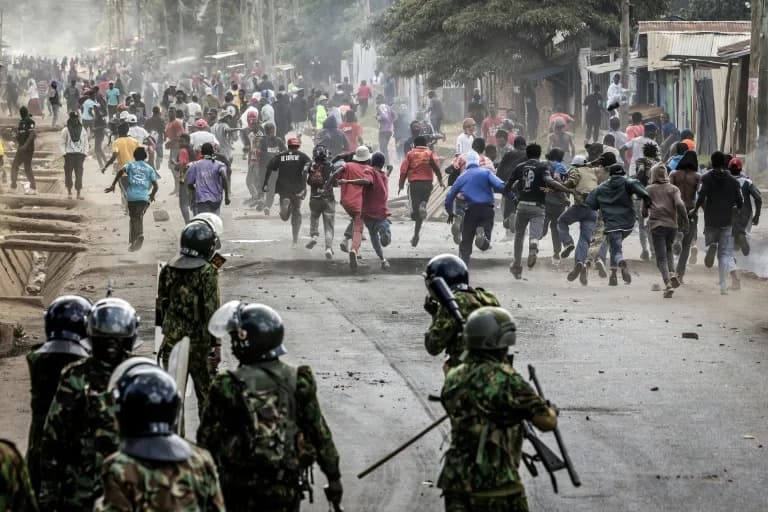
Protests have erupted in Kenya against a US Ebola quarantine centre being built in the north for American citizens (Luis TATO)(Luis TATO/AFP/AFP)
Washington's new transactional approach to health aid has provoked intense backlash in Kenya after bilateral agreements — including a $1.6 billion health compact and plans for an Ebola treatment site intended for US nationals — stirred fears about sovereignty, data privacy and colonial-style arrangements.
Background
Last year, Kenya became the first country to sign one of the Trump administration's redesigned bilateral health deals after the closure of the traditional development agency model, accepting terms that critics say carry strings and bypass normal parliamentary scrutiny. The US pledged $1.6 billion over five years under the compact, and separately committed $13.5 million to bolster Kenya's Ebola preparedness.
Protests and Legal Challenges
Proposals to build an Ebola treatment and quarantine facility on an air base in northern Kenya — reportedly intended to prioritize US citizens — triggered mass demonstrations. Clashes during those protests left three people dead. Kenyan courts also intervened: preparations for the facility were halted by a ruling, and Health Minister Aden Duale was recently held in contempt after failing to comply; he later issued a formal apology to the court.
"I sincerely regret any action, omission, misunderstanding or misinterpretation that may have resulted in a non-compliance with the order," Duale told the bench.
Data Privacy and Sovereignty Concerns
The broader health compact was temporarily suspended by a Kenyan court amid concerns that it required sharing personal health data with US partners — data that critics say could be accessed by foreign pharmaceutical firms preparing for future outbreaks. An appeals court cleared the agreement in May, allowing the compact to proceed on condition that Kenya progressively assumes more of the financial burden. Nevertheless, data-protection and constitutional concerns remain central to the dispute.
Voices of Opposition
Legal and political opponents, including the Law Society of Kenya and Senator Okoiti Andrew Omtatah, challenged the agreements as having bypassed required parliamentary approvals. Charles Kanjama, president of the Law Society, warned the deals could amount to a "blank cheque" for foreign companies to operate without normal public health safeguards. Senator Omtatah argued the compact violated Kenya's constitution and called health data "private property" that the government could not trade away.
Some other African countries, notably Ghana and Zimbabwe, have already rejected comparable US health agreements this year amid similar concerns, and memories of vaccine access challenges during the Covid-19 pandemic have sharpened public sensitivity to data-sharing and equity issues.
What Comes Next
The controversy highlights a broader tension over how international health assistance is structured: proponents argue the deals deliver much-needed resources, while critics warn that rushed, non-transparent agreements can undermine sovereignty, constitutional protections and public trust. The Kenyan government faces growing pressure to secure parliamentary approval, clarify data safeguards and rebuild public confidence as implementation proceeds.
Help us improve.