Researchers at the College of the Holy Cross trained six pigeons to identify lung nodules on brief CT-scan videos; the birds generalized that learning to detect emphysema and ground-glass nodules. Earlier eye-tracking work shows radiologists’ eyes and pupils often register abnormalities their conscious decisions miss. DiGirolamo aims to combine eye-gaze and physiological signals with AI to build assistive tools that flag subtle concerns for clinicians—augmenting judgment rather than replacing experts.
Pigeons Help Reveal How Radiologists’ Eyes Catch What Their Brains Miss — And How AI Could Use That
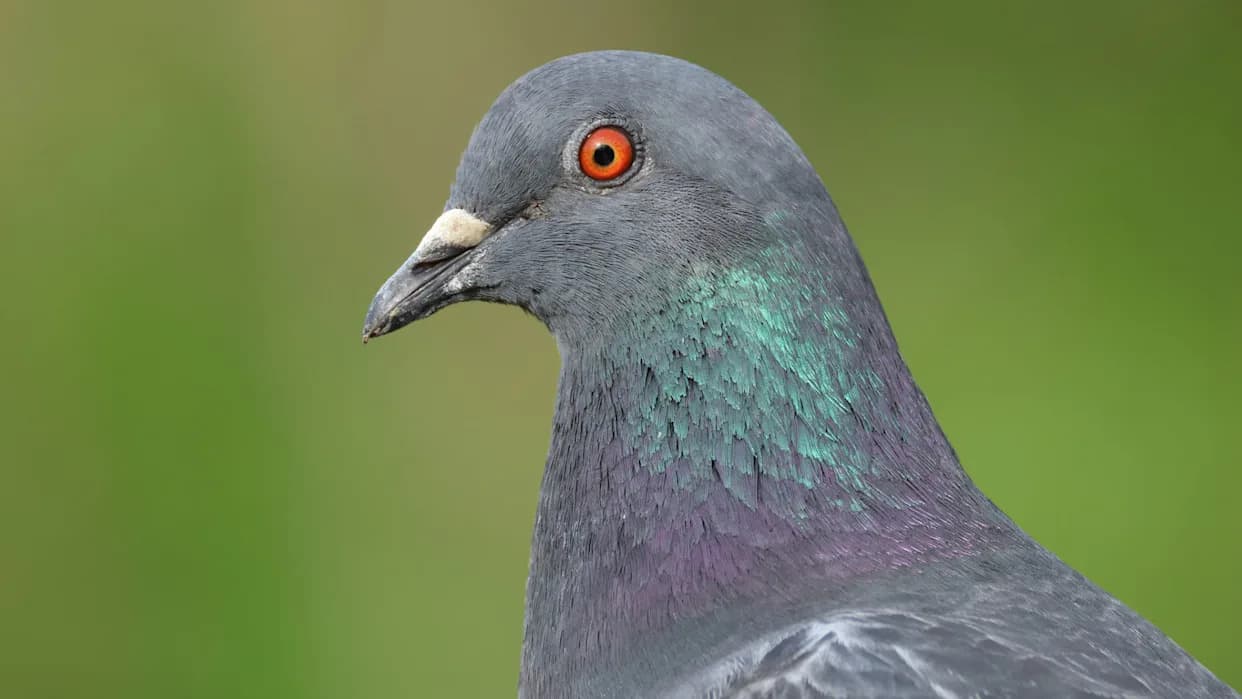
Pigeons have incredible eyesight. They can even see ultraviolet light, which humans aren't able to.
Radiologists routinely miss a meaningful share of abnormalities on medical scans — roughly three out of every ten problematic images may be overlooked — and that delay can affect patient outcomes. A surprising line of research from Dr. Gregory DiGirolamo at the College of the Holy Cross suggests an unexpected ally in reducing those misses: pigeons.
In a recent series of experiments, DiGirolamo and colleagues trained six pigeons to watch short CT-scan videos and indicate whether a lung nodule (a growth that can signal lung cancer) was present. The birds learned quickly and—with training—could distinguish images with nodules from those without, even when presented with scans they had never seen before.
The goal was not to put birds in hospitals, but to probe the nonconscious components of visual perception. Earlier work by the same group used eye-tracking to show that when radiologists look directly at suspicious spots on chest CTs, their gaze tends to linger and their pupils dilate — physiological signs that the brain has registered something unusual even when the clinician’s conscious judgment calls the scan “normal.”
Pigeons were chosen because their visual processing shares key features with the automatic, nonconscious aspects of human vision. In the training, half the birds received food rewards for correctly identifying scans with nodules, while the other half were rewarded for correctly identifying clean scans. After mastering the task, the pigeons also began to recognize two different lung abnormalities they had not been trained on: emphysema (damaged air sacs) and ground-glass nodules (hazy areas that can indicate early-stage cancer).
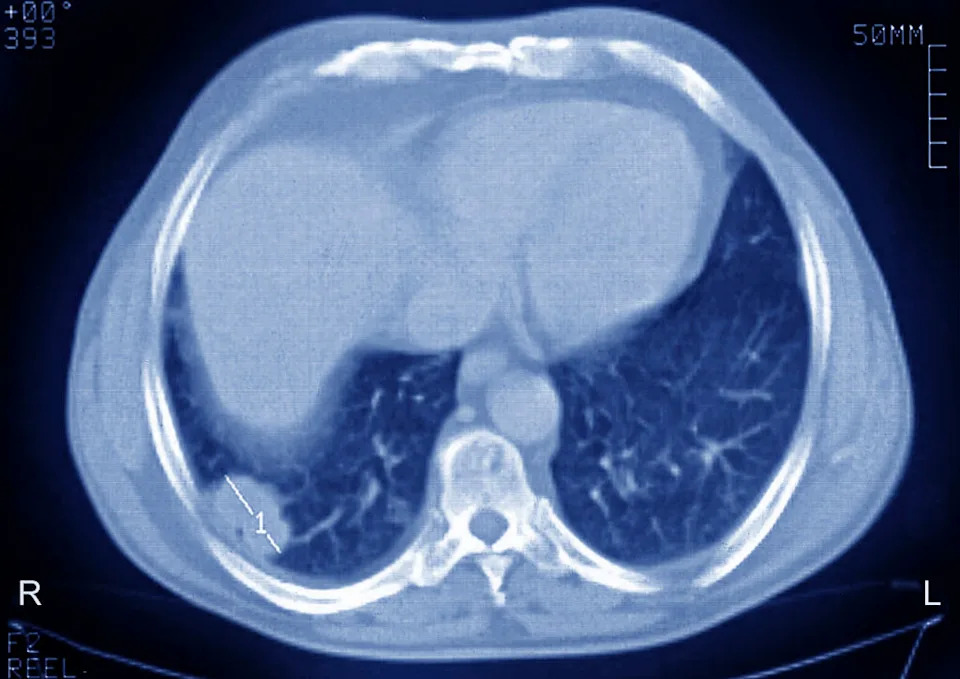
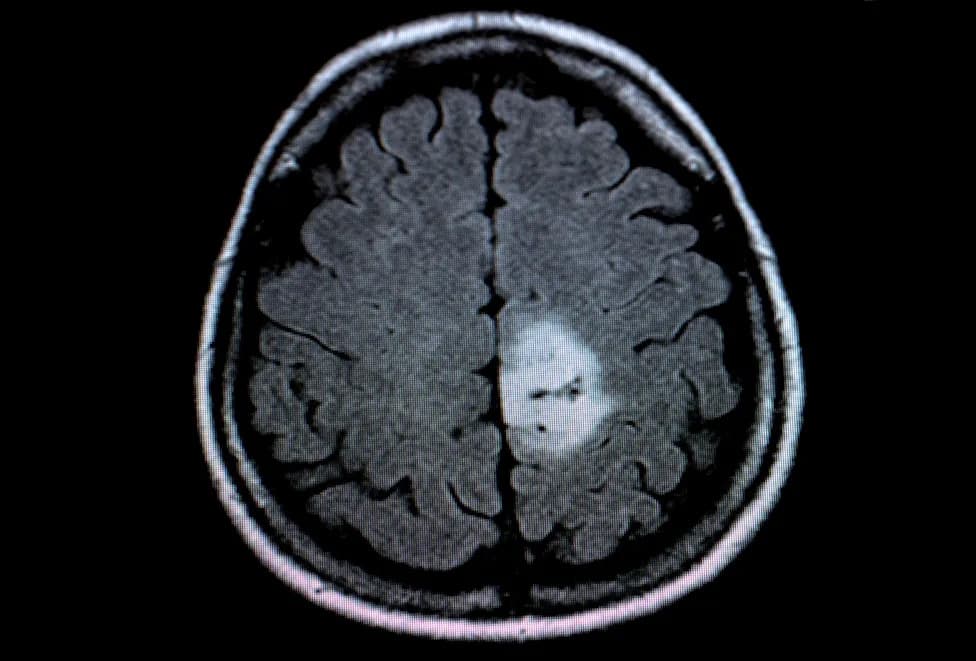
The pigeons looked at CT scans similar to this one, which shows a tumor in the lower left corner.Image: Contributor / Getty Images /BSIP
To human observers, emphysema and ground-glass changes look distinct from classic nodules. The pigeons’ ability to generalize suggests there may be a shared visual signature across different lung conditions that the nonconscious visual system detects.
From Bird Brains to Better Tools
DiGirolamo plans to translate these insights into assistive medical AI. By collecting radiologists’ eye-gaze traces and physiological signals (for example, pupil dilation) while they read scans — including cases they label as normal — researchers hope to train AI models that learn from experts’ nonconscious reactions as well as their explicit decisions. The goal is an AI assistant that highlights cases meriting a second look, bridging the gap between what clinicians’ eyes detect and what their conscious judgment reports.
“Right now I’m constraining myself purely to medical misses because those for me seem far more practical,” DiGirolamo said. “But I am hoping to do a little bit of ‘can we tell which Caravaggio are real and which ones are fake?’”
DiGirolamo emphasizes that the intent is augmentation, not replacement: these tools would support radiologists and other experts (for example, cardiologists reading ECGs) by flagging subtle clues their conscious review might miss. Beyond medicine, the same approach—training AI on experts’ eye movements and micro-physiological reactions—could assist in fields as varied as art authentication and security screening.
And no, you should not expect a pigeon in a white coat at your next appointment. The value of this research lies in what pigeons reveal about visual processing and how those insights can be encoded into technology to reduce diagnostic misses.
Help us improve.