L3Harris plans demonstrations to prove RC-135V/W Rivet Joints can control uncrewed systems, extending ISR reach and keeping crewed aircraft away from danger. Depot "spiral" upgrades keep mission systems modern despite older airframes, and the company says it can field rapid hardware/software updates in days to weeks. Paired drones would expand sensing range, improve geolocation and enable multi-mission swarms; AERIS-X and AI tools would centralize command-and-control. Rapid, cognitive electronic-warfare updates remain essential to staying ahead of evolving threats.
L3Harris Plans Demos to Let RC-135 Rivet Joints Control Drones, Greatly Expanding ISR Reach

L3Harris wants to demonstrate the ability of the RC-135V/W Rivet Joint intelligence, surveillance, and reconnaissance (ISR) aircraft to team up with uncrewed platforms.
L3Harris is preparing demonstrations to show that the RC-135V/W Rivet Joint intelligence, surveillance and reconnaissance (ISR) aircraft can act as crewed controllers for uncrewed systems. Pairing Rivet Joints with drones could expand sensing range, improve geolocation, and keep crewed aircraft farther from high-risk areas — while opening new multi-mission possibilities for both platforms.
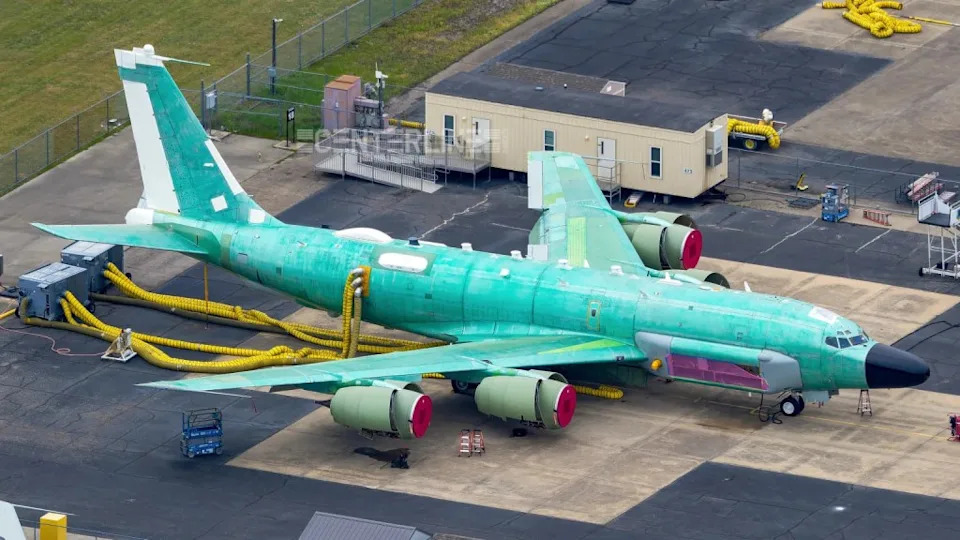
A Rivet Joint seen stripped of its usual paint scheme and undergoing work at L3Harris’ facility in Greenville, Texas.Dylan Phelps
Depot Upgrades Keep Old Airframes Modern
L3Harris performs depot-level maintenance and upgrades for the global RC-135 fleet — 17 aircraft in U.S. Air Force service and three operated by the Royal Air Force. Roughly every four years, aircraft are brought to the company's Greenville, Texas, facility for removal of electronics, airframe inspections, corrosion repairs, and a complete rebuild of mission systems with the latest antennas, processing hardware and software.

A head-on view of an RC-135V/W Rivet Joint.US Military
Jason Lambert, President for Intelligence, Surveillance, and Reconnaissance at L3Harris, emphasized the company's "spiral upgrade" approach: mission systems are continuously updated so that, despite 1960s–1970s airframes, the RC-135 mission equipment is among the newest in the U.S. Air Force. L3Harris says it can perform quick hardware and software turnarounds — typically from a week to a month — and return aircraft to operational theaters rapidly.
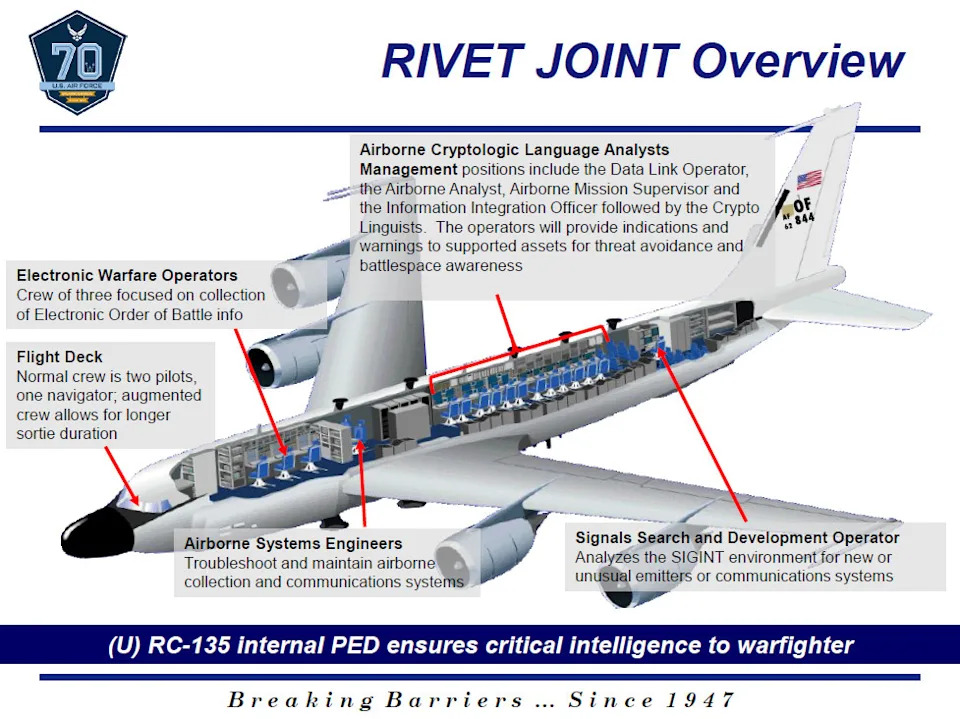
An unclassified US Air Force briefing slide giving a general overview of the roles and responsibilities of the members of a typical Rivet Joint crew.USAF
Crewed-Uncrewed Teaming: Technology Is Ready, Demonstrations Next
Lambert told our correspondent that L3Harris is in discussions with multiple drone manufacturers and plans demonstrations to validate crewed-uncrewed teaming using the RC-135. The company also highlighted its secure datalink capabilities through the Broadband Communications Systems business in Salt Lake City as a critical enabler for real-time linkages between manned aircraft and uncrewed platforms.
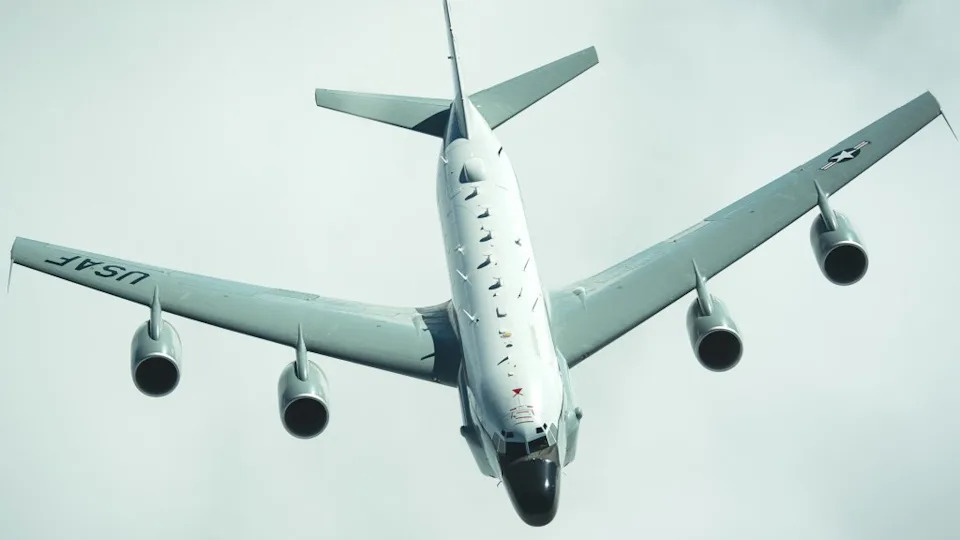
An RC-135V/W Rivet Joint seen flying somewhere in the Middle East.USAF
Uncrewed teammates could operate beyond the Rivet Joint's organic sensor range and radio horizon, carry complementary sensors, and provide triangulation for more precise geolocation of electronic emissions. The Rivet Joint's onboard crew — dozens of signals, electronic-warfare specialists, and linguists — could immediately analyze drone-fed data and pass actionable intelligence to forward units and command nodes.
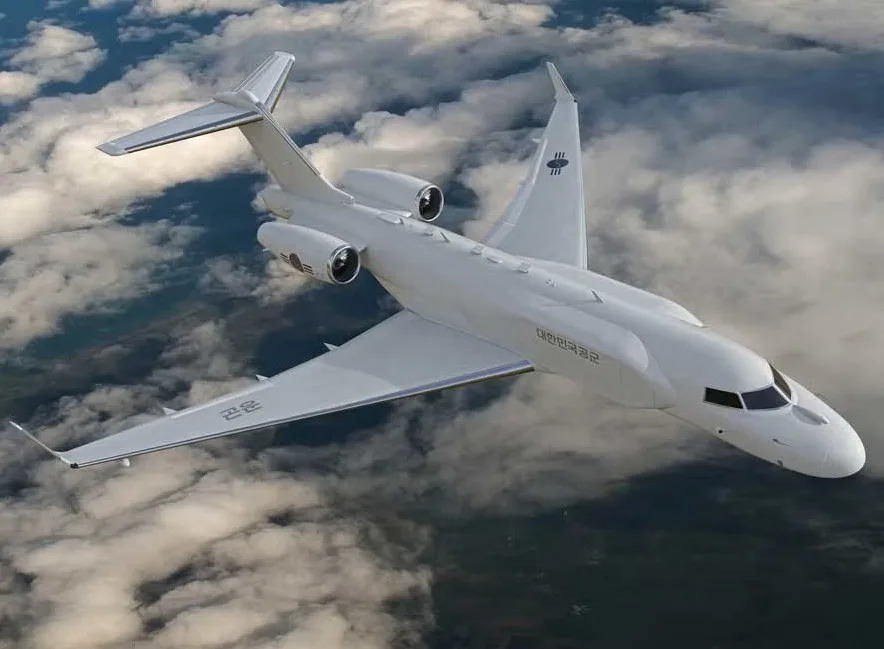
A rendering of a AERIS-X aircraft in South Korean service.L3Harris
Operational Benefits And New Mission Sets
Adding drone teammates could help Rivet Joints:
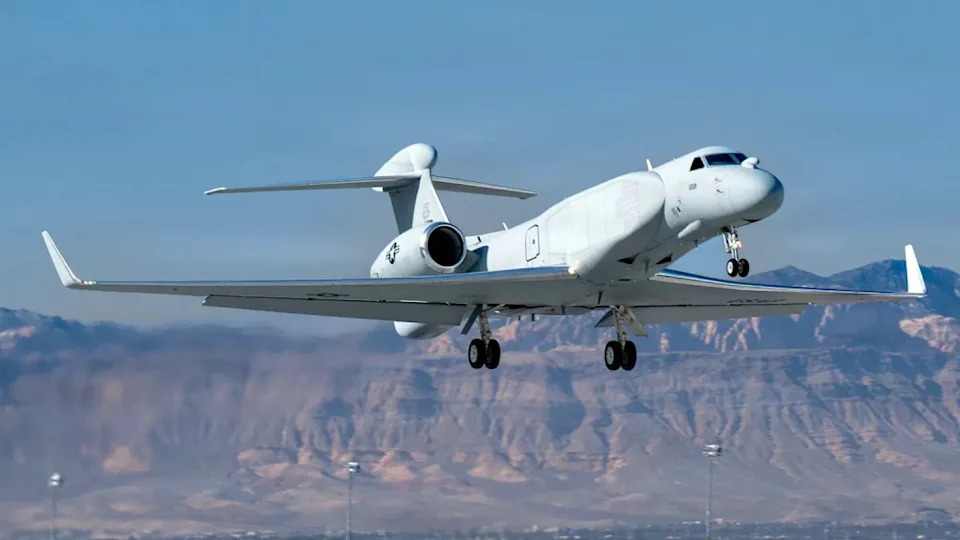
A US Air Force EA-37B Compass Call electronic warfare aircraft.USAF
• Extend collection reach: Drones can penetrate further into contested areas without risking the larger crewed aircraft.
• Improve geolocation and fidelity: Multiple platforms enable triangulation and richer multi-sensor fusion.
• Enable multi-mission swarms: Teammates could perform EW, signal relay, localized force protection, or ISR simultaneously.
The net effect could transform RC-135s from single-mission collectors into multi-role airborne nodes capable of coordinating complex, distributed tasking across a battlespace.
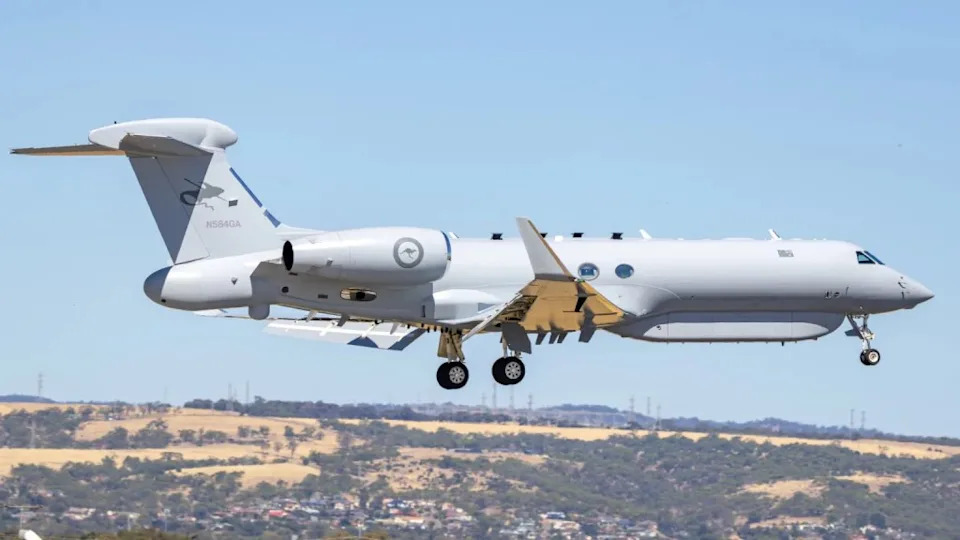
The first MC-55A for the Royal Australian Air Force arrives in that country in January 2026.@airman941
AERIS-X, AI And Networked Command
Lambert described AERIS-X, an AEW&C variant based on the Bombardier Global 6500, as a hub-and-spoke command node designed to operate and coordinate unmanned aircraft. Current AERIS-X configurations support six operator stations, easily expanded to eight and being evaluated for up to ten. L3Harris positions AI as a force multiplier that reduces individual operator workload and enables smaller crews to manage larger formations of autonomous or semi-autonomous drones.
AERIS-X integrates radar (including SAR/GMTI capabilities), standoff targeting, and both line-of-sight and satellite datalinks for beyond-line-of-sight command-and-control. A complementary product, TOC-L (Tactical Operations Center-Light), can provide networked ground connectivity across dispersed bases or island chains.
Electronic Warfare, Rapid Updates, And Cognitive EW
The company also discussed electronic warfare (EW) integration across its special-mission portfolio, including EA-37B Compass Call variants and systems adapted for partners like Australia (MC-55A Peregrine). Rapid update cycles are especially crucial in EW because adversaries constantly change waveforms and tactics. L3Harris and others are investing in cognitive electronic warfare approaches that dramatically shorten update timelines and move toward systems that can adapt autonomously in near real time.
Limits And Challenges
Despite the promise of crewed-uncrewed teaming, the Rivet Joint fleet remains a low-density, high-demand resource: each of the USAF’s 17 RC-135s can only be in one place at a time, and aging airframes have faced readiness challenges that reduce daily availability. Demonstrations will need to validate secure, resilient datalinks, doctrine for distributed operations, and tactics that preserve mission effectiveness in contested environments.
Outlook
L3Harris appears focused on proving that pairing Rivet Joints, AERIS-X and other ISR/AEW/EW platforms with uncrewed teammates can create more capable, resilient airborne teams for future conflicts. If demonstrations succeed and command-and-control, datalinks and EW updates keep pace, crewed-uncrewed teaming could significantly expand ISR reach and survivability.
Contact the author: [email protected]
Help us improve.