The study finds giant deep-sea isopods survive more than five years without food by combining physical, microbial and genetic strategies. Their stomachs can occupy about two-thirds of the body cavity to store large meals, while very low metabolism and efficient nutrient use stretch those reserves. Researchers also identified an ND1 gene, likely acquired from bacteria via horizontal gene transfer, that acts as a metabolic switch—raising metabolism in warmth and conserving energy in cold to extend starvation survival.
How Giant Deep-Sea Isopods Survive Years Without Food — Huge Stomachs, Slowed Metabolism and a 'Borrowed' Gene
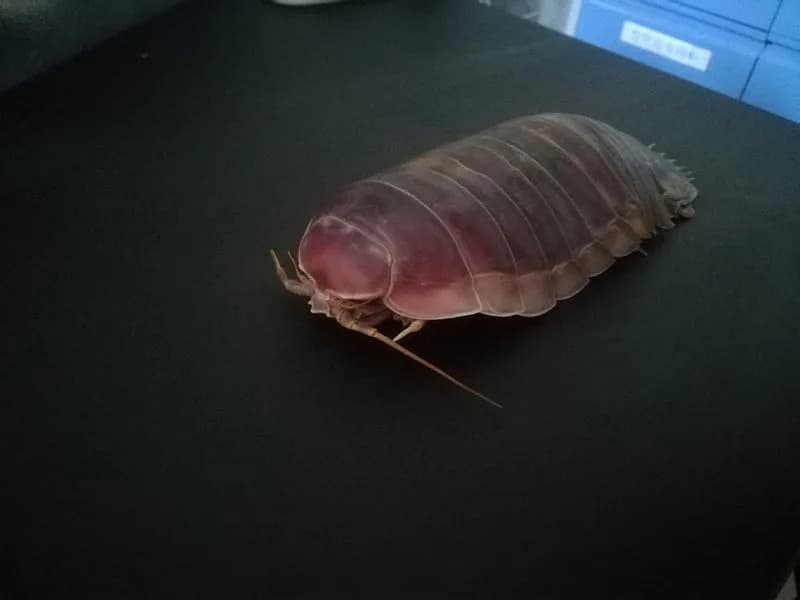
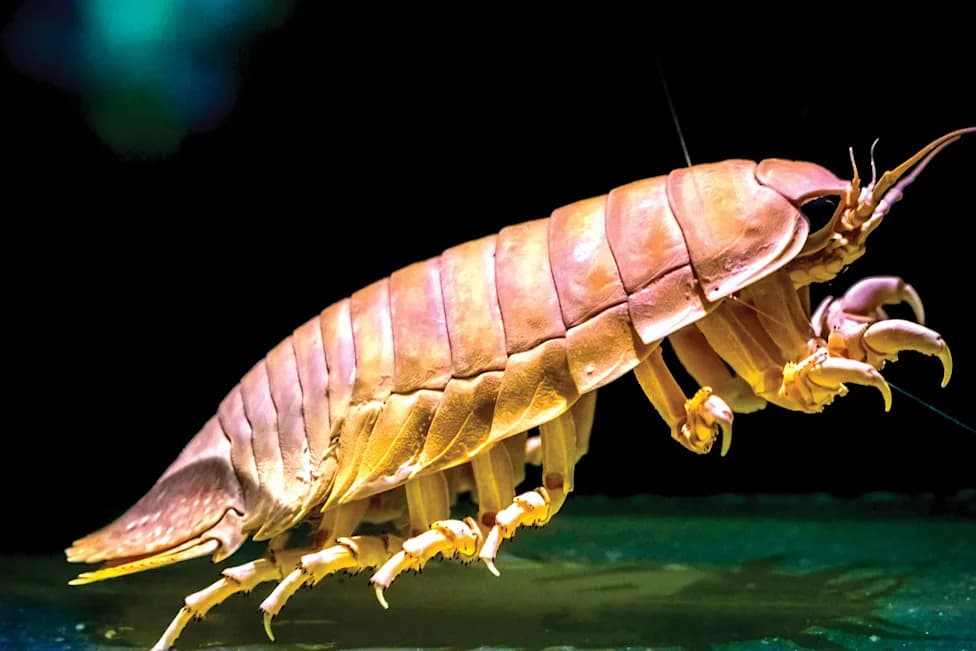
The deep-sea isopod Bathynomus jamesi is seen in this photograph taken in the laboratory of the Institute of Oceanology, Chinese Academy of Science, in Qingdao, China, on October 12, 2020. Jianbo Yuan/Handout via REUTERS
Small land pill bugs curl into armored balls to protect themselves. Far below the ocean surface, their much larger relatives face a different challenge: how to survive when meals arrive only as rare drifts of dead organic matter. New research reveals that giant deep-sea isopods combine striking anatomy, extreme metabolic control and a horizontally acquired gene to endure long fasts — sometimes for more than five years.
The study, published in Cell by researchers at the Institute of Oceanology, Chinese Academy of Sciences, focuses on two species: Bathynomus doederleini (typically around 300 meters) and the deeper-dwelling supergiant Bathynomus jamesi (around 900 meters). These benthic scavengers inhabit a cold, dark seafloor where food falls only occasionally from upper waters.
Anatomy: A Massive, Slow-Release Stomach
In the deeper species the stomach can occupy roughly two-thirds of the body cavity, allowing the animal to store a single, large meal. Lead author Jianbo Yuan likened it to a "food warehouse" that supplies energy slowly while the animal runs on minimal power. Dramatically reduced metabolic rates, very slow digestion and highly efficient nutrient use let one feast fuel the animal for years.
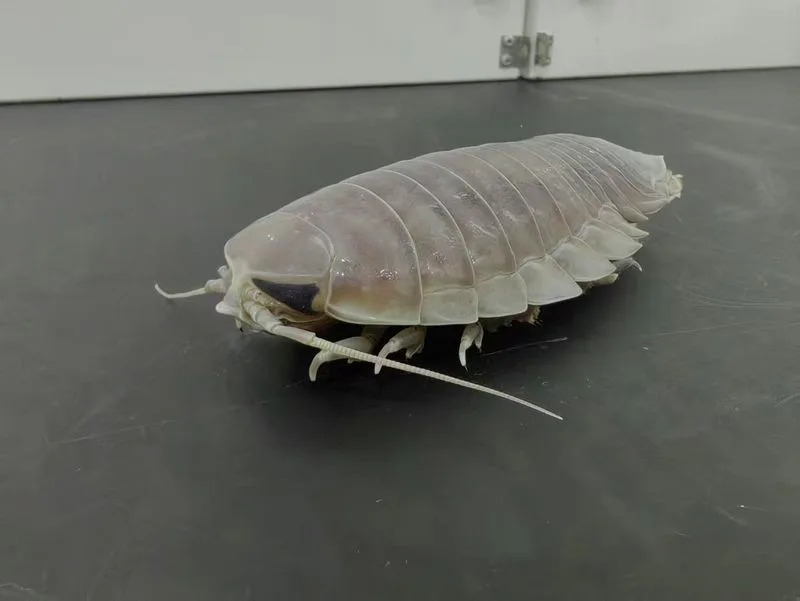
The deep-sea isopod Bathynomus doederleini is seen in this photograph taken in the laboratory of the Institute of Oceanology, Chinese Academy of Science, in Qingdao, China, on May 20, 2026. Jianbo Yuan/Handout via REUTERS
Microbial Partners
Researchers also found gut bacteria from the group Chlamydiae in the deeper species that appear linked to fat storage. Although some Chlamydiae are pathogens in other animals, in these isopods the microbes may provide slow-release energy while gaining a stable habitat — a mutually beneficial arrangement.
Genetic Adaptation: The ND1 Metabolic Switch
The team identified a gene called ND1 that likely originated in a bacterium and entered the isopod genome via horizontal gene transfer. That gene appears to help regulate cellular energy production. Because live deep-sea isopods are difficult to study directly, researchers tested ND1 in laboratory models — zebrafish, nematode worms and human cells — and found it raised metabolism at normal temperatures but conserved energy and extended survival under cold, starving conditions. Yuan describes ND1 as acting like a metabolic switch that helps the animal speed up or slow down energy use depending on the environment.
Broader Implications
These findings illustrate how anatomy, microbial partnerships and even borrowed genes can combine to solve extreme ecological problems. The unusual adaptations of deep-sea creatures offer clues for evolutionary biology and potential inspiration for medicine, robotics and conservation strategies aimed at improving resilience to food scarcity and environmental change.
(Reporting by Marta Serafinko in Gdansk, Poland; Editing by Will Dunham)
Help us improve.