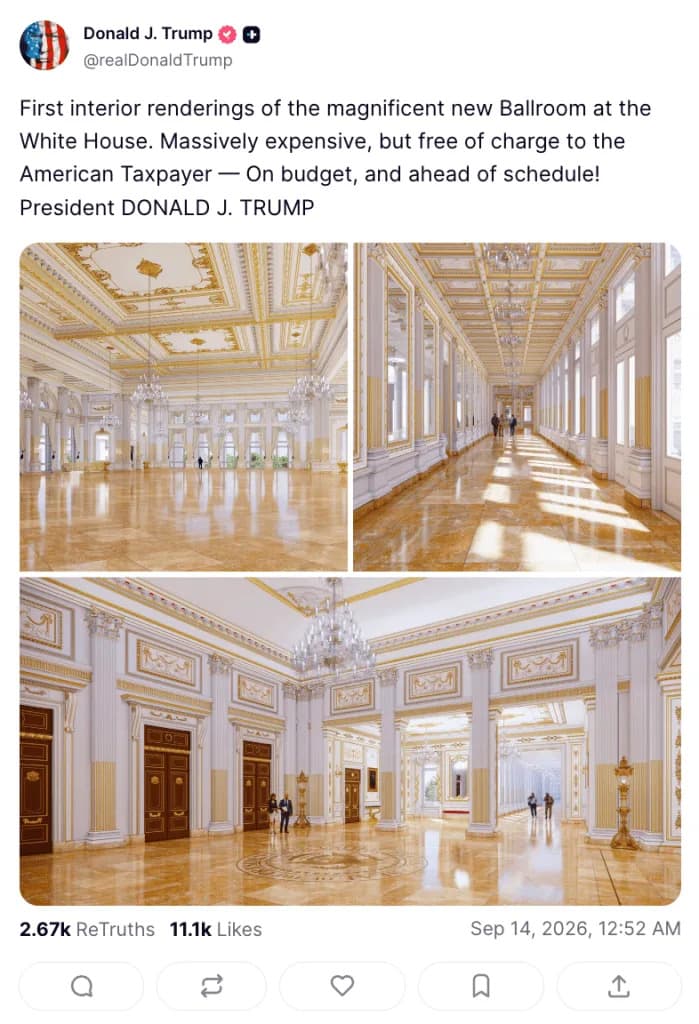
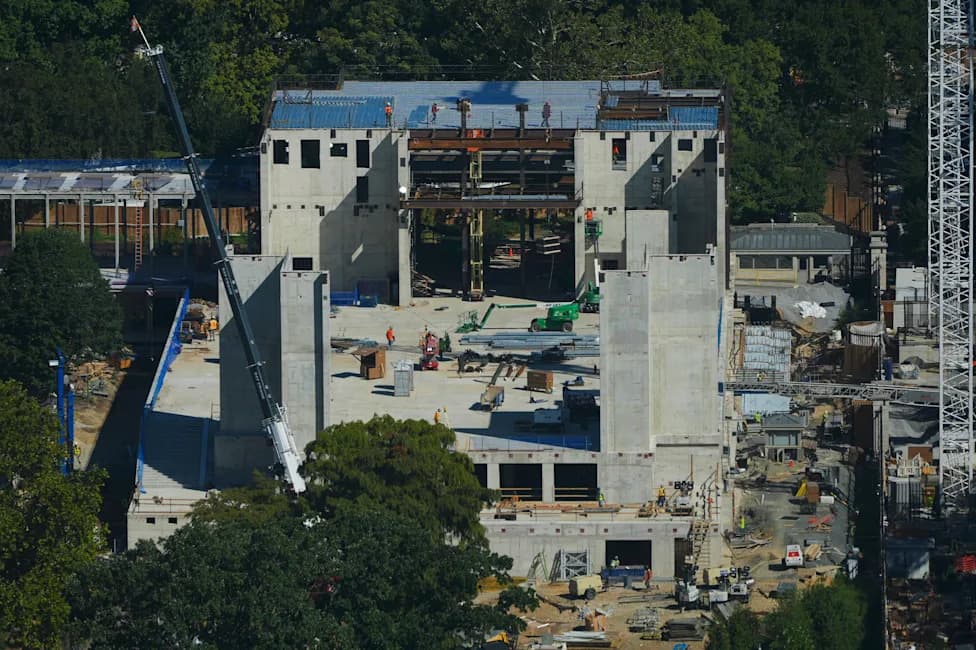
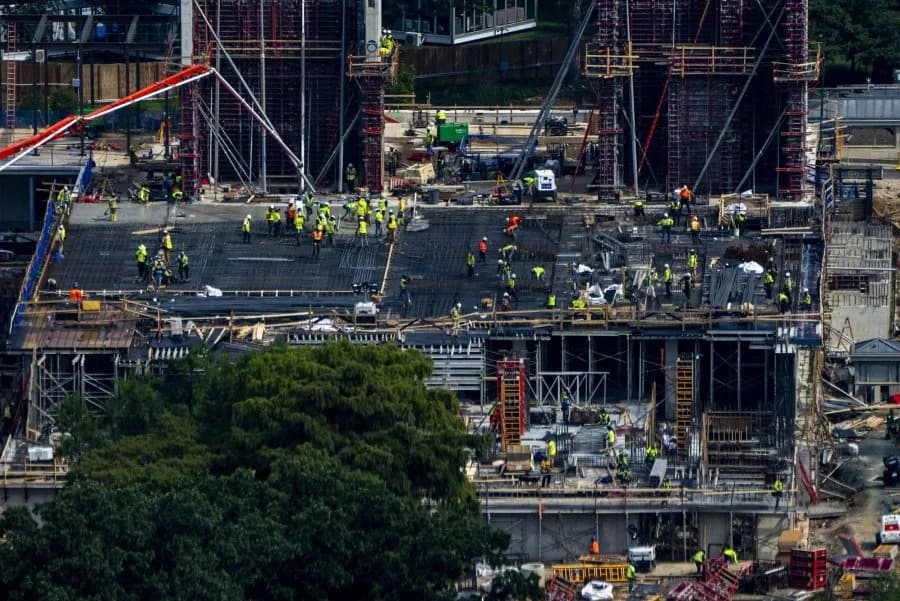
The Justice Department told an appeals court that a thwarted plot to assassinate President Trump at a UFC event on the White House lawn demonstrates a “compelling need” for a fortified ballroom with a drone port, sniper nests and hardened construction. Attorneys say the structure — part of a broader plan that includes an underground bunker — would improve presidential security. Costs have risen to at least $600 million and watchdogs report that many public donors later won large federal contracts; courts are now weighing whether the project can proceed without congressional approval.
DOJ Tells Appeals Court Foiled Assassination Plot Justifies Fortified White House Ballroom With 'Drone Port' and Sniper Nests
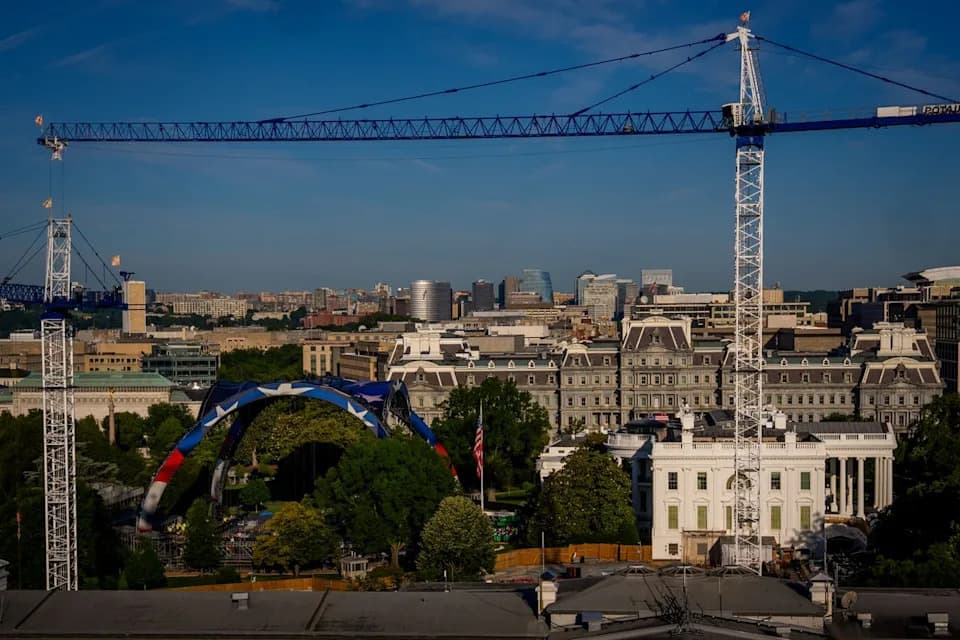
Lawyers for the Justice Department argued that an alleged plot to attack the UFC fight on the White House lawn underscores the need for a ballroom on the site of the now-demolished East Wing (Getty)
The Justice Department asked a federal appeals court to allow construction to resume on a planned, heavily fortified White House ballroom, arguing that a recently foiled plot to assassinate President Donald Trump at a UFC event on the White House lawn underscores a “compelling need” for the structure.
Hours after prosecutors charged five men in connection with the alleged plan, government lawyers asked the court to lift an order that has blocked the project. In filings, the DOJ said the ballroom was explicitly designed to defend against attacks of this kind and highlighted planned features including a “highly sophisticated Drone Port and Sniper Nests.”

Text messages released by the FBI allegedly show a group of men planning to attack the White House on Trump’s birthday during a UFC cage match (Department of Justice)
Planned Security Features
DOJ attorneys described multiple hardened elements intended to protect the president and visitors: a heavy steel drone‑proof roof; missile‑resistant columns; windows rated for bullets, ballistic force and blasts; and military‑grade, hermetically sealed ventilation for heating and air conditioning. The filing also references an expansive underground component of the overall project, including a bunker and military installations beneath the site where the East Wing once stood.
Costs, Funding And Donor Questions
Internal estimates cited in court filings say the ballroom alone could cost at least $600 million, with taxpayers expected to cover a substantial share. The White House initially said the ballroom would cost roughly $200 million and be financed by private donors, but the administration has since requested $1 billion from Congress for security upgrades that include the ballroom.
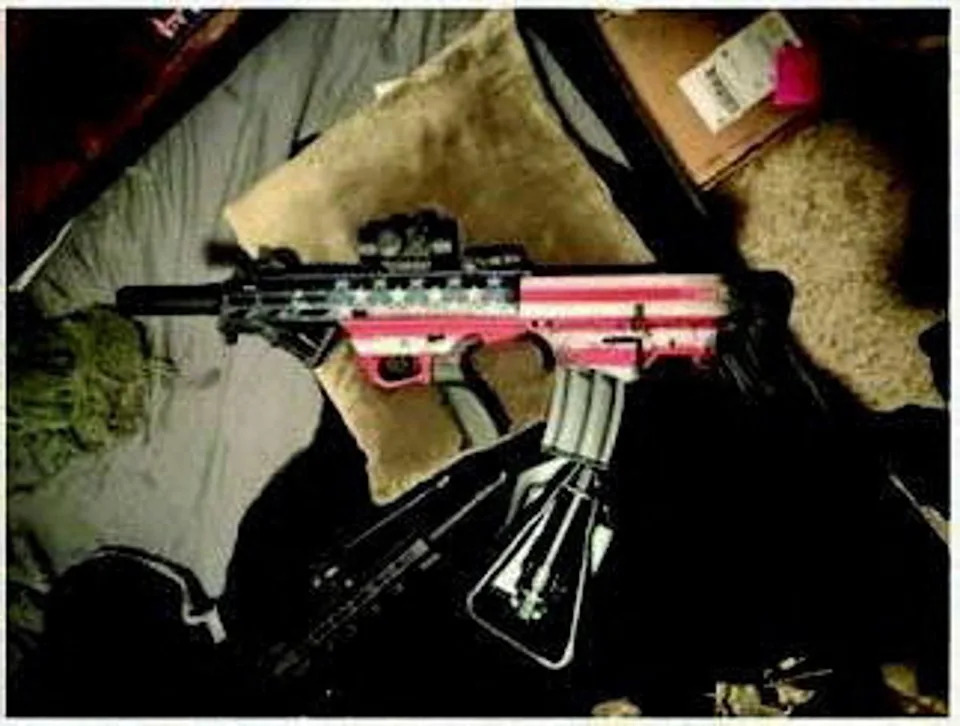
The alleged attackers allegedly amassed firearms, ammunition and tactical gear in preparation for an assault on the White House grounds (Department of Justice)
"In short, the repeated assassination attempts and plots against President Trump and those around him demonstrate the National Security imperative for a bullet proof, drone proof Ballroom," the DOJ wrote to the appeals court.
Watchdog reporting has raised questions about the ties between public donors and federal contracting. Public Citizen found that more than half of 27 publicly identified donors received new or expanded federal contracts after construction began; 14 corporate donors saw increased government business totaling roughly $50 billion in the first six months, the group reported.
Legal Battle And Court Rulings
In March, U.S. District Judge Richard Leon ruled that any new construction on White House grounds requires congressional approval, regardless of whether private or public funds are used. Judge Leon’s order did not bar work on the underground component; the National Trust for Historic Preservation, which sued to stop the project, did not challenge the bunker work in its complaint.
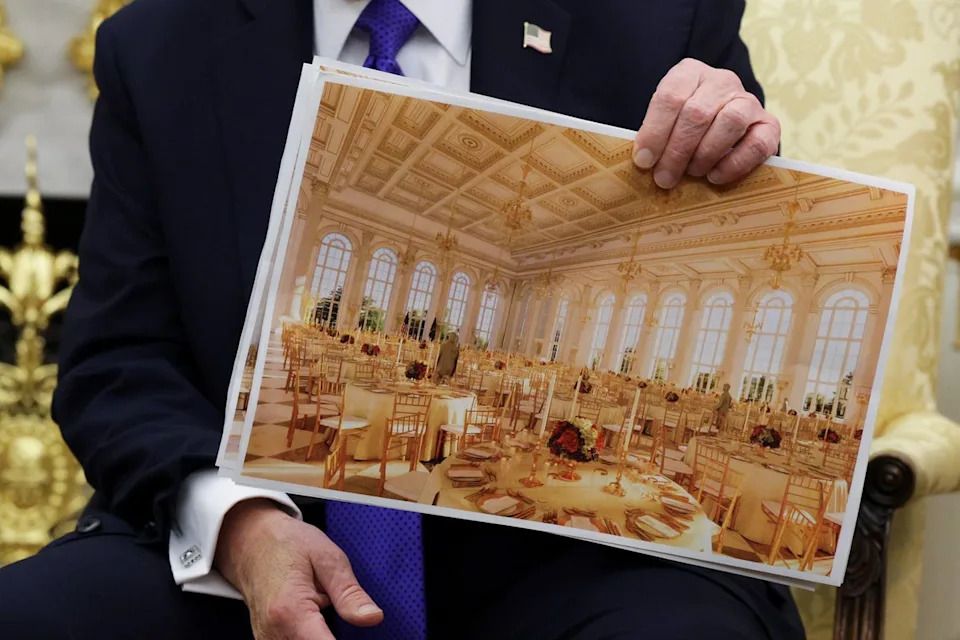
Trump has insisted that his massive ballroom won’t be paid by taxpayers, but his administration has sought millions of dollars in public funding for the project, which is expected to cost at least $600 million (Getty)
An appellate panel temporarily allowed some work to continue while litigation proceeds. That same appeals court is now weighing whether to maintain an injunction against broader construction. The DOJ has also contended that, because demolition has already occurred and work has progressed rapidly, courts cannot effectively unwind the project even if the demolition is later ruled unlawful.
During oral arguments, Justice Department lawyer Yaakov Roth appeared to accept a judge's hypothetical question — whether a president could raze a national monument before a challenger could obtain relief — responding, "I think that's right, yes." The exchange underscored the stakes in the case about executive authority, historic‑preservation law and congressional oversight.
The legal fight is ongoing, and the appeals court’s forthcoming decisions will determine whether construction can proceed or if congressional approval will be required before additional work continues.
Help us improve.