President Trump has proposed placing a drone port atop the new White House ballroom, portraying a large, heavily armed aerial defense. In practice, the U.S. Secret Service already operates a smaller, operational drone dock on a nearby Treasury building, deploying Skydio surveillance drones from four weatherproof boxes for rapid reconnaissance. Experts say a rooftop hub would pose significant logistical, oversight and airspace challenges, while critics warn it risks further militarizing the White House.
Secret Service Already Runs A Drone Dock Near The White House As Trump Pushes For A Larger Rooftop Port
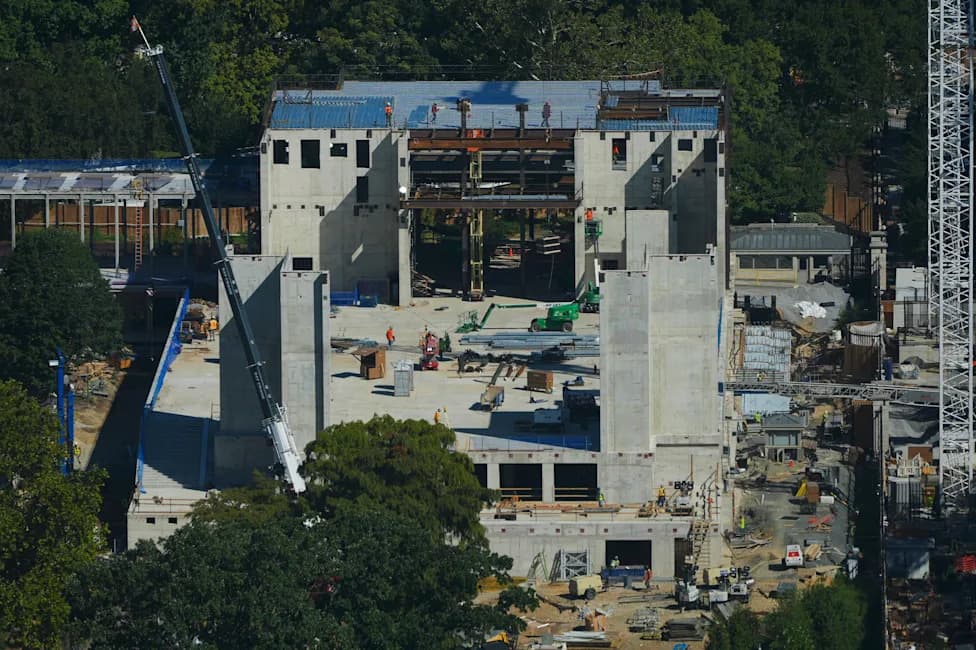
Work continues on the construction of the ballroom at the White House, Tuesday, Sept. 15, 2026, in Washington. (AP Photo/Pablo Martinez Monsivais)(AP Photo/Pablo Martinez Monsivais)
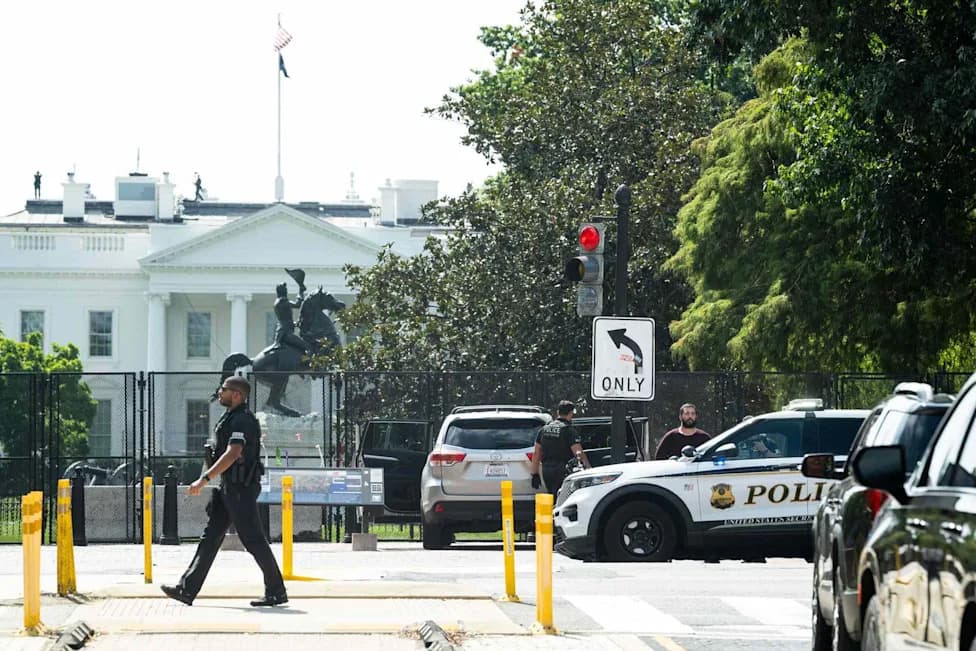
President Donald Trump has promoted an ambitious, AI-driven plan to install a drone port on top of the new White House ballroom, describing a facility that could host armed drones and personnel to protect the 18-acre complex. A few hundred feet away, however, the U.S. Secret Service already operates a much smaller, operational drone dock on a Treasury Department building adjacent to the White House.
What Exists Today
The Secret Service deployment uses small, unarmed Skydio surveillance drones stored in four gray, weatherproof boxes. Equipped with cameras and sensors, these drones are kept on standby and launched quickly to provide aerial reconnaissance and real-time situational awareness at officers' commands.
Trump's Proposal Versus Reality
Trump has circulated AI-generated images showing rows of large, attack-style UAVs and armed troops defending the grounds. Officials and independent experts say the Secret Service system next door is far more modest: fast, compact reconnaissance drones designed to gather intelligence and return to their docks rather than serve as offensive platforms.
“To be honest, if a drone was so close to the White House that it needed interdiction, it's already gotten too far,” said Matt Sloane, co-founder of SkyfireAI, which makes software for public-safety drones.
Operations, Oversight And Context
The Secret Service describes its approach as a "drone-as-first-responder" model: small UAVs launch from outdoor stations to provide immediate aerial oversight. The agency has expanded drone and counter-drone programs in recent years, a shift that accelerated after the 2024 attempted assassination at a campaign rally in Butler, Pennsylvania, where the agency did not successfully intervene against a drone allegedly used to scout the event.
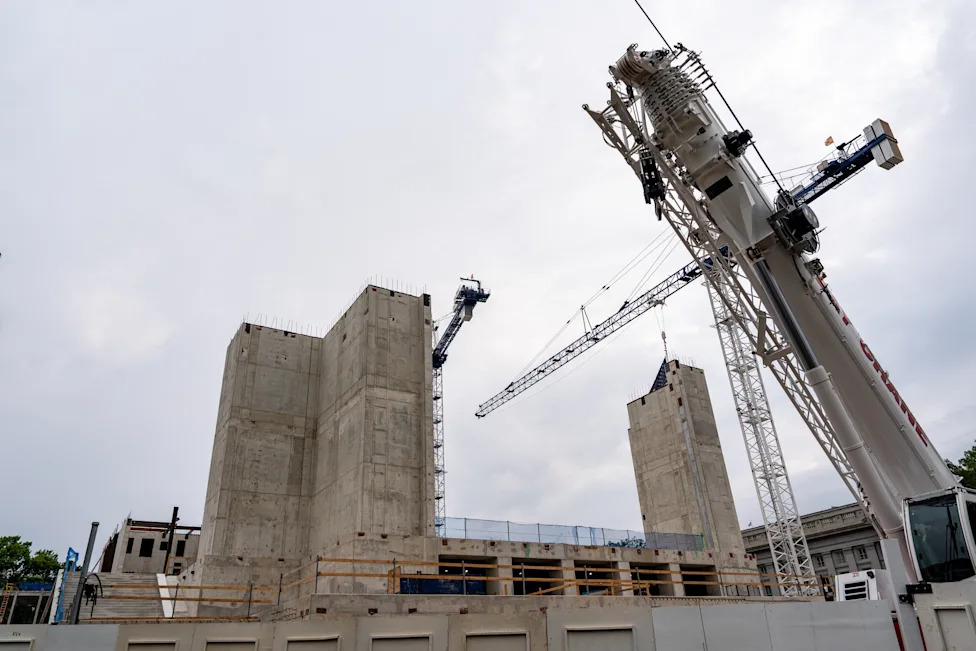
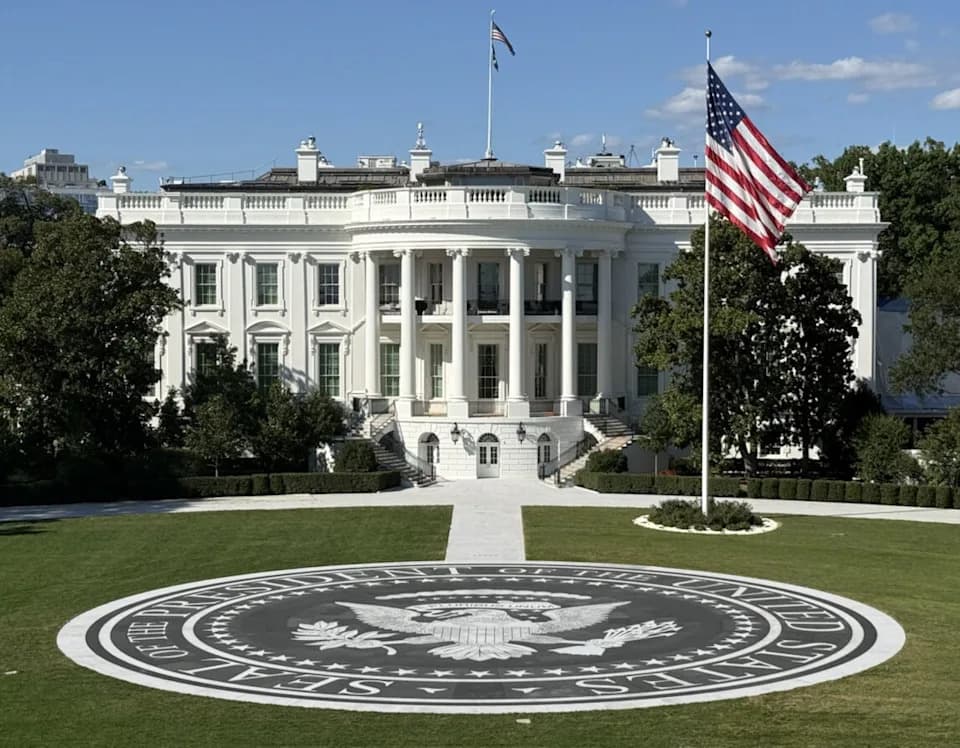
Construction on the ballroom on the South Grounds of the White House continues, Sunday, Sept. 20, 2026, in Washington. (AP Photo/Alex Brandon)(AP Photo/Alex Brandon)
While the White House has not specified what types of drones it plans to use for the ballroom port, the Secret Service's drones are a fraction of the size of the attack-style UAVs depicted in Trump's images. The U.S. Air Force purchased similar small Skydio drones in April for base protection overseas, and Skydio systems have been used at major events to provide aerial security.
Legal, Logistical And Airspace Concerns
Trump has defended the ballroom construction as a national security necessity, and the administration has cited military officials' interest in increased drone capacity. Courts have weighed the legal dispute: a federal judge paused ballroom construction but allowed work on security features to continue; the U.S. Supreme Court later permitted construction to proceed while litigation continues.
Experts warn that placing a busy drone hub atop the White House would raise complex questions about command, oversight, rules of engagement, and deconfliction with commercial and military air traffic. Washington's crowded airspace—near Reagan National Airport and shared military routes—would complicate operations. Past coordination errors, such as the military's mistaken shoot-down of a Customs and Border Protection drone near El Paso, illustrate the stakes of misidentification.
Reactions
Supporters frame the proposal as a response to rising political violence and the evolving threats posed by commercially available drones. Critics argue the plan risks further militarizing the White House and transforming a public symbol into a fortified complex. Edward Lengel, former chief historian for the White House Historical Association, described the trend as turning the residence into "a big giant porcupine" whose defenses point outward.
"It allows you to see the threat before it becomes an issue, and to task assets accordingly," said Dustin Talbott of the Secret Service's Aviation and Airspace Security Division in an agency video highlighting drone deployments.
The White House did not provide additional comment for this report. The Secret Service declined to discuss operational specifics but said its drone docks are separate from the drone port Mr. Trump has described. Skydio did not respond to requests for comment.
Help us improve.