Right-wing populists across Latin America are winning support by promising rapid, tough responses to crime and irregular migration, capitalizing on localized spikes in violence despite a regional decline in homicides. Analysts warn these short-term security strategies, modeled after leaders like El Salvador’s Nayib Bukele, could risk human rights and democratic norms, while long-term prevention and institutional reforms take longer to show results. The shift has boosted candidates such as Abelardo de la Espriella in Colombia and Keiko Fujimori in Peru into competitive runoffs.
AP Analysis: Latin America's Shift Right — Crime, Migration and the Rise of Hardline Leaders

FILE - Presidential candidate Abelardo de la Espriella addresses supporters from inside a bulletproof booth aboard a barge on the Magdalena River after leading the first round of the presidential election and advancing to a runoff in Barranquilla, Colombia, May 31, 2026. (AP Photo/Fernando Vergara, File)(AP Photo/Fernando Vergara)
BOGOTÁ, Colombia (AP) — Right-wing populists are gaining ground in several of Latin America’s largest economies by promising swift, forceful responses to crime and irregular migration. Their rise is being fueled by spikes in certain crimes and voter frustration with slow-to-pay-off, long-term reforms.
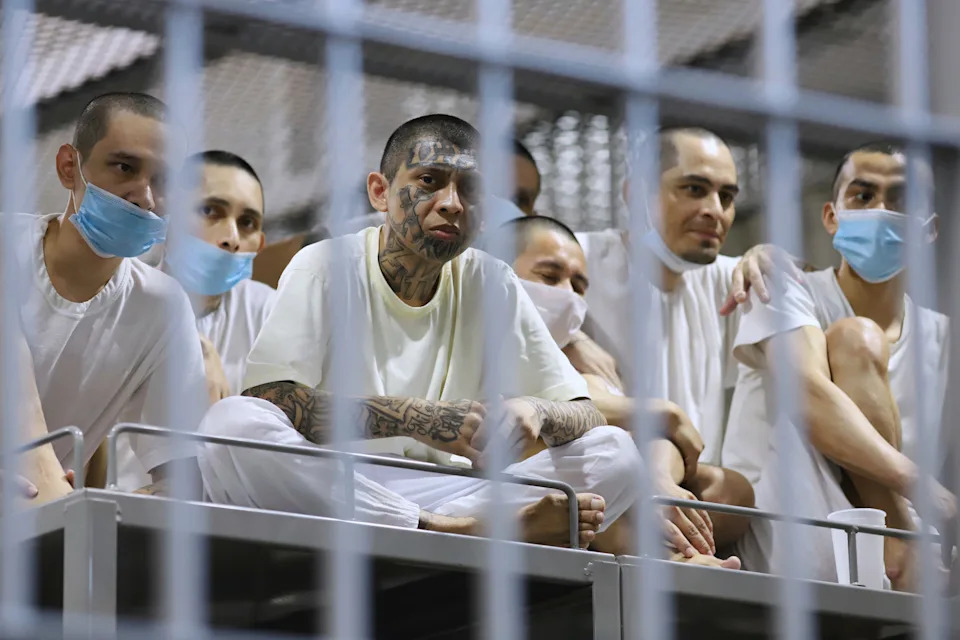
FILE - Prisoners look out from their cell as the Costa Rica Justice and Peace minister tours the Terrorism Confinement Center in Tecoluca, El Salvador, April 4, 2025. (AP Photo/Salvador Melendez, File)(AP Photo/Salvador Melendez)
Regional Context
Although overall homicide rates in Latin America and the Caribbean have fallen compared with a decade ago, recent surges in some countries and an uptick in other types of crime have created fertile political ground for hardline leaders. InSight Crime, a think tank tracking organized crime in the Americas, reported that the region’s combined average homicide rate declined by more than 5% last year, with a median rate of about 17.6 per 100,000 people.
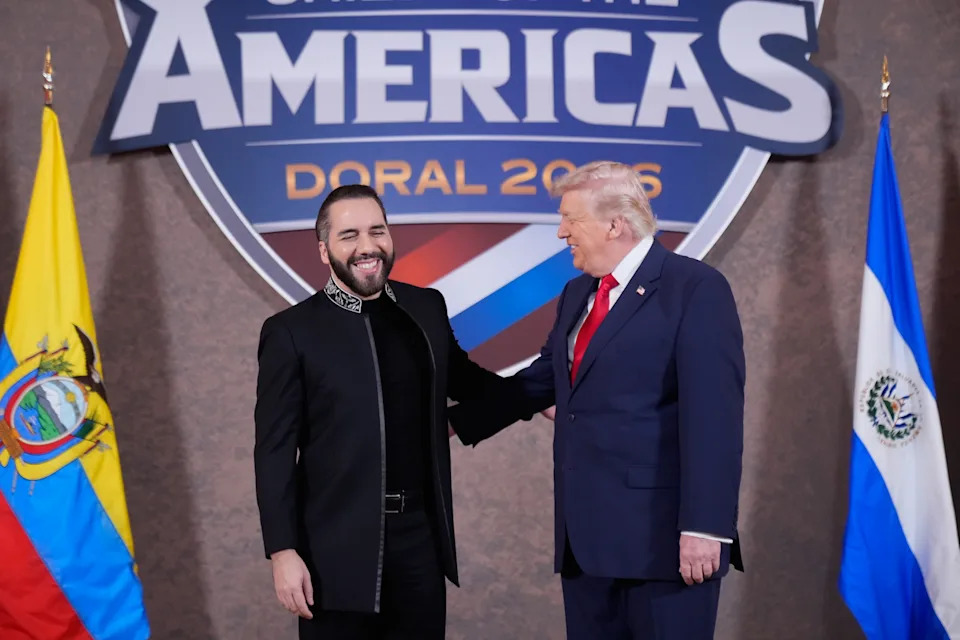
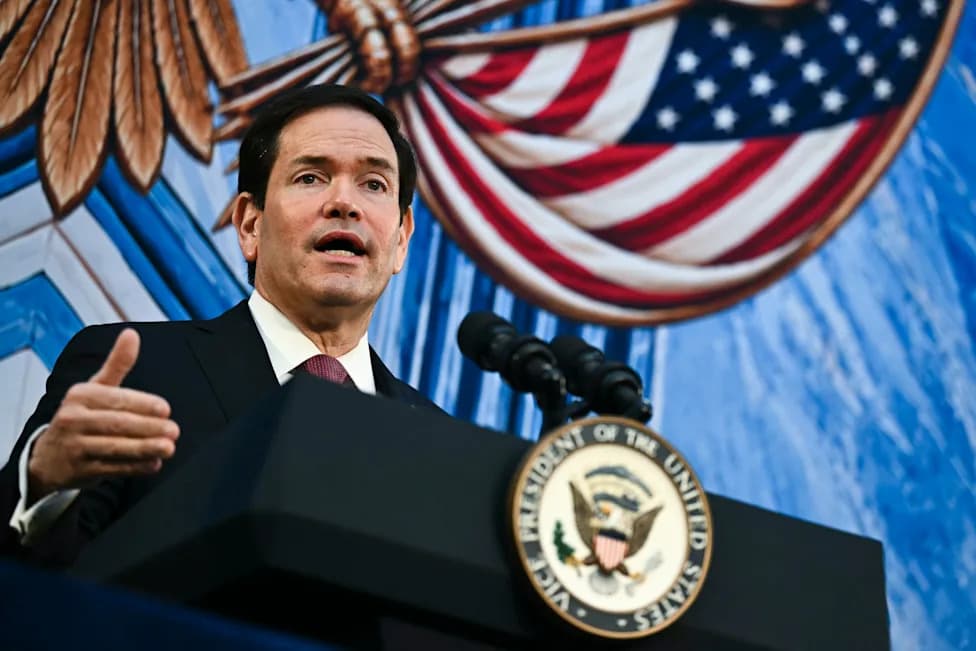
FILE - President of El Salvador Nayib Bukele greets President Donald Trump at the Shield of the Americas Summit at Trump National Doral Miami in Doral, Fla., March 7, 2026, (AP Photo/Mark Schiefelbein, File)(AP Photo/Mark Schiefelbein)
Where Violence Is Rising
There are notable exceptions to the regional decline. Drug-related killings have risen in Peru and Colombia — the world’s top cocaine producers — and in neighboring Ecuador, where traffickers view major ports as gateways to European markets. Authorities recorded roughly 2,400 homicides in Peru and 14,780 in Colombia last year, the highest totals for each country since at least 2020. Ecuador saw a dramatic 31% year-on-year increase in killings, to 9,216.

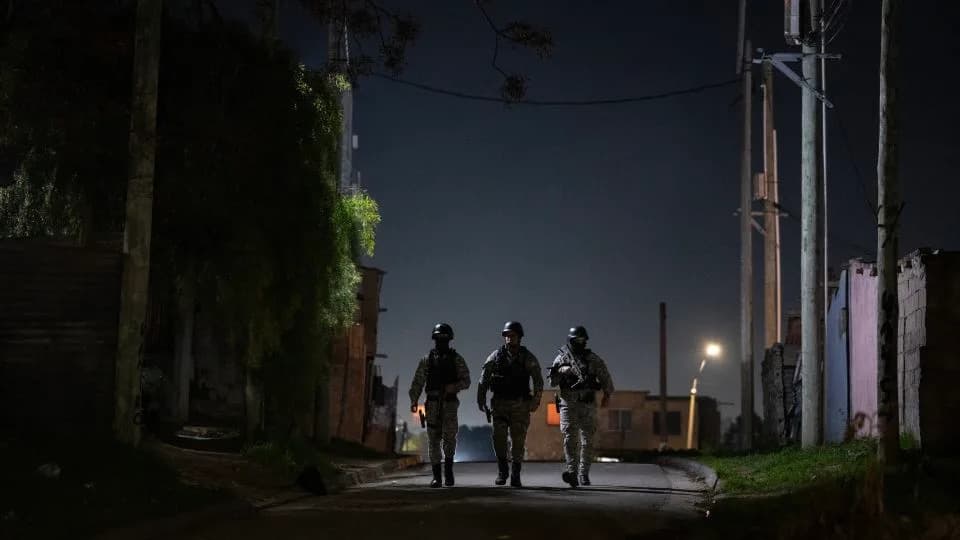
FILE - An unidentified man is detained by soldiers during a military operation in Guayaquil, Ecuador, Jan. 18, 2024. (AP Photo/Cesar Munoz, File)(AP Photo/Cesar Munoz)
Politics and Public Security
Analysts say populist movements across the political spectrum have made electoral gains, but the political right has offered rapid security remedies that can produce quick, visible results — even if critics warn those measures may endanger human rights and democratic checks and balances.

FILE - Presidential candidate Keiko Fujimori, of the Popular Force party, waves after voting during the presidential runoff election in Lima, Peru, June 7, 2026. (AP Photo/Martin Mejia, File)(AP Photo/Martin Mejia)
“It’s absolutely what you’re supposed to be doing, but people’s patience runs out,” said Adam Isacson, director for defense oversight at the Washington Office on Latin America. “So, there come the Bukeles of the world saying, ‘You want to feel better? We got this.’”
Country Examples
In Colombia, where large swathes of the countryside have slipped back into conflict, pro-Trump businessman Abelardo de la Espriella has surged in polls ahead of a runoff election, adopting rhetoric and tactics similar to those of El Salvador’s Nayib Bukele.
In Peru, extortion has increased fivefold over the past five years. Keiko Fujimori advanced to a June 7 presidential runoff on a law-and-order platform, pledging to deploy the military in prisons and along borders and invoking the authoritarian legacy of her disgraced late father, former President Alberto Fujimori.
Long-Term Solutions vs. Quick Fixes
Experts note that proposals typically advanced by the left — such as community-based violence prevention, improved police training, and judicial and prison reform — often take years to yield measurable results. That delay creates an opening for leaders who promise immediate public security gains.
DeBre reported from Buenos Aires, Argentina.
Help us improve.