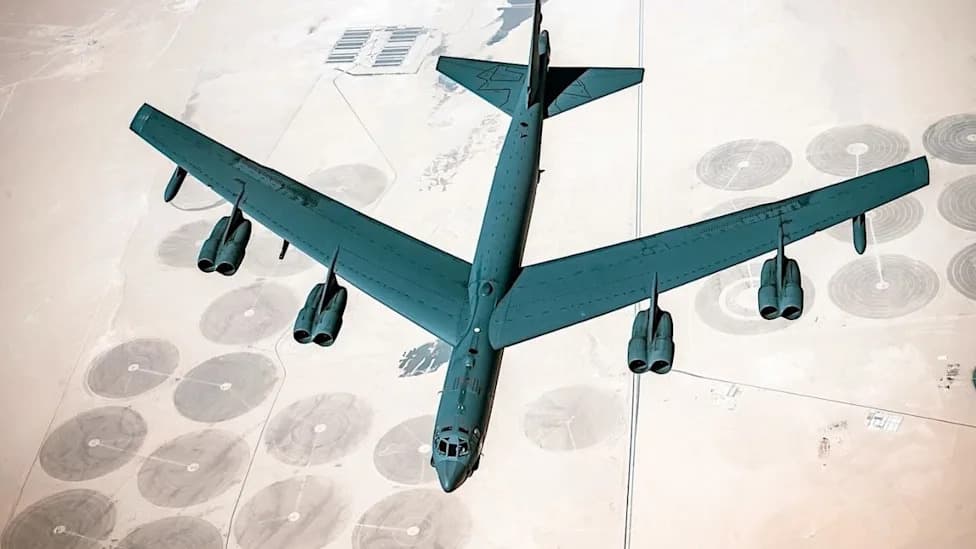
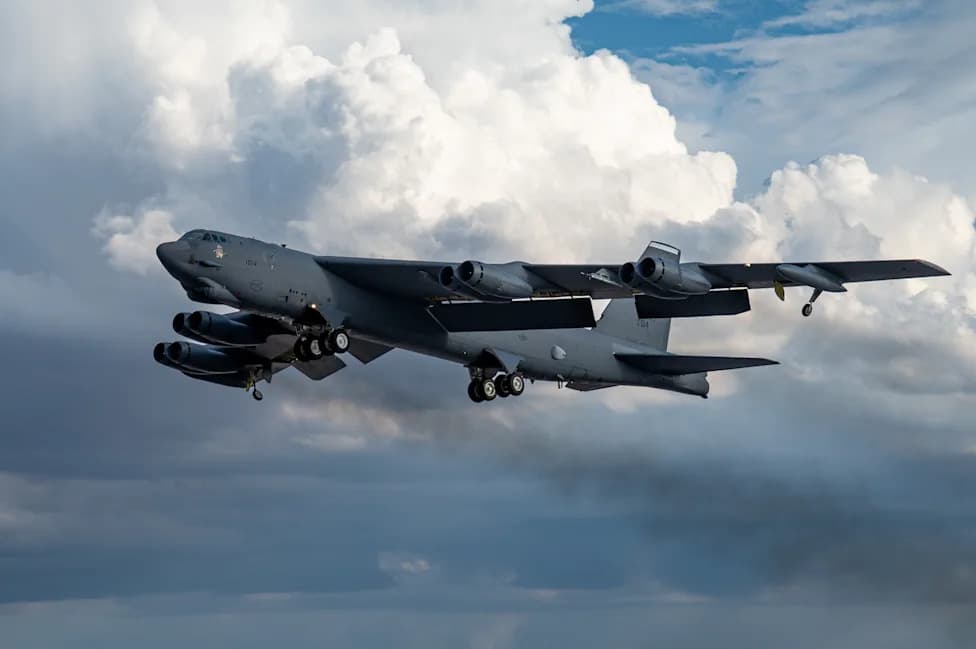
The B-52 Stratofortress crashed shortly after taking off from Edwards Air Force Base during a test flight tied to a radar modernization program, killing all eight people aboard. Officials described the accident as unsurvivable, and investigators said detailed findings may take about six months. One civilian victim identified publicly was flight test engineer Jeromy Smith, who leaves two young children. Edwards — a long-standing flight-test site — has opened family support resources and paused flight operations while recovery and investigation continue.
Eight Killed in B-52 Crash at Edwards AFB During Radar Modernization Test Flight
X
A B-52 Stratofortress on a routine test sortie crashed shortly after takeoff Monday at Edwards Air Force Base in Southern California, killing all eight people aboard and leaving wreckage so badly burned and fragmented that it was difficult to identify.
Crash Details
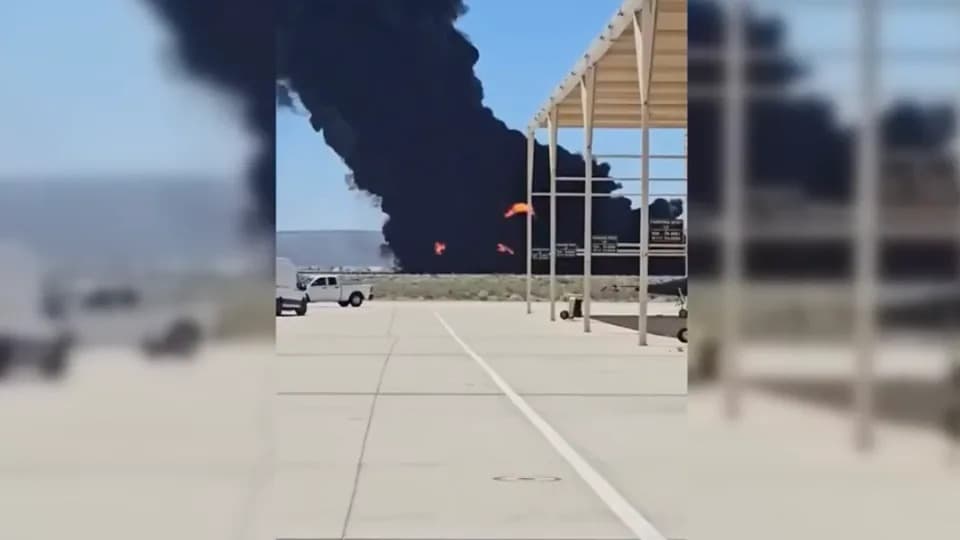
The bomber departed at 11:20 a.m. local time for a flight supporting the B-52 Radar Modernization Program, Air Force officials said. The aircraft produced a towering column of black smoke over the base — about 100 miles northeast of Los Angeles — and left a large, charred scar across the runway and nearby desert terrain.
“It was tragic and unsurvivable,” Air Force Col. James Hayes said at a news briefing.
Officials said the flight crew included a mix of uniformed service members, government-employed civilians and private contractors. The military has not released a full list of victims pending family notifications; relatives have publicly identified at least one victim as Jeromy Smith, a Department of Defense civilian flight test engineer. His widow told local media he leaves behind two young sons.
Response, Investigation and Base Status
Video from local outlets showed smoldering wreckage and a wide burned area on the runway. Edwards personnel said several small fires at the crash site reignited overnight while maintenance and Explosive Ordnance Disposal teams worked to make the area safe for search and recovery crews.
The base established a support center to help service members and families affected by the tragedy. Base officials said the airfield would remain closed "until at least Thursday," and that flight test operations were expected to resume early next week after safety checks.
Military investigators will lead a formal inquiry into the cause of the crash. Officials cautioned the detailed findings are not likely to be made public for about six months while the investigation proceeds.
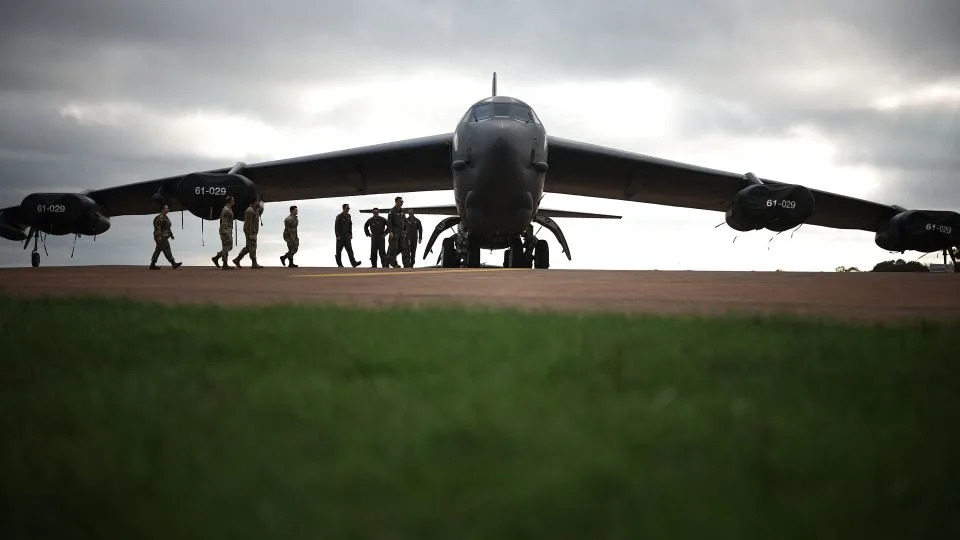
Flight crew from US Air Force 501st Combat Support Wing and 307th Bomb Wing walk toward a B-52 Stratofortress bomber aircraft at RAF Fairford on September 19, 2025. - Henry Nicholls/AFP/Getty Images/File
Reactions and Context
Boeing, the aircraft manufacturer, confirmed that two of its employees were aboard and said the company was in contact with their families and offering support. Senior officials, including members of the Air Force and state leadership, publicly expressed condolences and thanked emergency responders.
Edwards Air Force Base is a primary U.S. flight-test facility used for aircraft, helicopters, drones and, historically, space shuttles, prized for its long runways and surrounding desert safety margins. Retired test pilots and engineers note that test flights typically include highly experienced crews and civilian specialists depending on the mission.
Historical Background
The B-52 first entered service in 1955 and remains one of the Air Force’s oldest operational aircraft. The B-52H variant — the model currently flown — was part of a fleet that numbered 76 aircraft before this crash. The long-range heavy bomber typically operates with a crew of five and can carry heavy munitions, including conventional and nuclear weapons.
The Radar Modernization Program aims to keep the B-52 relevant through 2050 and beyond by upgrading radar systems, engines, avionics, communications, crew compartments and weapons integration. Because the airframe has not been produced since 1962, many spare parts and replacement components are sourced from preserved airframes stored at Davis-Monthan AFB in Arizona.
Past Accidents At Edwards
Edwards’ long test history includes several fatal accidents dating back decades. Notable past incidents recorded in aviation archives include crashes in 1951, 1948, 1944 and 1941, each resulting in loss of life during testing or training operations.
Military officials continue recovery operations at Edwards while investigators work to determine what led to this crash. The Air Force will release formal findings when available.
Reporting contributions and original coverage were provided by multiple news organizations; this article synthesizes official statements and local reporting.
Help us improve.