Penn State researchers found pervasive microplastic contamination across Pennsylvania waterways, averaging about 1,125 particles per pound (≈2,500/kg) of sediment. Sediment cores indicate microplastic burial has roughly doubled every 20 years since 1950, with polypropylene, polyurethane and tire rubber most common. Estuaries trap some plastic but not enough to explain the ocean’s missing mass; the most recent layers show a modest decline, suggesting policy and behavioral changes can help.
Microplastics Pervade Pennsylvania Waters — Recent Sediment Layers Show a Small Decline

Microplastics are settling into Pennsylvania's rivers and marshes.Philippe Gerber/Moment Collection via Getty Images
Researchers from Penn State mapped microplastics across Pennsylvania waterways and found pervasive contamination in both rural and urban sites. Sediment records show concentrations have roughly doubled every 20 years since about 1950, and the most common materials recovered include polypropylene, polyurethane and tire rubber. The most recent sediment layers show a modest decline, offering a hopeful sign that behavior and policy can make a difference.

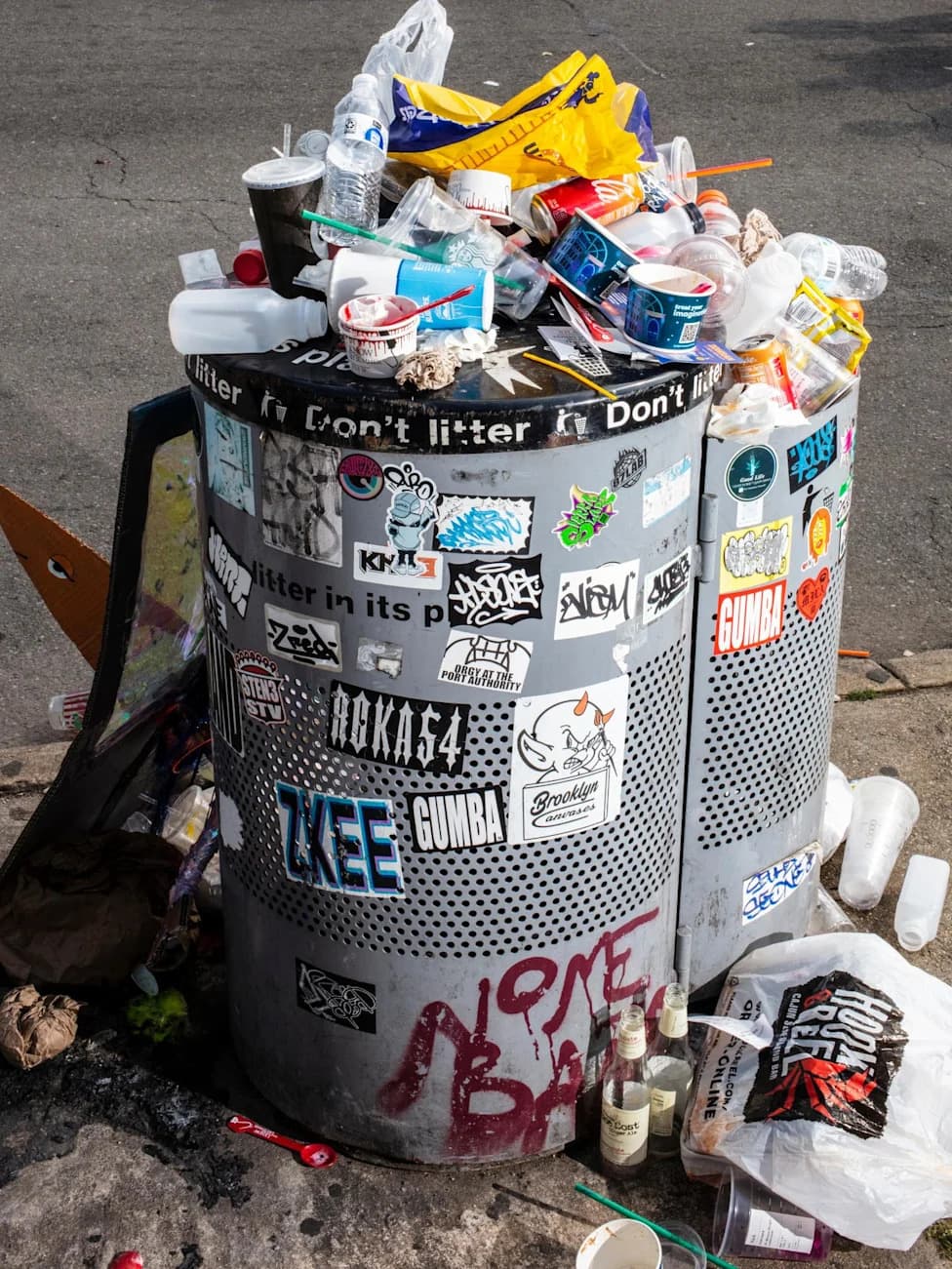
Plastics have revolutionized our lives, but more than half of plastic waste ends up in landfills.Nathaniel Warner
Why This Matters
Global plastic production has doubled roughly every two decades since the 1950s. Today the world manufactures more than 500 million metric tons of plastic per year — about the combined weight of every person on Earth. Much of that waste ends up in landfills or escapes into the environment, where it fragments over hundreds to thousands of years into microplastics (particles ranging from ~5 millimeters down to nanometer scales).
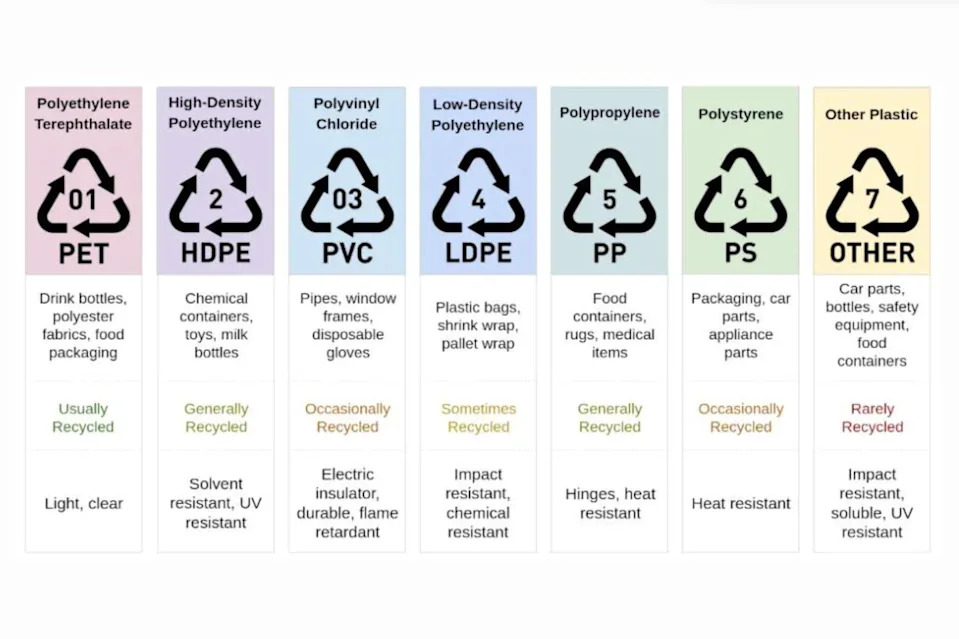
The resin code system was created to make it easier to identify types of plastic.Oliver Radwell
Study Sites and Methods
The team sampled sediments from three Pennsylvania locations: Raystown Lake and Conemaugh River Lake in central Pennsylvania, and the John Heinz National Wildlife Refuge at Tinicum near Philadelphia, which is the upper reach of the Delaware Estuary. Two types of sediment were collected:
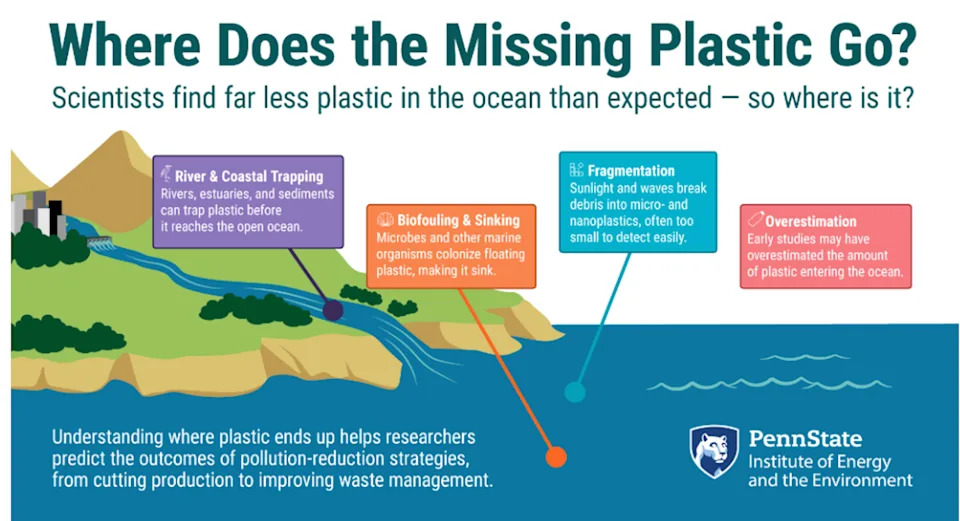
Researchers are investigating how plastic is redistributed through watersheds.Penn State Institute of Energy and the Environment
- Surface sediment samples along transects from urban to rural areas.
- Long sediment cores drilled from reservoirs and estuaries, which preserve a chronological record of deposition.
Researchers dated sediment layers using isotopic methods — lead-210 for recent-decade resolution and cesium-137 (notably its 1964 atmospheric testing peak) as a fixed time marker — then measured microplastic concentrations and characterized plastic types.

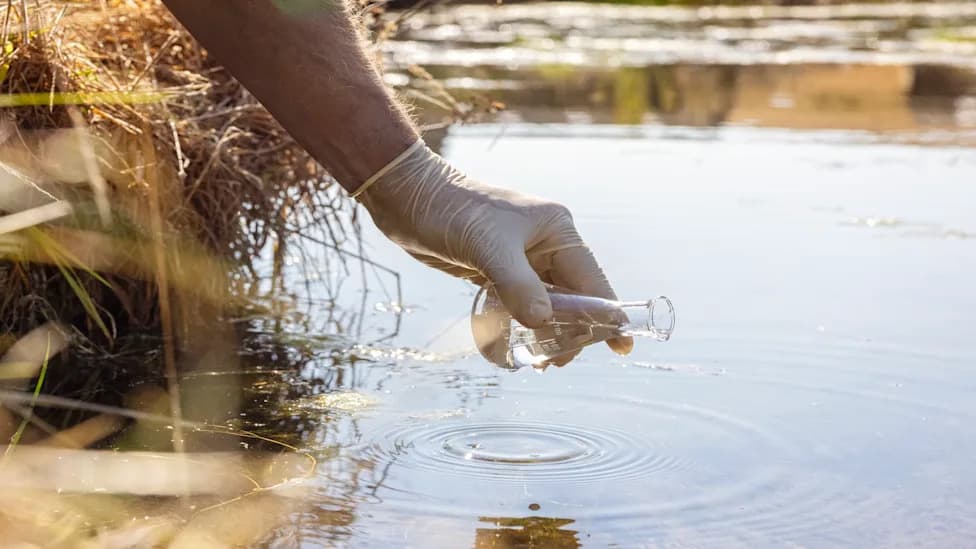
Water samples from rural Pennsylvania had similar microplastic levels to those taken from John Heinz National Wildlife Refuge in Philadelphia.Matthew James
Key Findings
- Widespread contamination: Microplastics were found across all sampled sites, including rural, forested watersheds and urban refuges near Philadelphia.
- High sediment concentrations: Average concentrations were about 1,125 microplastic particles per pound (≈2,500 particles per kilogram) of sediment, with substantial local variation.
- Rapid accumulation over time: Microplastic burial in sediment has roughly doubled every ~20 years since 1950, mirroring global production trends.
- Common materials: Polypropylene and polyurethane (both abundant in single-use items) and fragments consistent with tire rubber were the most frequently detected materials.
- Estuaries trap some plastic: Estuaries capture microplastics, but not nearly enough to account for the large mass of “missing” plastic that models predict should be in the ocean.
- Recent improvement: The most recent sediment layers (dating roughly to the 2000s by depth and accumulation rate) show a small but measurable decline in microplastic concentration, possibly linked to improved recycling and greater public awareness.
Health and Environmental Context
Microplastics are now detected in air, water, soil, food and living organisms, including humans. They can enter the body by ingestion (food and drinking water), inhalation and skin contact. Studies have reported microplastics in human blood and in tissues including brain and reproductive organs, though the health implications and mechanisms of harm are still an active area of research.
What You Can Do
- Reduce single-use plastics: Choose reusable bottles, cups, bags and containers (glass, stainless steel, and unbleached paper alternatives).
- Check resin identification codes (numbers 1–7) when possible and prioritize durable, recyclable materials.
- Support local and national policies that reduce plastic production and improve waste management.
- Stay informed about product choices and proper disposal to limit plastic loss to the environment.
Authors and Funding
This research was conducted by Nathaniel Warner, Lisa Emili and Raymond Najjar at Penn State. Funding sources include the National Science Foundation, Penn State’s Institute of Energy and the Environment, the U.S. Geological Survey, and Penn State’s College of Earth and Mineral Sciences.
Bottom line: Microplastics are widespread in Pennsylvania sediments and have accumulated rapidly since 1950, but a small decline in the most recent layers suggests that mitigation efforts and behavior changes can have measurable effects.
Help us improve.