The Trump administration is pursuing a coordinated effort — DoJ lawsuits, FBI investigations and a March 2026 executive order — to tighten vote-by-mail rules and seek state voter records. Critics, including experts and 23 Democratic-led states, say the measures mirror debunked 2020 fraud claims, risk disenfranchising voters and exceed federal authority. Multiple courts have already pushed back on related DoJ actions.
Experts Alarmed as Trump Advances Broad Campaign to Restrict Voting Rights
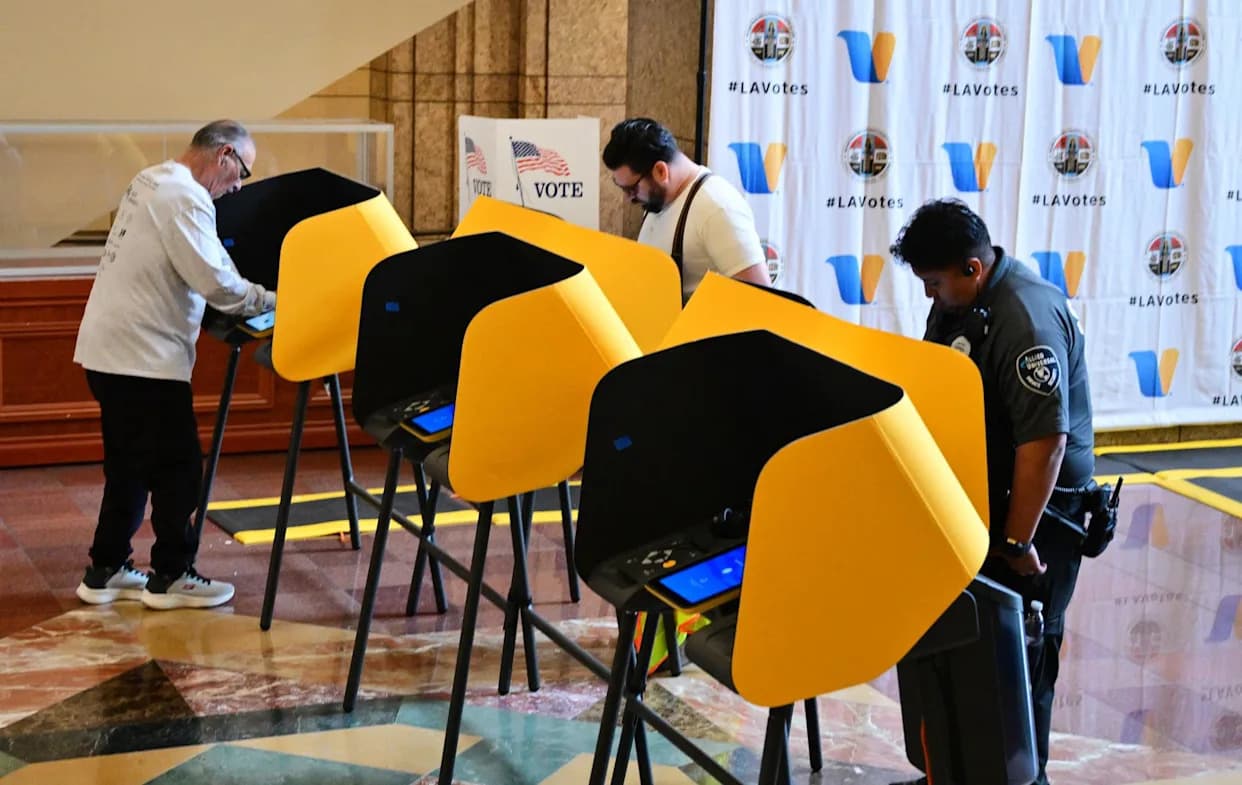
People vote at a polling station in Los Angeles earlier this month. The administration has launched a multi-pronged push to change voting rules.Photograph: Frederic J Brown/AFP/Getty(Photograph: Frederic J Brown/AFP/Getty)
Election experts, former officials and voting-rights groups warn that the Trump administration has launched a multi-pronged effort to restrict voting access — using Department of Justice lawsuits, FBI probes and a March 2026 executive order that tightens rules for mail-in voting. Critics say the moves echo the president’s repeatedly debunked claims that the 2020 election was stolen and risk intimidating election workers and disenfranchising voters in key battleground states.
What Officials Are Doing
The Justice Department has filed suits seeking sensitive voter information from roughly 30 states, even as state law reserves primary control of election administration to the states. Courts have pushed back: at least eight federal courts have ruled against the department in these cases so far.
At the same time, the FBI has opened and expanded inquiries in several battleground states, including Georgia and Wisconsin. Among the actions reported this year are an FBI raid on an election facility in Fulton County, Georgia; the seizure of election-related data and ballot images in Arizona; requests for ballots in Michigan; and expanded inquiries in the Milwaukee area.
Executive Orders and Federal Role
In March 2026 the president issued an executive order tightening mail-in voting rules. The order gives the U.S. Postal Service new authority to set rules that could limit mail ballot delivery and directs the Department of Homeland Security to compile federal lists of purportedly eligible voters using federal databases. Civil-rights groups and many states say the databases are incomplete and unreliable and have warned the measures could create chaos and disenfranchise eligible voters.
Voting-rights advocates and 23 Democratic-led states — including California and the District of Columbia — have filed suit to block the order, arguing it unconstitutionally interferes with states’ authority to run elections. Federal courts have already blocked major parts of a related March 2025 order, and the administration is appealing those rulings.
Changes Inside the Justice Department
The Justice Department’s voting section has been reorganized since 2025 and its staff reduced from about 30 attorneys to less than half that number, according to former department lawyers. Several recent hires include attorneys who were involved in 2020 election challenges: former Congressman Dan Bishop was tapped to help lead national fraud investigations, and William Mohrman was hired as senior counsel and has entered appearances in cases seeking state voter records.
Concerns From Experts and Some Republicans
“The Department of Justice has no authority to sweep up the voter rolls…from every state in the nation,” said Eileen O’Connor, senior counsel at the Brennan Center and a former DoJ voting-section lawyer. “These lawsuits are only one part of a broader campaign to interfere with elections.”
Former election officials and nonpartisan experts say the pattern — aggressive record requests, personnel changes, high-profile prosecutions and expanded FBI inquiries — risks intimidating election workers and voters, while failing to identify meaningful, widespread fraud in 2020. Some Republican veterans have also warned the orders could be unconstitutional and disenfranchising.
Politics and Potential Impact
Critics argue the actions are politically timed ahead of the November midterms, when control of the House and Senate could shift. Supporters within the administration say they aim to secure election integrity; opponents say the effort amounts to federal overreach that would transfer powers traditionally reserved to the states and could suppress turnout among eligible voters.
Legal battles are ongoing and likely to remain central to how the 2026 midterms are administered. Voting-rights groups and state officials say they will continue to challenge federal actions they view as unconstitutional or harmful to ballot access.
Help us improve.