Georgia Republicans will decide nominations in a primary runoff Tuesday, headlined by U.S. Rep. Mike Collins vs. Derek Dooley in the Senate contest and Lt. Gov. Burt Jones vs. Rick Jackson for governor. Collins led the May 19 primary with strong rural support; Dooley carried several populous Atlanta-area counties. Polls close at 7 p.m. ET; the AP will report results and will declare winners only when a comeback by a trailing candidate is no longer plausible.
Georgia Runoff Preview: Collins vs. Dooley, Jones vs. Jackson — What to Watch Tuesday

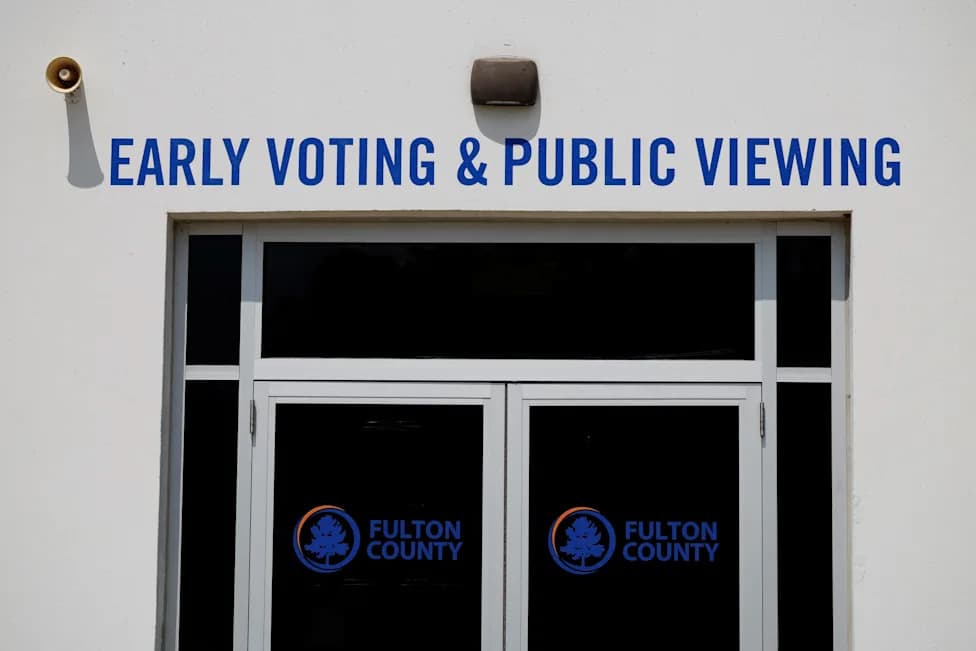
A sign directs voters arriving to vote on Tuesday, May 19, 2026, in Atlanta. (AP Photo/Brynn Anderson)(AP Photo/Brynn Anderson)
Georgia Republicans will settle several high-profile nominations in a state primary runoff on Tuesday, with marquee contests for the U.S. Senate and governor drawing the most attention. Voters also will pick nominees for multiple congressional and state legislative districts and several statewide offices where no candidate won a majority in the May 19 primary.

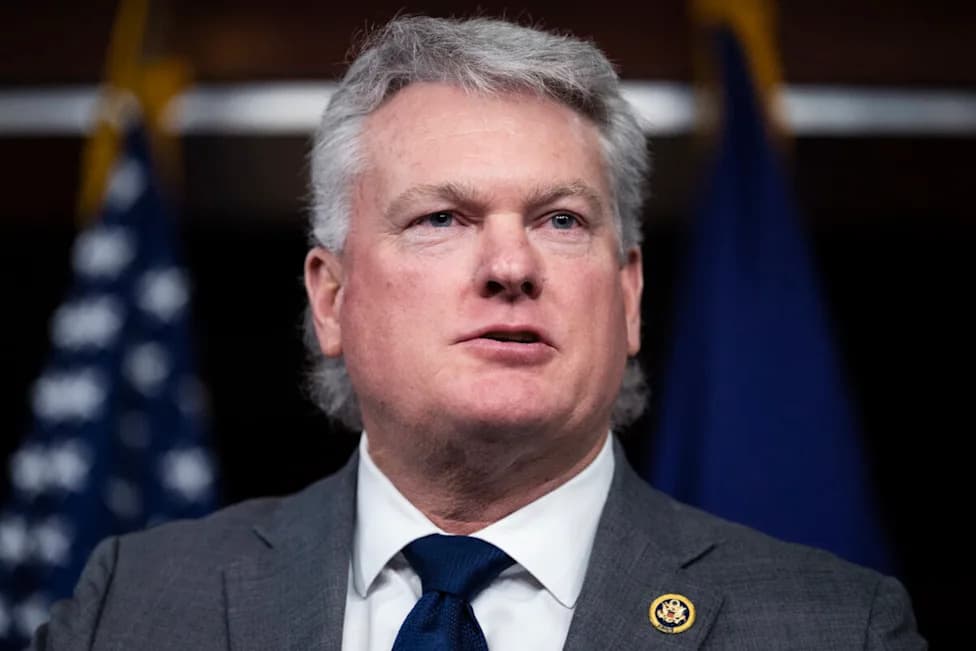
U.S. Rep. Mike Collins, R-Ga., greets supporters as he arrives at his primary election watch party in Jackson, Ga. on Tuesday, May 19, 2026. (Arvin Temkar/Atlanta Journal-Constitution via AP)(Arvin Temkar/Atlanta Journal-Constitution via AP)
Senate Runoff: Collins vs. Dooley
U.S. Rep. Mike Collins and former University of Tennessee football coach Derek Dooley advanced to the Republican runoff to determine the GOP nominee who will face Democratic Sen. Jon Ossoff in November. Collins led the May 19 primary with roughly 41% of the vote, winning many smaller, rural counties and some larger counties north of Atlanta. Dooley finished near 30%, carrying just 14 of Georgia’s 159 counties but including five of the state’s most populous: Fulton, Gwinnett, Cobb, DeKalb and Clayton, plus Clarke County (home to the University of Georgia).

FILE - Gov. Brian Kemp, center left, and Republican U.S. Senate candidate Derek Dooley greet supporters at campaign stop for Dooley at Farmview Market in Madison, Ga., on May 8, 2026. (Arvin Temkar/Atlanta Journal-Constitution via AP, File)(Arvin Temkar/Atlanta Journal-Constitution via AP)
Third-place finisher U.S. Rep. Earl “Buddy” Carter captured about 25% of the primary vote; his supporters could be decisive in the runoff. Carter’s strength came largely from small, rural counties in southeastern Georgia that overlap much of his 1st Congressional District. Carter and Collins are generally viewed as more closely aligned with former President Donald Trump’s movement, while Dooley has said he did not vote in the 2016 or 2020 presidential elections. Trump endorsed Collins on the Sunday before the runoff.

Georgia gubernatorial candidate Rick Jackson talks to a supporter after speaking during a primary election night party on Tuesday, May 19, 2026, in Atlanta. (AP Photo/Brynn Anderson)(AP Photo/Brynn Anderson)
Governor Runoff: Jones vs. Jackson
The governor’s runoff pits Lt. Gov. Burt Jones, who earned about 38% of the primary vote and was endorsed by former President Trump, against healthcare executive Rick Jackson, who received about 33%. Jones performed strongly across many small, rural counties; Jackson stayed competitive by eking out narrow wins in larger counties including Fulton and several Atlanta suburbs. Outgoing Gov. Brian Kemp endorsed Jones ahead of the runoff.

Supporters cheer as Georgia gubernatorial candidate Burt Jones speaks during a primary election night watch party, Tuesday, May 19, 2026, in Jackson, Ga. (AP Photo/Mike Stewart)(AP Photo/Mike Stewart)
How the Night Will Unfold — What the AP Decision Team Will Monitor
- Polls close at 7 p.m. ET.
- The Associated Press will report vote results and declare winners in runoff contests for U.S. Senate, U.S. House, governor, lieutenant governor, secretary of state, insurance commissioner, state school superintendent, labor commissioner, public service commissioner, state Senate and state House.
- Voters who cast a partisan ballot on May 19 may vote only in that same party’s runoff; registered voters who did not vote in either primary on May 19 may choose a party’s runoff this time.
- As of May 28, Georgia had about 8.1 million registered voters.
- In the May 19 primaries, approximately 934,000 ballots were cast in the Republican governor primary and about 913,000 in the Republican U.S. Senate primary.
- Early in-person and mail ballots constituted roughly 46% of total turnout on May 19. By the Friday before the runoff, about 119,000 Democratic and 222,000 Republican runoff ballots had already been cast.
- A large share of pre–Election Day votes are reported early in the night: roughly four in five counties release most early in-person results in the first update, and about two-thirds release nearly all mail-vote results in that first update.
- In the May 19 Republican governor primary, the AP’s first report came at 7:13 p.m. ET (13 minutes after polls closed); the last update that night came at 3:13 a.m. ET, with more than 99.9% of votes counted.
- Georgia has no automatic recount. A losing candidate may request a recount if the margin is ≤ 0.5% of the total vote; the AP may call a race that is subject to recount if the lead appears too large to be overturned by a recount or legal challenge.
- The AP will declare a winner only when it determines there is no plausible scenario for a trailing candidate to catch up; if a race is not called, the AP will continue to report developments while making clear it has not declared a winner.
- As of the runoff, there are 140 days remaining until the 2026 midterm elections.
Follow ongoing coverage of the 2026 elections from the AP for updates as results are reported.
Help us improve.