Troy Lake stunned his new neighbor, Wyoming political consultant Jeff Daugherty, by confessing over dinner that he would soon report to federal prison after pleading guilty to conspiring to violate the Clean Air Act. Lake, a mechanic and small-business owner, admitted to disabling pollution-control monitors on hundreds of commercial diesel trucks and was sentenced to one year and one day — a punishment many considered unusually harsh for this type of environmental offense.
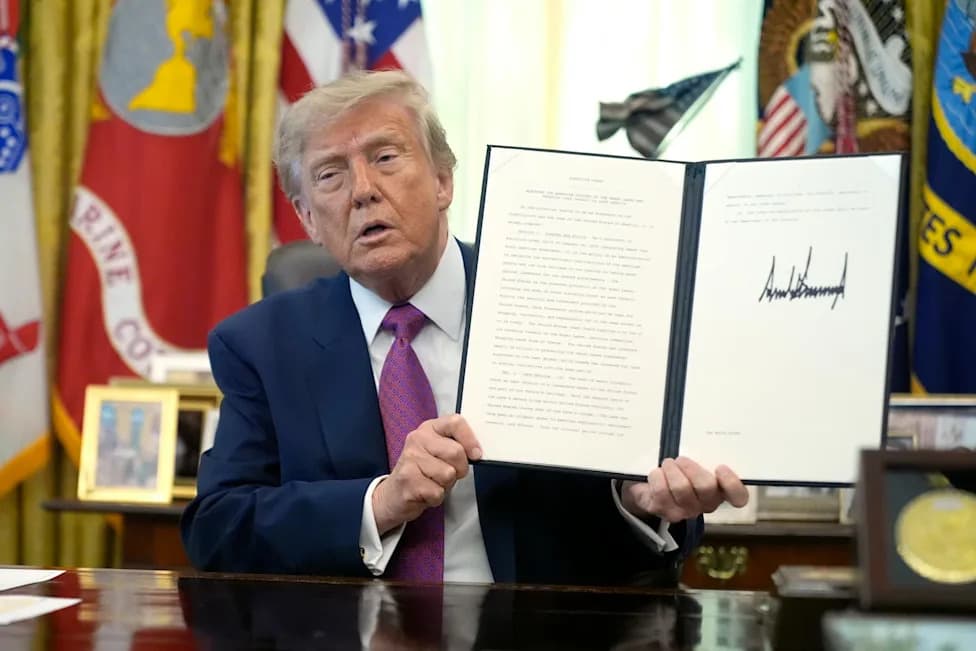
Moved by the encounter, Daugherty — who had no prior experience in presidential clemency — mounted a lobbying effort on Lake’s behalf. With help from Colorado attorney Stewart Cables, phone calls to regional EPA officials, local politicians and other contacts ultimately culminated last November when President Donald Trump granted Lake a pardon. The president later also pardoned Lake’s company, Elite Diesel Service, which had received probation and a fine.
From One Pardon to a Broader Campaign
Lake’s pardon has become a rallying point for others convicted under Clean Air Act theories. Daugherty and Cables say they are now coordinating clemency requests for several defendants who argue their actions were intended to keep trucks and equipment operational — not to harm the environment — and that they lacked the resources to mount vigorous legal defenses.
“What the pardon office and [U.S. Pardon Attorney] Ed Martin want to know is whether there are Americans who faced felony enforcement for conduct they didn’t know was criminal and who lacked the means to defend themselves,” Cables said.
Supporters frame the effort as defending hard-working mechanics, farmers and small business owners from what they call excessively punitive prosecutions. Critics call it an attempt to blunt enforcement of pollution rules and to secure clemency for serious offenders.
How the Cases Unfolded
Federal enforcement of emissions tampering grew after the 2015 Volkswagen diesel-cheating scandal. EPA began targeting aftermarket "defeat devices," deletions and other software or hardware modifications that circumvent emissions controls. In 2019 the agency added defeat devices to its enforcement priorities, producing prosecutions of shops and individuals.
Defendants such as Ryan LaLone, who pleaded guilty to deleting emissions-control software from hundreds of trucks, say they were often asked to work on state or municipal vehicles rendered inoperable by emissions systems in cold weather. Others, like Matt Geouge, Mackenzie "Mac" Spurlock and Tim Clancy, faced large fines, probation or prison time.
Prosecutors and former EPA officials counter that criminal charges are reserved for the worst actors and are pursued carefully because of collateral consequences like incarceration and loss of civil rights. Some legal experts argue the shift from civil enforcement to criminal prosecutions represents a novel interpretation of statutory language designed mainly for stationary sources like power plants.
Policy Shifts and Political Fallout
The enforcement landscape shifted again under the current DOJ leadership. Several defeat-device criminal cases were dropped, and senior Justice Department officials have signaled that many such matters should be handled civilly rather than criminally. Meanwhile, Sen. Cynthia Lummis introduced legislation to expunge tampering convictions and restrict EPA vehicle pollution mandates — a proposal that would sharply reverse long-standing air-quality policy.
Reports also indicate President Trump is considering issuing a large batch of pardons to mark the nation’s semiquincentennial, and analysts say a high share of recent pardons have fallen outside traditional Justice Department clemency guidelines.
Who Is Seeking Relief?
Daugherty and Cables say they are selective about clients, taking cases they view as unfairly prosecuted rather than wealthy defendants seeking to avoid collateral consequences. Their roster includes:
- Ryan LaLone — Pleaded guilty to deletions; serving probation and whose business paid a large fine.
- Matt Geouge — Sentenced to one year and one day for selling defeat devices and hit with substantial EPA and IRS penalties.
- Mackenzie "Mac" Spurlock — Pleaded guilty and received probation and a fine; seeks pardon to reenlist in the Air Force.
- Tim Clancy — Pleaded guilty for tampering with company semitrailers and was fined and placed on probation.
- John Rimmasch — Convicted of wire fraud and exposing workers to asbestos related to an NPS contract; his team argues the dispute should have been civil.
Why This Matters
The campaign raises broader questions about the line between civil and criminal enforcement of environmental rules, the appropriate scope of presidential clemency, and whether small businesses and mechanics are being treated fairly by federal regulators and prosecutors. EPA has also acknowledged tampering is widespread enough that the agency is developing new modeling so states can account for pollution from illegal deletions in regulatory plans.
As legal and political debates continue, the Lake pardon has proved consequential: it has encouraged other defendants to seek clemency and sparked renewed scrutiny of enforcement priorities and the use of prosecutorial discretion in environmental cases.