Study Snapshot: An analysis of FEC data from 2009–2022 mapped member-to-member campaign contributions in the U.S. House as a network. It found that party leaders and senior members are likeliest to give—and to many colleagues—while members targeted by heavy outside spending attract more internal support. Democrats' giving networks were more stable and centralized; Republican networks trended toward smaller, clustered groups. These internal flows operate as political signals that help shape influence and the balance of power in Congress.
Inside the Money Pipeline: How House Members’ Donations Shape Congressional Power

The Capitol Dome and the U.S. Senate in Washington, D.C., on Thursday. Photo by Bonnie Cash/UPI
When most Americans think about campaign finance, they picture wealthy donors, PACs and super PACs. But a revealing and underappreciated set of transactions happens inside Congress: members of the U.S. House regularly give campaign funds to fellow lawmakers. Those transfers are a small share of total spending but a large source of information about how parties reward influence, shore up vulnerable incumbents and organize power from within.
What the Study Did
Using Federal Election Commission data, researchers tracked member-to-member contributions across seven election cycles (2009–2022). Treating each representative as a node and each contribution as a directed link allowed the study to map patterns over time and test whether internal giving was random or followed consistent political logic.
Key Findings
Leaders Give More Than They Receive
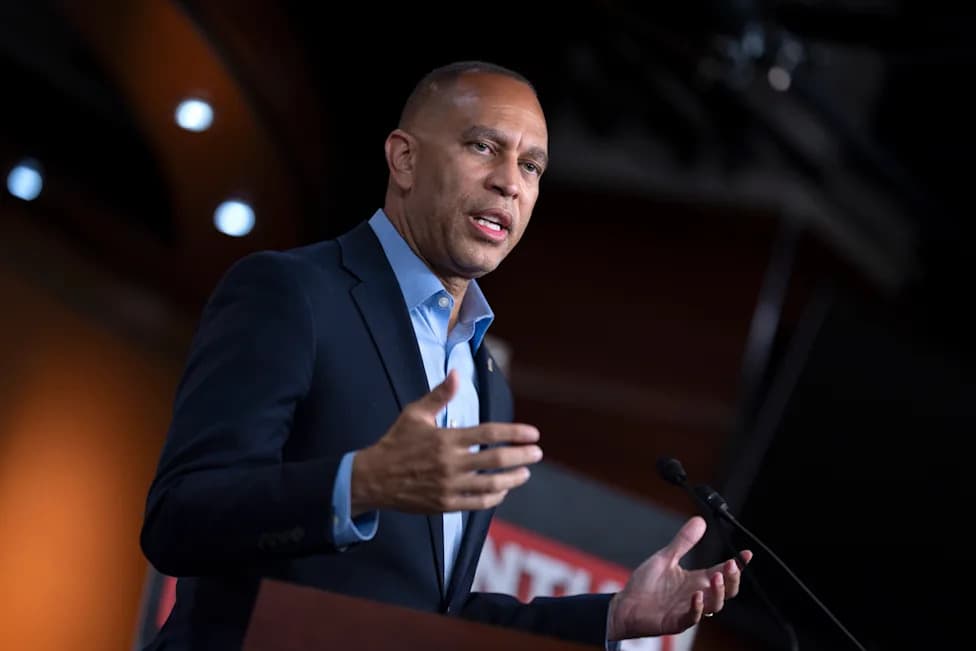
Party insiders—senior lawmakers and those in formal leadership roles—play a central role in steering campaign cash. Across the period studied, about 79% of Democratic leaders and 71% of Republican leaders gave to at least one colleague, compared with 65% and 58% of non-leaders in their respective parties. Leaders also tend to distribute funds to many more colleagues: in 2021–22, Hakeem Jeffries gave to 76 colleagues, Nancy Pelosi to 61, Steve Scalise to 192 and Jason Smith to 100.
Seniority Matters, Especially for Democrats
Longer-serving Democratic members were more likely to be givers and less likely to be recipients, suggesting experienced lawmakers often act as internal funders who channel resources to those with greater electoral need.
Democrats And Republicans Use Different Internal Strategies
Democratic giving networks were relatively stable and centralized: money flowed repeatedly through a smaller, consistent set of members. Republican networks, by contrast, became more dispersed over time. Early in the study period, GOP flows were centralized, but later contributions clustered within smaller connected groups rather than through a single core hub. Neither approach is inherently superior—each reflects a different strategic model for organizing internal support.
Outside Spending Sends A Signal
Members targeted by greater super PAC activity were more likely to receive internal party contributions and less likely to give to others. For example, outside spending in the 2020 cycle reached roughly US$8.4 million in Abigail Spanberger’s race and about US$7.36 million in Rep. David Valadao’s contest; such large outside expenditures act as public signals of competitiveness and prompt colleagues to redirect their own resources.
Why This Matters
Internal transfers are more than bookkeeping. They help build alliances, reinforce party hierarchies and protect vulnerable incumbents. Over time, the cumulative effect of these choices helps shape who has influence inside each caucus and, ultimately, the balance of power in Congress.
Examples And Scale: Public filings illustrate the scale leaders can reach. During the 2021–22 cycle, Kevin McCarthy’s Majority Committee PAC reportedly directed roughly US$4 million to select House Republicans facing difficult reelection bids.
Conclusion
Studying member-to-member contributions provides a unique window into the internal mechanics of party politics. These directed donations reveal strategic decision-making by party insiders and show how parties respond to electoral pressures—information that complements what we learn from outside donors and interest groups.
Mayank Kejriwal is a research assistant professor of industrial & systems engineering at the University of Southern California. This article is republished from The Conversation under a Creative Commons license. The views expressed are those of the author.
Help us improve.