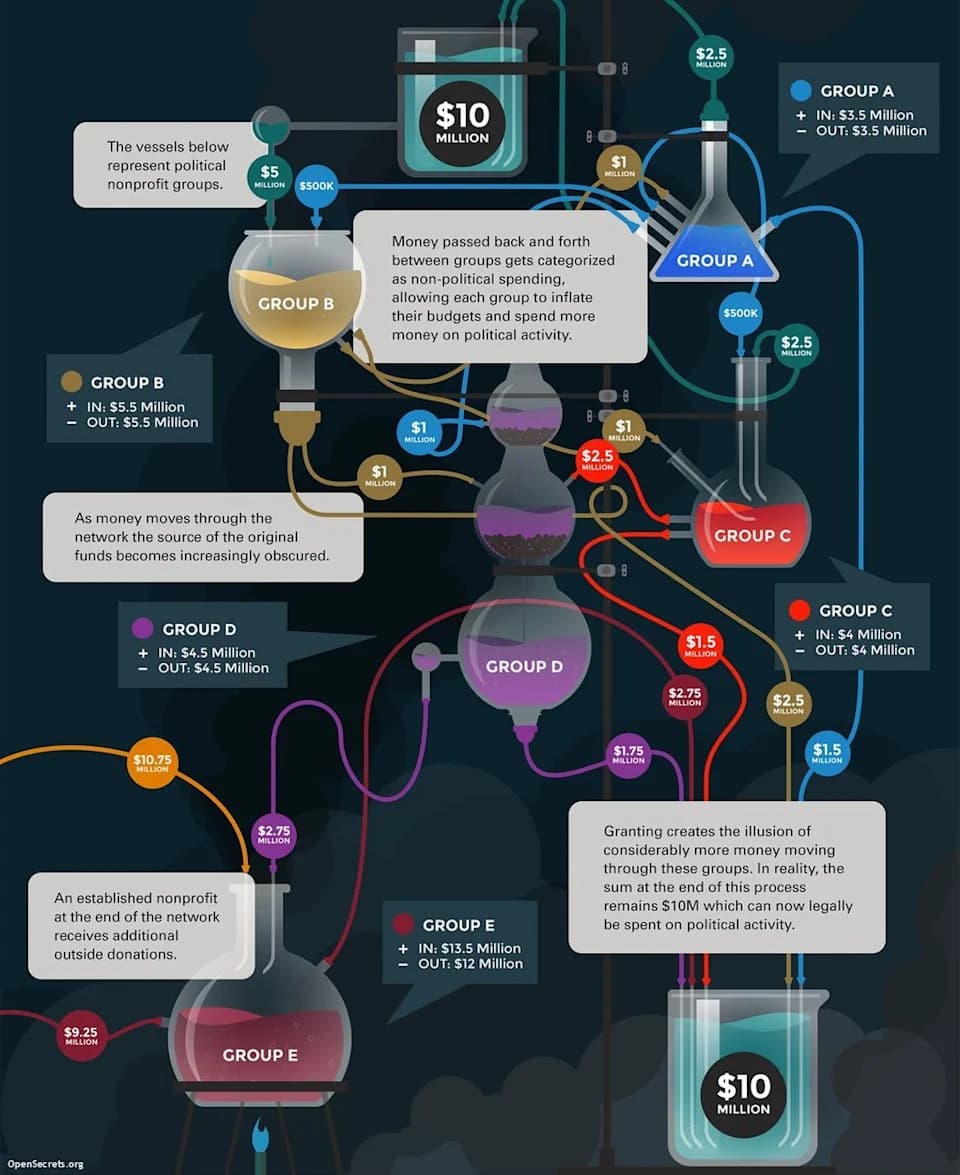
Campaign finance totals are informative but incomplete. Outside spending and Super PAC activity have surged, concentrating money in fewer competitive races. Local small-dollar donations often indicate grassroots strength, while out-of-state or large-interest contributions buy influence but not votes. Interpreting impact requires context on who gives, where they live and how funds are used.
Eight Rules for Reading Campaign Finance: What Donor Data Reveals — and What It Hides

It's hard for the average person to understand reporting about campaign finance.ekinyalgin, iStock/Getty Images Plus
News coverage of campaign finance shows up every election season. The raw dollar figures can be striking, but without context they often mislead more than they illuminate. Below are eight practical rules to help readers interpret reporting on campaign donations, outside spending and political influence.
Eight Rules To Read Campaign Finance Reporting
- Raw Totals Are Only A Starting Point.
Stories often focus on totals — for example, NBC reported in August 2026 that outside groups spent more than $130 million in Ohio’s U.S. Senate contest. Totals matter, but they don’t tell you how the money is being used, where it came from, or how concentrated the spending is across races.
- Look At Trends, Not Just Year-To-Year Changes.
Campaign costs have risen faster than inflation over the past decade. The Center for Responsive Politics reports $9.5 billion spent on congressional races in 2024 versus $8.8 billion in 2020; inflation-adjusted spending nearly doubled from about $5.1 billion in 2014 to $9.5 billion in 2024. Those long-term shifts matter more than small fluctuations between adjacent cycles.
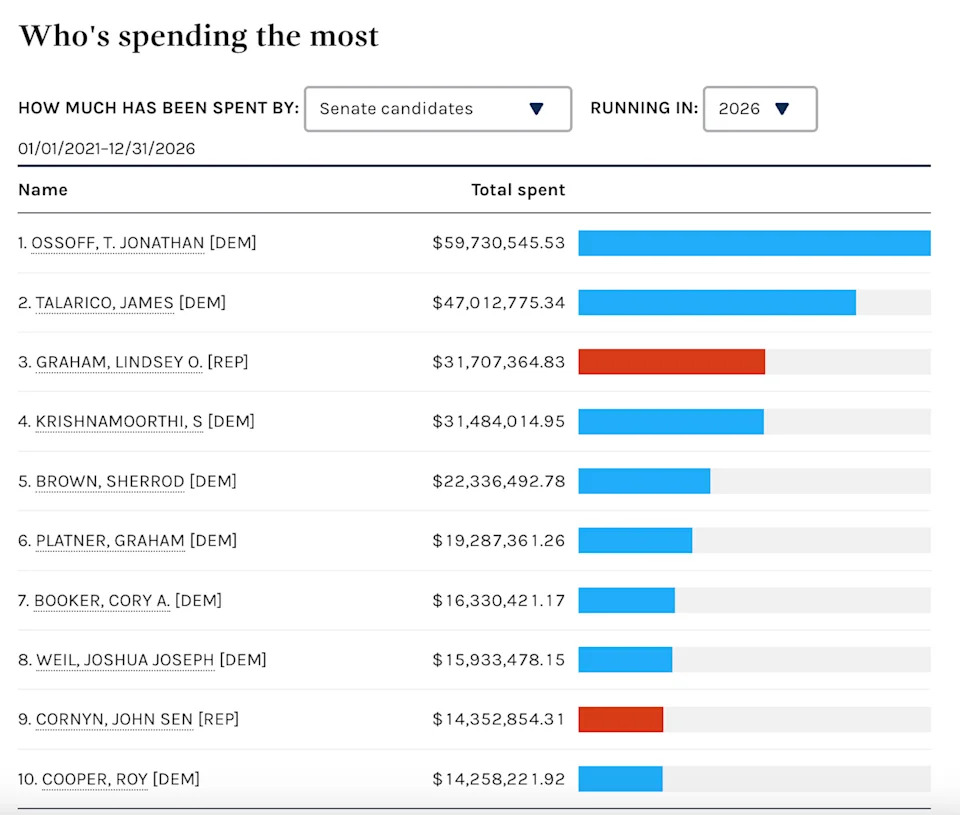 The Federal Election Commission's chart of the top 10 spenders in 2026 Senate races.FEC.gov
 - Understand How Competitiveness Concentrates Money.
Most spending is concentrated in a shrinking set of competitive seats. Across typical House contests, the candidate who raises the most money wins more than 90% of the time — but that pattern largely reflects incumbency: well-funded incumbents attract donors because they are expected to win.
- Contextualize Fundraising Advantages.
In close, expensive races, marginal differences matter less. Outraising an opponent by $500,000 is meaningful in a $1 million race but far less so if both sides each have $20 million. Consider both relative and absolute spending levels.
- Differentiate Local Small Donors From Out-Of-State Money.
Local small-dollar contributions often signal grassroots mobilization — donors who may vote, volunteer and persuade neighbors. By contrast, large out-of-state or interest-group donations can help pay for ads but cannot directly deliver votes in a district.
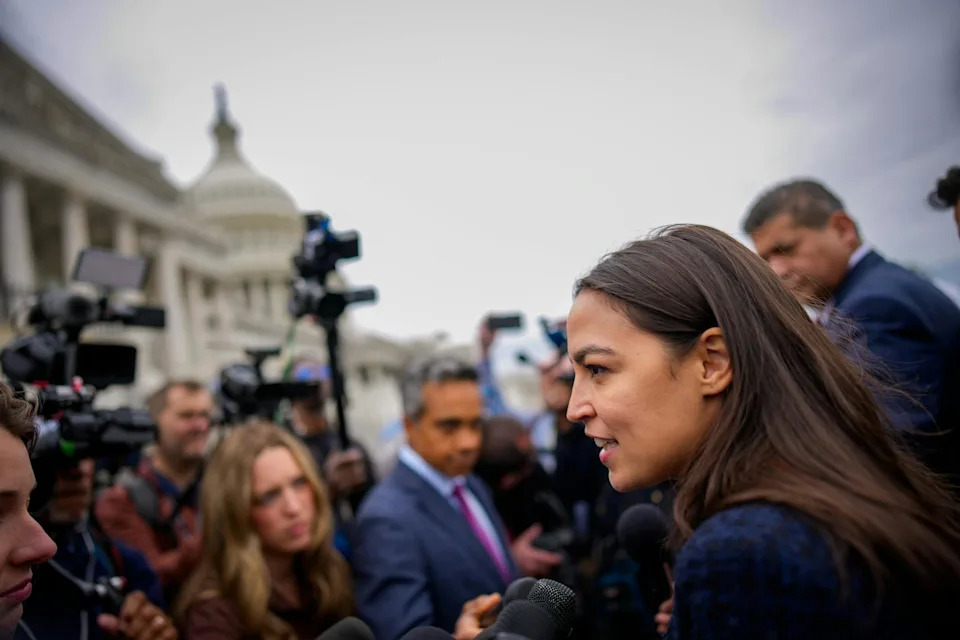 Democratic Rep. Alexandria Ocasio Cortez touts the fact that her average campaign contribution is $21.Andrew Harnik/Getty Images
 - Interpret Small-Donation Claims Carefully.
Candidates highlight small-dollar averages (for example, Rep. Alexandria Ocasio-Cortez cites a $21 average contribution) to show grassroots backing. But small donors are often more ideologically intense and may live outside the contested district, so small-dollar fundraising is an imperfect proxy for local support.
- Know What Super PACs And Parties Can — And Cannot — Do.
Super PACs can accept unlimited donations and spend independently in support of candidates; they cannot coordinate legally with campaigns. Parties, after recent court changes, have greater leeway to coordinate and can use richer voter data and staff resources. Each actor has different strengths: campaigns spend flexibly and can run grassroots operations; outside groups can flood the airwaves quickly with big buys.
- Treat Donor Employer And Occupation Data With Caution.
Federal filings require donors who give over $200 to disclose employer and occupation, but these fields are blunt instruments. Reporting that ties donations to an employer can mislead — an employee’s contribution does not mean their employer is involved. Common categories like "retired" or "self-employed" are broad and often uninformative.
Bottom line: Dollar amounts matter, but so do who gives, where donors live, how funds are spent and whether donations reflect grassroots activity or big, rapid ad buys. Read reporting with these rules in mind to separate real influence from noise.
Source notes: Examples and figures in this piece draw on reporting and data from news coverage (e.g., NBC’s August 2026 account of Ohio outside spending) and public trackers such as the Center for Responsive Politics and Federal Election Commission disclosures.
Help us improve.