Pope Leo XIV visited Barcelona to honor architect Antoni Gaudí on the 100th anniversary of his death, praying at Montserrat and celebrating Mass at the Sagrada Familia. He also visited inmates in a Barcelona prison, urging them not to let past mistakes define their future. The Sagrada Familia — begun under Pope Leo XIII and still unfinished — draws over 5 million visitors a year and became the world’s tallest church after completion of its final Christ tower. Historians say Gaudí blended the Gospels and nature to create a symbolic expression of Christian faith through light and form.
Pope Honors Gaudí’s Masterpiece in Barcelona on 100th Anniversary of Architect’s Death
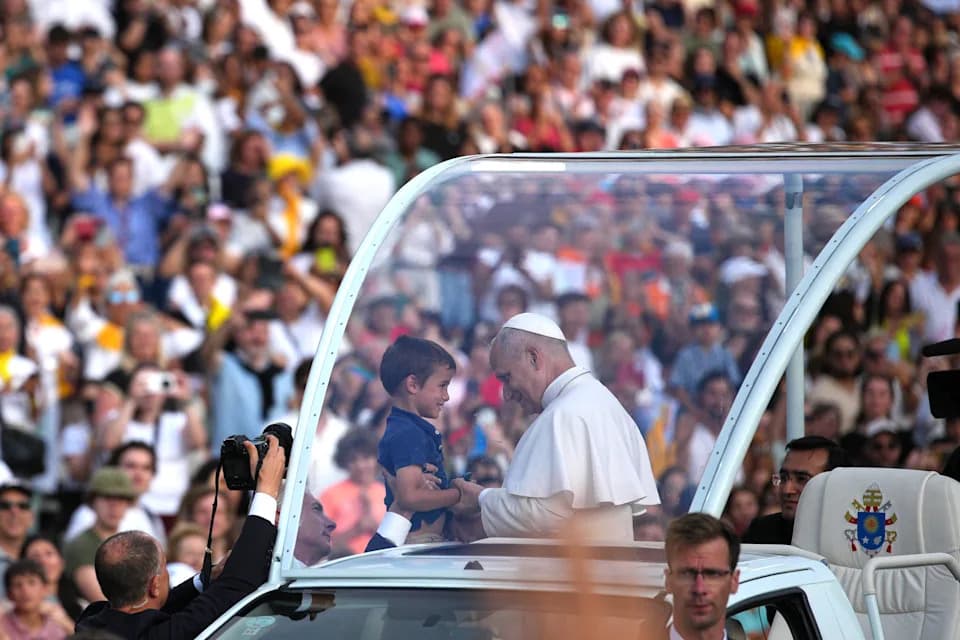
Pope Leo XIV blesses a child before a prayer vigil at Lluis Companys Olympic Stadium in Barcelona, Spain, Tuesday, June 9, 2026. (AP Photo/Emilio Morenatti)(AP Photo/Emilio Morenatti)
Pope Leo XIV paid tribute Wednesday to two of Barcelona’s most beloved religious landmarks, offering a midday prayer at the mountaintop Montserrat abbey and celebrating an evening Mass at the Sagrada Familia Basilica to mark the 100th anniversary of architect Antoni Gaudí’s death.
The pope began his day with a visit to inmates at a Barcelona prison, continuing a practice associated with Pope Francis of reaching out to those who cannot attend public papal events. Speaking to prisoners, he urged them not to let past mistakes define their future, saying the past “does not condemn the future, but rather offers us the possibility of changing our decisions and choices.”
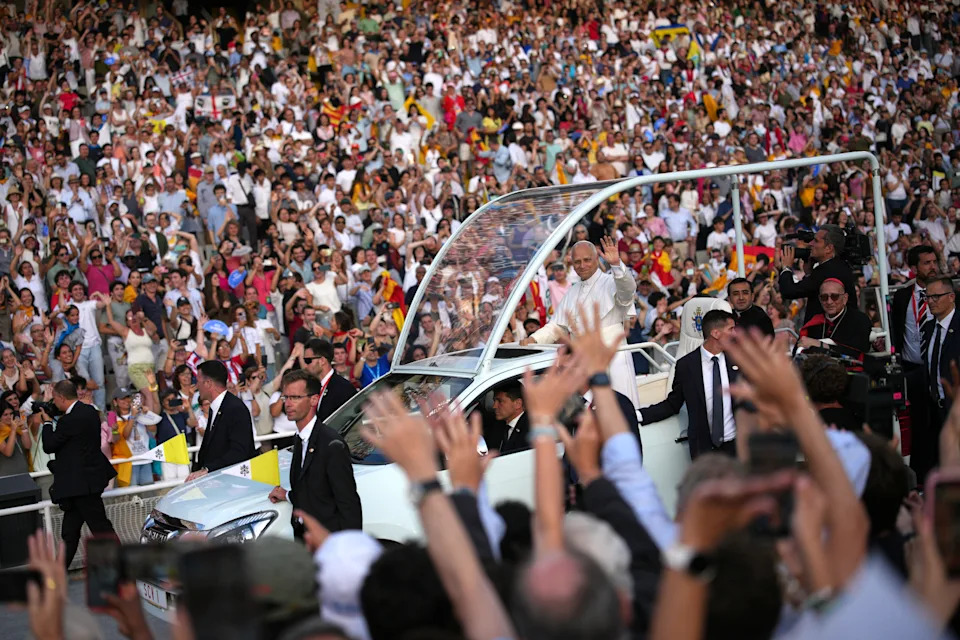
Pope Leo XIV arrives to attend a prayer vigil at Lluis Companys Olympic Stadium in Barcelona, Spain, Tuesday, June 9, 2026. (AP Photo/Emilio Morenatti)(AP Photo/Emilio Morenatti)
Montserrat: A Deeply Rooted Devotion
Leo prayed at Montserrat, a mountain sanctuary outside Barcelona that is central to Catalan popular devotion. The complex includes an 11th-century Benedictine abbey and a 16th-century basilica, is famed for its Black Madonna statue, and is home to a boys’ choir that traces its origins to the 13th century.
Sagrada Familia: A Century of Faith and Craft
The centerpiece of the pope’s visit was an evening Mass at the Sagrada Familia, commemorating a century since Gaudí’s death. Gaudí died at 73, three days after being struck by a tram. Construction of the basilica began during the papacy of Leo XIII, and the church has grown into one of the world’s most visited — and still unfinished — monuments, drawing more than 5 million visitors annually.
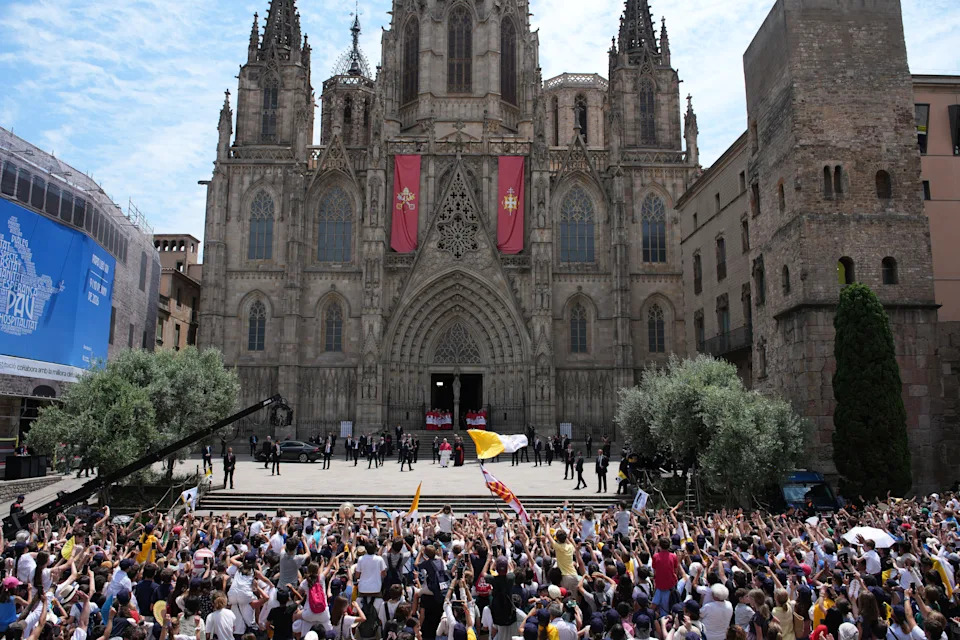
Pope Leo XIV looks at the cheering crowd upon arriving to attend a midday prayer at the Cathedral of the Holy Cross and Saint Eulalia in Barcelona, Spain, Tuesday, June 9, 2026. (AP Photo/Emilio Morenatti)(AP Photo/Emilio Morenatti)
Gaudí devoted roughly four decades to designing and building the basilica as a carved, architectural expression of Christian faith. The Nativity and Passion — two key episodes in Jesus’ life — are sculpted on the east and west facades, while a third southern façade, the Glory, is planned to become the main entrance when complete.
The Sagrada Familia blends Byzantine and Gothic traditions while showcasing Gaudí’s unique geometrical language. Rising from its rooftop are 18 sculptural spires: 12 represent the apostles, four honor the Evangelists, one — topped with a star above the apse — pays tribute to the Virgin Mary, and the tallest is dedicated to Jesus Christ.
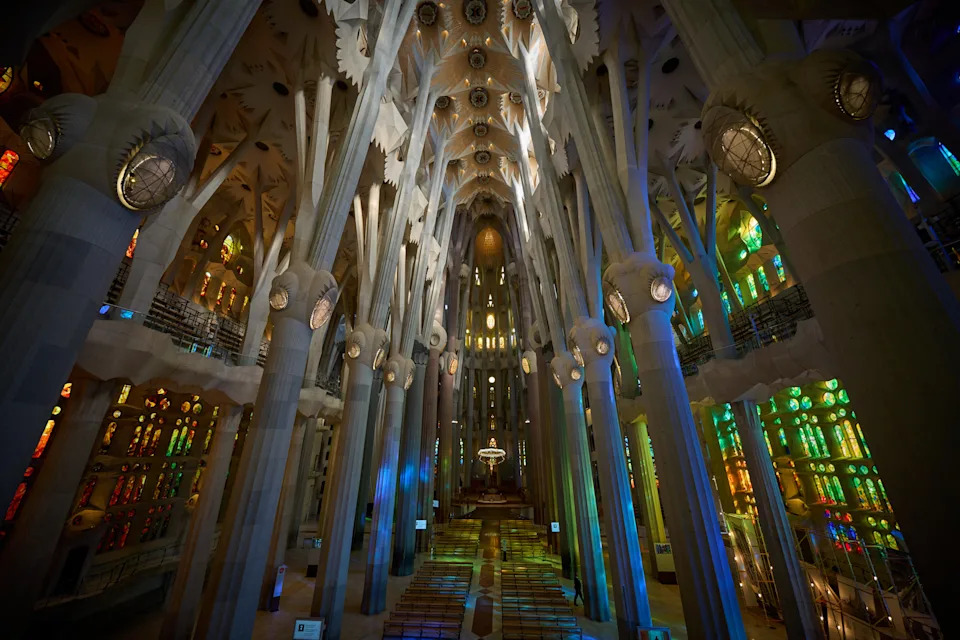
A view of the Basilica of the Sagrada Familia in Barcelona, Spain, Wednesday, May 20, 2026, ahead of Pope Leo XIV's visit to the city in June. (AP Photo/Emilio Morenatti)(AP Photo/Emilio Morenatti)
With the completion of the final Christ tower last year, reaching 172.5 meters (564 feet), the basilica became the world’s tallest church; the pope was scheduled to formally consecrate that tower during his visit.
Light, Nature and Faith
Inside, the cross-shaped layout places the altar in the apse and celebrates light and nature: treelike columns soar upward while colored light pours through stained glass, evoking sunlight filtering through leaves.
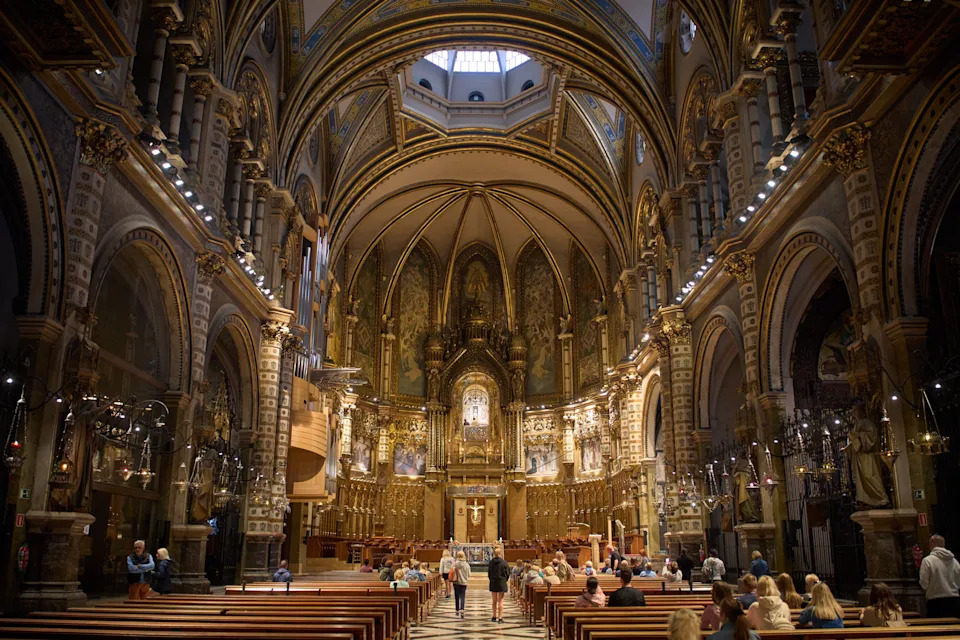
A view of the Basilica of Montserrat at the Monastery of Montserrat near Barcelona, Spain, Friday, June 5, 2026. (AP Photo/Emilio Morenatti)(AP Photo/Emilio Morenatti)
“Nature is my teacher,” Gaudí wrote. “Everything comes from the great book of nature, always open that we must read.”
Historian Mònica Santín, who leads tours of the basilica, says Gaudí drew primarily on the Gospels and the natural world. “The way he brings in natural light is an invitation to the Christian mystery,” she said. “When you enter inside, it is all light. We can’t see God, but we perceive his light all around us.”
Note: Associated Press religion coverage receives support through collaboration with The Conversation US, funded by Lilly Endowment Inc. The AP is solely responsible for this content.
Help us improve.