A 4.3m (14ft), 597kg smalltooth sand tiger shark washed ashore at Greve D'Azette in Jersey and died despite rescue efforts. It is the first confirmed record of this species in Jersey; a post-mortem found no obvious cause of death and no signs of fisheries interaction. Conservation groups say recent sightings in UK and Irish waters may reflect a northward shift linked to warmer sea temperatures, highlighting changing marine conditions.
Endangered 14ft Smalltooth Sand Tiger Shark Found Dead on Jersey Beach — First Recorded on the Island
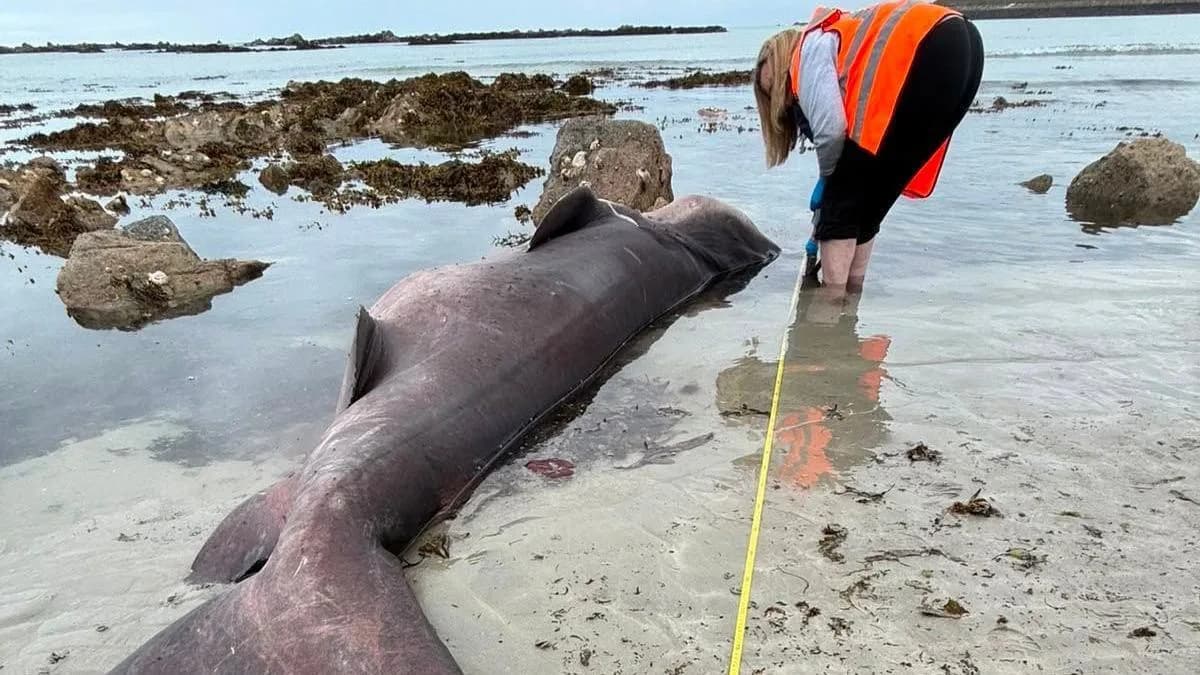
The shark measured in at 4.3m (14ft) and weighed 597kg (1,316lbs) [Government of Jersey]
A large endangered shark was discovered dead after washing ashore at Greve D'Azette in Jersey. The Government of Jersey's Marine Resources department said the animal measured 4.3m (14ft) and weighed 597kg (1,316lbs).
Officials identified the specimen as a smalltooth sand tiger shark (Odontaspis ferox), a species listed on the IUCN Red List. When first found on Sunday the shark was "showing small signs of life," but attempts to revive it were unsuccessful and the incoming tide later carried the carcass away. The animal washed up again on Monday and was removed for a post-mortem examination.
The post-mortem revealed "no obvious signs" indicating the cause of death, and authorities reported "no signs of fisheries interaction or entanglement." The Government of Jersey coordinated with British Divers Marine Life Rescue, who assisted at the scene.
Why This Sighting Matters
This is the first confirmed record of a smalltooth sand tiger shark in Jersey since records began. The species is generally elusive and associated with deep, warm waters; British Divers Marine Life Rescue noted that the first confirmed records in UK and Irish waters were only published in 2023, when three individuals were recorded in the English Channel and Celtic Sea.
Researchers say recent sightings may be linked to warmer-than-average sea temperatures, which can push warm-water species northward. The discovery underscores changing marine conditions and the need for ongoing monitoring and conservation of vulnerable species.
Authorities have asked anyone with further information or photographs to contact the Government of Jersey's Marine Resources department or British Divers Marine Life Rescue.
Help us improve.