Researchers describe Jian changmaensis, a new microraptorine dromaeosaur from the Lower Cretaceous Xiagou Formation (Changma Basin). The specimen — an articulated left pectoral girdle and upper forelimb — shows distinctive features and suggests an estimated ~four‑foot wingspan. This is the first formally described non‑avian theropod from Changma and may explain the site’s dense, pellet‑like clusters of crushed bird bones, though direct proof of predation is not established.
New Four‑Winged Predator Identified: Jian changmaensis May Explain Crushed Bird-Bone Clusters at Changma
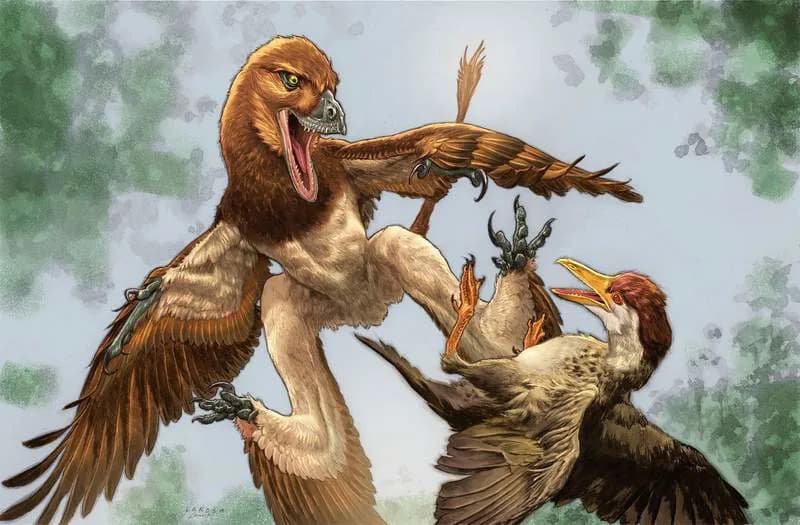
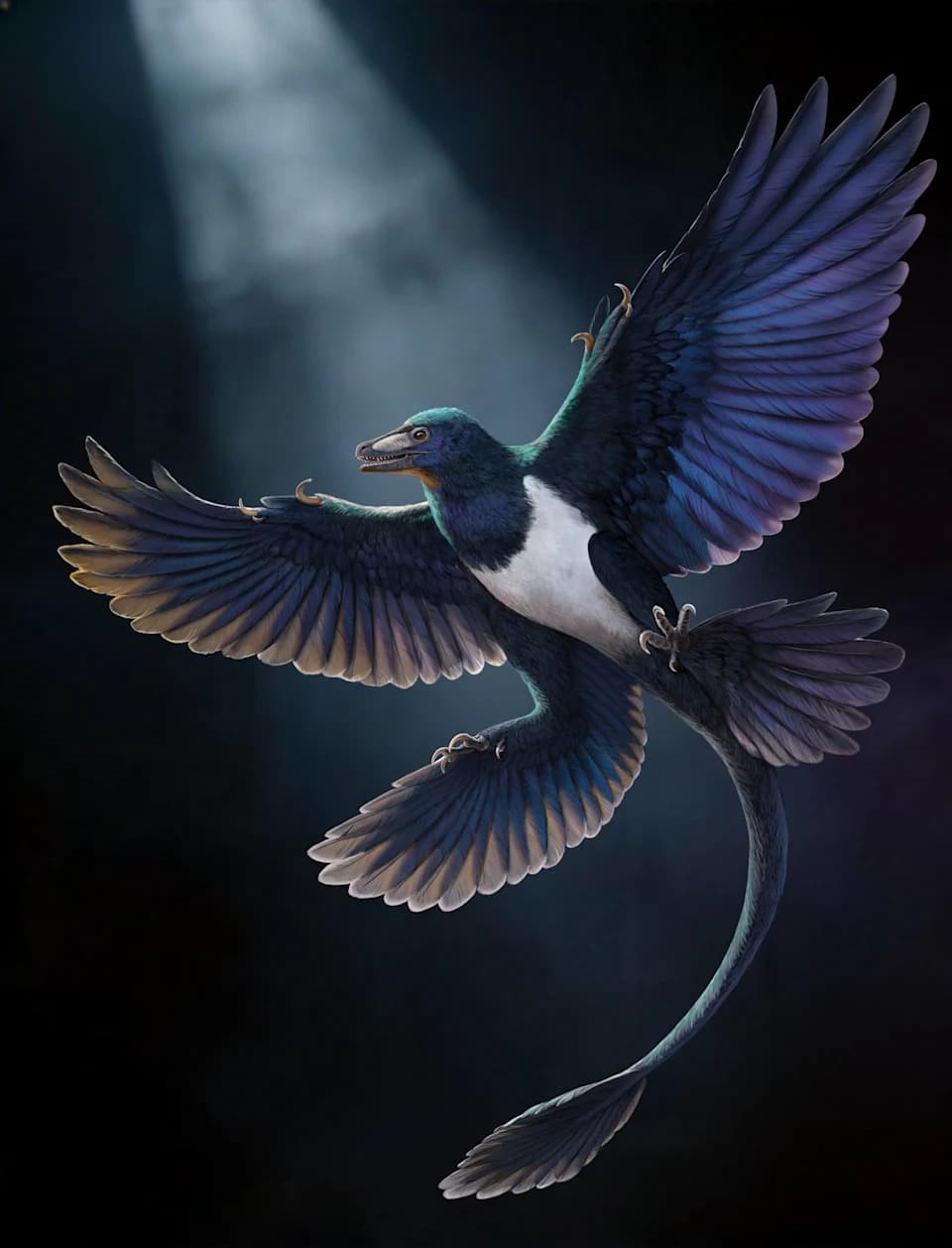
The new microraptor dinosaur Jian changmaensis (left) attacks the early bird Gansus yumenensis (right) in what is now the Changma Basin of northwestern China approximately 120 million years ago. (CREDIT: illustration by Lewis LaRosa, colorized by Jão Canola)
A remarkable new discovery from northwestern China adds a missing predator to a famous bird-rich fossil site. Researchers publishing in the Annals of Carnegie Museum describe a new microraptorine dromaeosaur, Jian changmaensis, recovered from the Lower Cretaceous Xiagou Formation in the Changma Basin, Gansu Province.
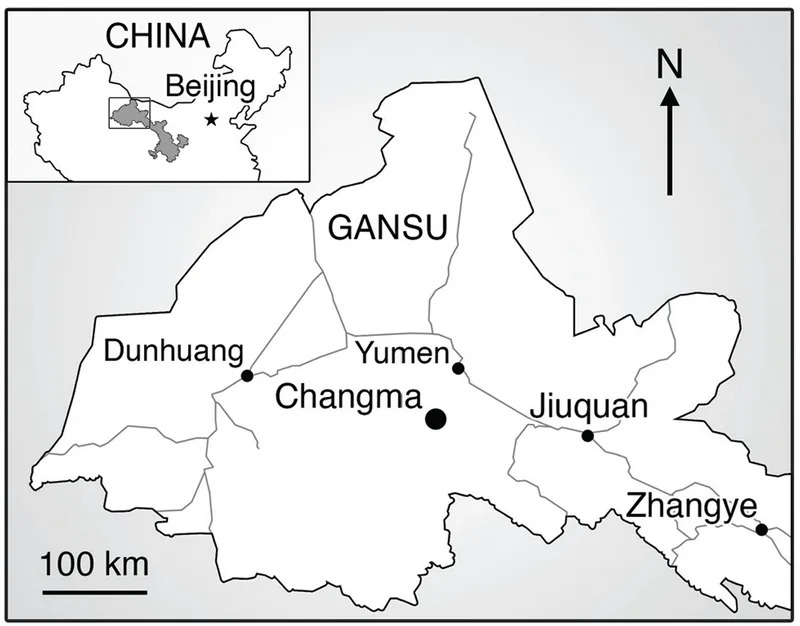
Location of the type locality of Jian changmaensis, gen. et sp. nov., in the Changma Basin of northwestern Gansu Province, China. (CREDIT: Annals of Carnegie Museum)
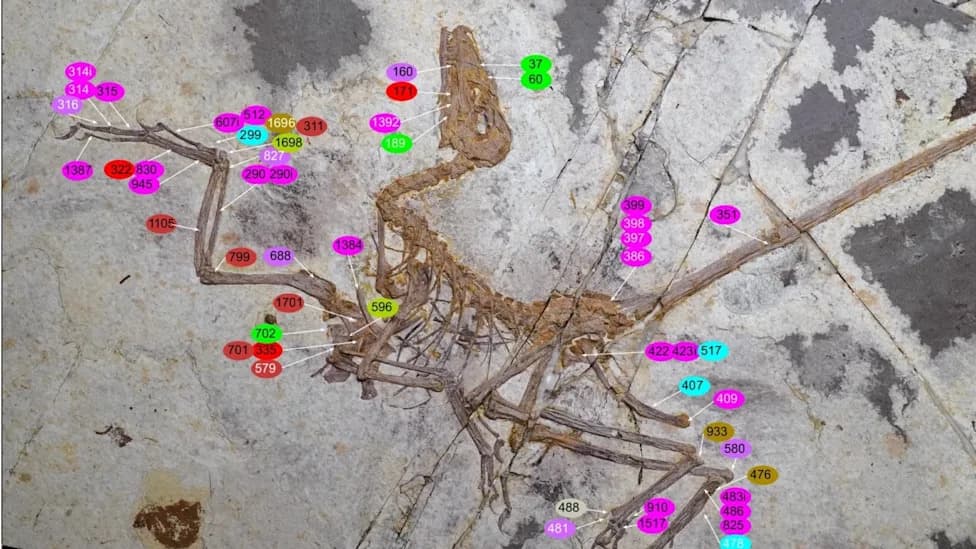
The specimen consists of an articulated left pectoral girdle and upper forelimb (the wrist and hand are absent), but the preserved bones display distinctive anatomical features that justify naming a new species. Lead authors include Jingmai O’Connor (Field Museum) and Matt Lamanna (Carnegie Museum of Natural History).
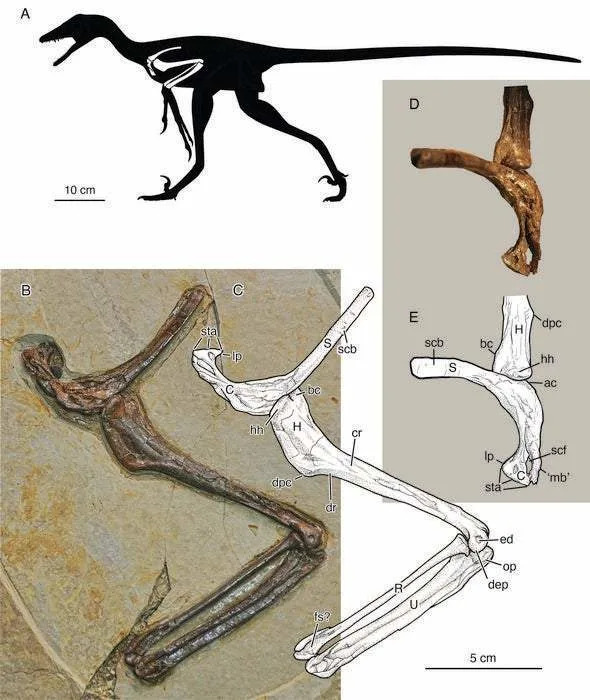
Holotype of Jian changmaensis, gen. et sp. nov. (GSGM-D050), an articulated partial left pectoral girdle (scapulocoracoid) and forelimb (humerus, radius, and ulna). (CREDIT: Annals of Carnegie Museum)
Why This Matters
The Changma Basin has long been known for an exceptional concentration of early bird fossils — more than 100 partial skeletons, many preserving feathers and soft tissues — alongside puzzling dense clusters of crushed bird bones resembling owl pellets. Until now, no non-avian theropod had been formally described from these deposits. Jian changmaensis is the first such non-avian theropod named from Changma and is the strongest candidate yet to account for those pellet-like accumulations.
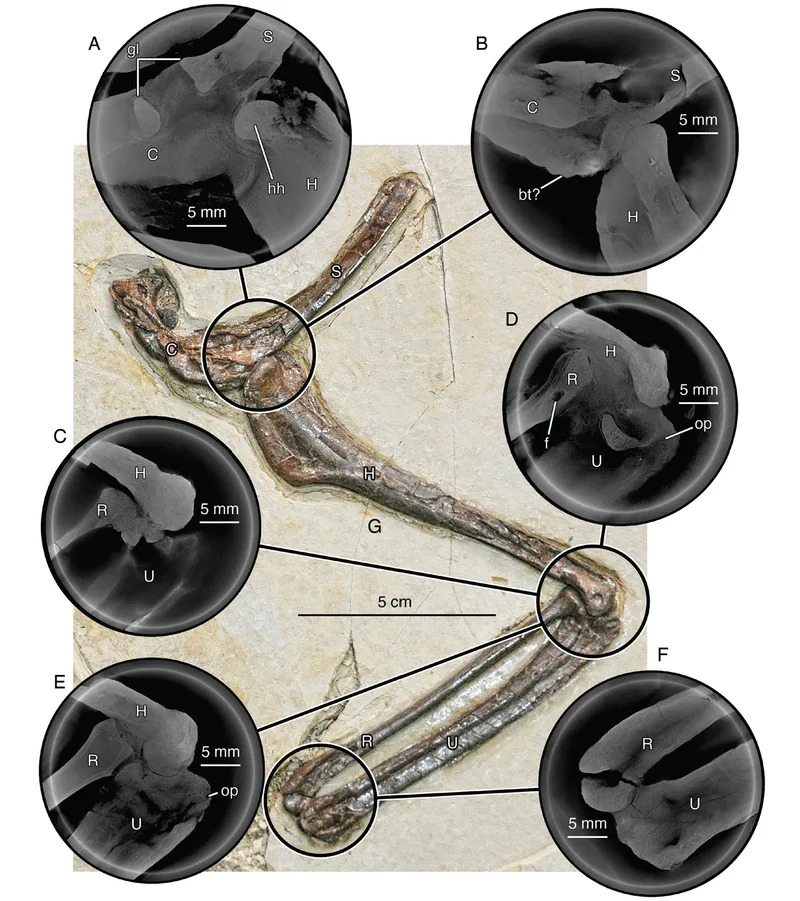
Computed laminography (CL) images of left pectoral girdle and forelimb of Jian changmaensis, gen. et sp. nov. (GSGM-D050). (CREDIT: Annals of Carnegie Museum)
What the Fossil Shows
Although incomplete, the humeral fragment (~10 cm or about 4 inches) suggests a relatively large microraptorine. The authors estimate a wingspan on the order of four feet — roughly comparable to a barn owl — making Jian among the largest known microraptor specimens.
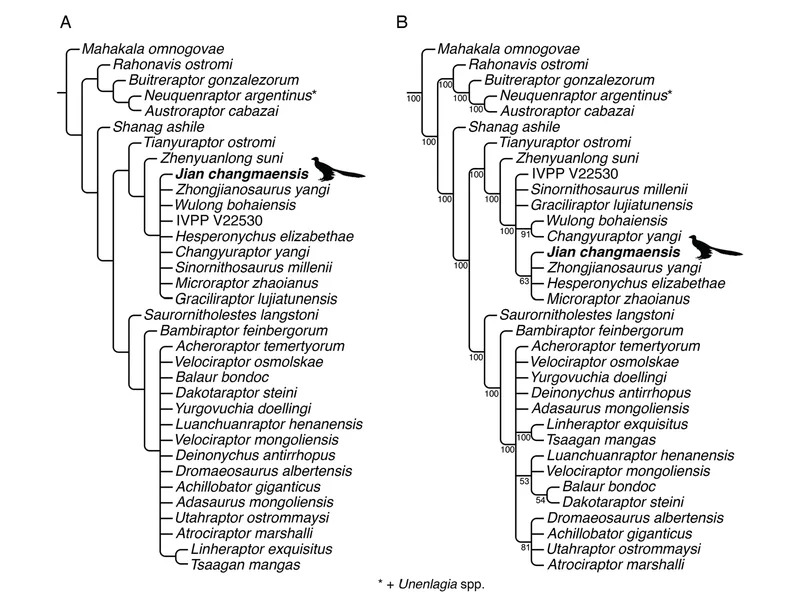
Hypothesized phylogenetic position of Jian changmaensis, gen. et sp. nov. Topology of Dromaeosauridae as represented in the strict (A) and 50% majority-rule (B) consensuses of 810 most parsimonious trees (MPTs) of 3,452 steps recovered by parsimony analysis. (CREDIT: Annals of Carnegie Museum)
Diagnostic features highlighted in the paper include a coracoid proportionally longer relative to the humerus than in other microraptorines, distal humeral condyles developed on the cranial surface, and a pronounced foramen on the ventral side of the humerus. These osteological details distinguish Jian changmaensis from close relatives.
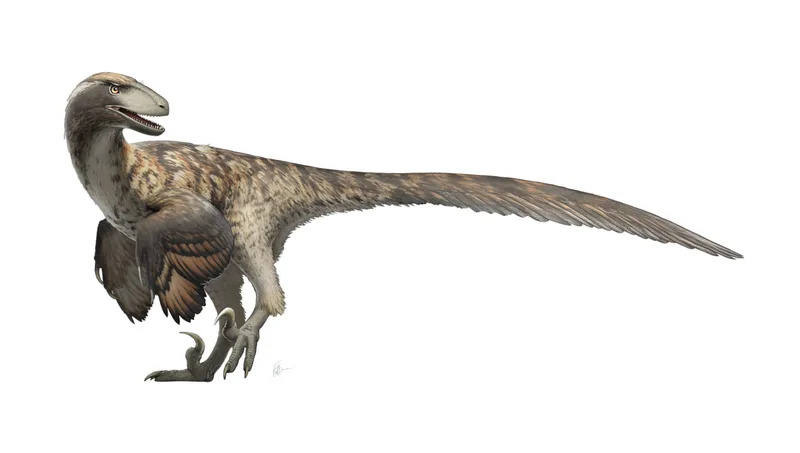
Artistic restoration of Deinonychus antirrhopus. (CREDIT: Wikimedia / CC BY-SA 4.0)
Ecological and Biogeographic Implications
The researchers infer that Jian likely bore long pennaceous feathers on both fore- and hindlimbs and was adapted for gliding rather than sustained powered flight. That gliding, predatory lifestyle fits the Changma ecosystem: a lake-margin environment dominated by small birds but now known to include at least one larger feathered predator.
The discovery also expands the confirmed geographic range of microraptorines into northwestern China and reveals palaeoecological parallels with the Jehol Group localities (e.g., Sihedang), where microraptorines occur alongside bird faunas dominated by a single ornithuromorph taxon. While the fossil does not prove direct predation on the crushed bird clusters, the size, feeding ecology and co-occurrence make Jian a compelling candidate.
Broader Context
This find adds to the growing, diverse picture of dromaeosaurid evolution — a group that ranges from the crow-sized, four-winged Microraptor to larger predators such as Deinonychus and Utahraptor. By documenting a relatively large, gliding microraptorine in a bird-dominated lake deposit, the study helps reconstruct predator–prey dynamics in Early Cretaceous ecosystems and supplies a new reference point for comparing northwestern and northeastern Chinese fossil faunas.
Research note: The formal description of Jian changmaensis appears in the Annals of Carnegie Museum, where the full anatomical and phylogenetic details are available.
Help us improve.