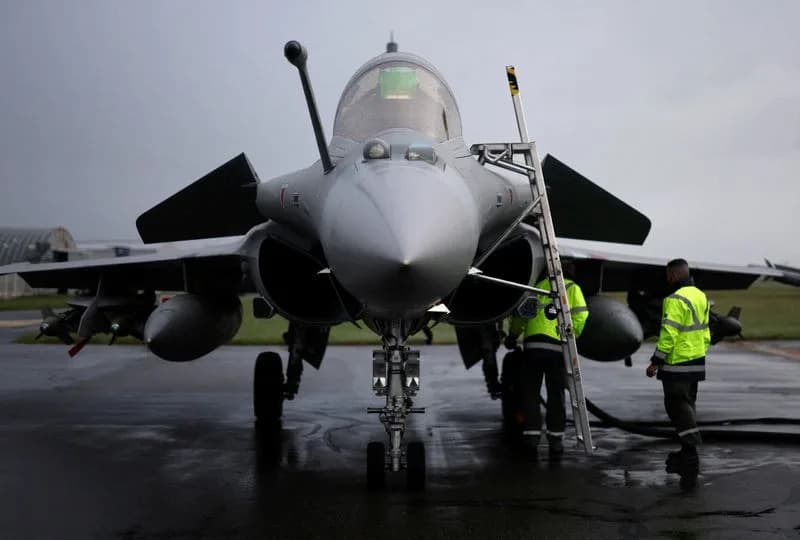
France will field Arcadia, a domestically developed AI command-and-control platform, at NATO’s CWIX exercise in Poland from June 8–26. Built with Mistral AI, Safran.AI, Thales and Airbus, Arcadia has been tested in Dacian Fall and Orion 26 and is positioned as a decentralized, FMN-focused alternative to Palantir’s Maven. The French Army also unveiled Berthier, a staff-focused large language model to support information synthesis and draft courses of action.
France To Field Arcadia — Homegrown AI Battlefield Command System — At NATO CWIX (June 8–26)
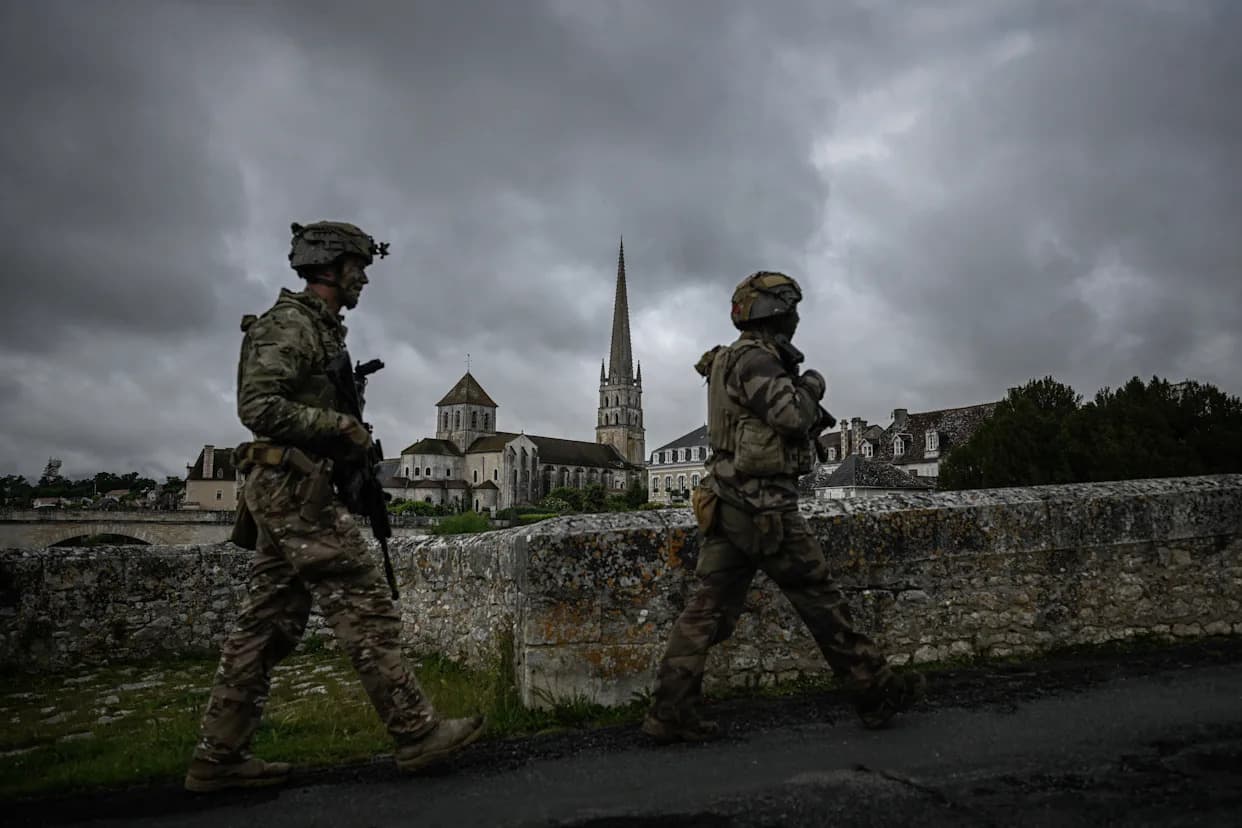
French Foreign Legion paratroopers patrol a bridge over the Gartempe river during a bridge defense exercise in Saint-Savin, south-western France, on May 17, 2026. (Philippe Lopez / AFP via Getty Images)(PHILIPPE LOPEZ)
Paris — France will deploy its domestically developed artificial intelligence battlefield command platform, Arcadia, with allied forces during NATO’s Coalition Warrior Interoperability Exercise (CWIX) in Poland from June 8–26, Gen. Patrick Justel, deputy chief of the French Army staff, said at a media briefing.
What Is Arcadia?
Arcadia is an AI-enabled command-and-control system developed by the French Army in partnership with local industry players, including Mistral AI, Safran.AI, Thales and Airbus. The system has already been trialed in exercises such as Dacian Fall in Romania and Orion 26 in France.
Why It Matters
French officials present Arcadia as a European alternative to Palantir’s Maven Smart System and say it addresses concerns about digital sovereignty and interoperability within NATO. France will use CWIX to test Arcadia’s ability to operate alongside allied systems and to demonstrate compliance with NATO’s Federated Mission Networking (FMN) standards.
Interoperability And Reactions
Palantir has said that the Maven Smart System is "compliant with the principles of FMN" and that it is working with NATO toward formal certification. NATO officials note that Maven is already integrated with more than 10 NATO systems and that final FMN certification milestones are being secured.
Gen. Patrick Justel said Arcadia is intended as 'our response to Maven' and framed the project as an effort to preserve European digital sovereignty and provide an interoperable alternative.
Design And Technical Approach
Unlike a centralized cloud model, Arcadia is designed around decentralization and resilience: command posts connect to field-deployable servers in a mesh-network architecture. That approach distributes data across local hubs so units can retain autonomy if links to a central node are lost. The design builds on work from France’s Artemis project, launched in 2022, and leverages an expanding network of national data hubs.
Open Architecture And Partnerships
The French military emphasizes an open system architecture so multiple manufacturers and allied partners can plug in components without exclusive data ownership by a single vendor. Officials say France will propose Arcadia to European partners and NATO, and that several countries have expressed interest.
AI Tools For Staff Officers
As part of the program, the French Army developed a large language model called Berthier (named after Napoleon’s chief of staff). Berthier is intended to help staff officers synthesize information, retrieve operational data, and draft proposed courses of action while leaving final decisions to human commanders.
Broader Context
The U.K. is pursuing a similar AI-enabled command-and-control capability and is working on how to interface with systems such as Maven. French officials say the NATO edition of Maven differs from the U.S. implementation in databases and functionality. Palantir has indicated openness to integrate with Arcadia or other national systems.
Bottom line: CWIX will be a key interoperability test for Arcadia and a chance for European partners to evaluate a decentralized, FMN-focused alternative to commercially provided systems.
Help us improve.