The Great Smoky Mountains host vast—but often overlooked—biodiversity that volunteers and scientists are rushing to document as climate change and invasive pests reshape the park. A grassroots network, including the volunteer group GRISLD, supports the long-running all taxa biodiversity inventory (ATBI), managed with Discover Life in America. The ATBI has recorded more than 22,000 species, with over 1,000 new to science since 1998, but many high-elevation 'sky island' species risk disappearing before they are noticed. Year-round volunteers and nonprofit partners fill monitoring gaps and help the park respond when federal resources are limited.
Volunteers Race To Catalog the Smokies’ Hidden Life Before It Disappears
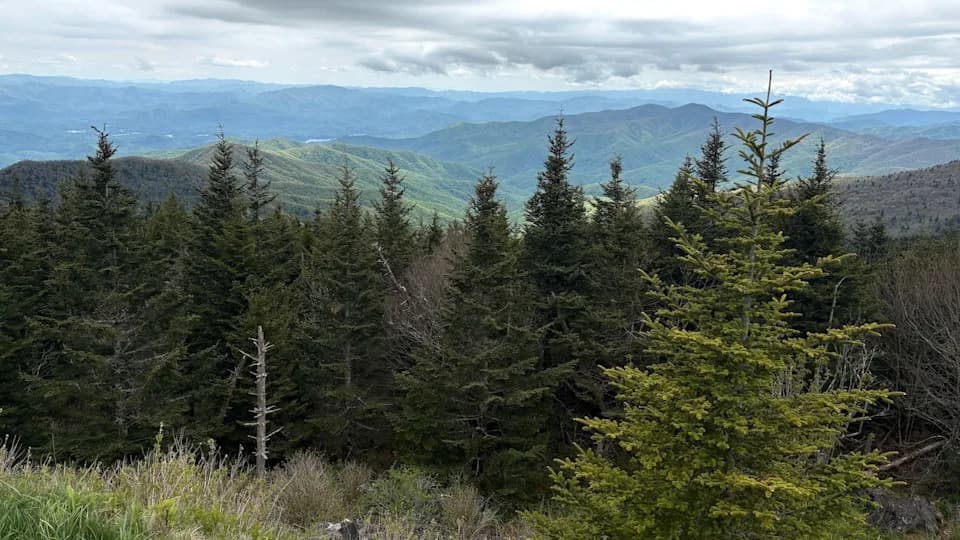
A panoramic vista of Great Smoky Mountains National Park.(Katie Myers / Grist)
A light rain fell as four people dressed in waterproof gear pushed deep into a high-elevation spruce-fir stand inside Great Smoky Mountains National Park. Moving off the trail and under bright green understory, a hush settled over the group.
Just a few steps in, they found an aging yellow birch sheathed in moss. James Hollinger, a retired computer scientist turned amateur lichen enthusiast, leaned in and identified a rare, spongy lichen recorded only about a dozen times in the park and, he believes, absent from standard botanical guides. Laura Boggess, a lichenologist and fellow volunteer, unfolded a hand lens and counted more than 17 other moss and lichen species on a single side of the tree.
Every square foot of the Smokies teems with life most visitors never notice: lichens clinging to bark, fungi hiding in fallen logs, and salamanders slipping beneath wet leaves. Scientists and volunteers say paying attention to those small organisms — and returning often enough to detect subtle changes — has become urgent as climate change reshapes park ecosystems and budget pressures threaten long-term monitoring.
Citizen Scientists Filling Critical Gaps
The volunteer group calls itself the Gang of Retirees in Search of Life's Diversity, or GRISLD. Not everyone is retired, but members spend hours moving deliberately through remote pockets of the park, documenting creatures most visitors never see. Connected by a listserv and a shared passion, they quietly support the long-running all taxa biodiversity inventory (ATBI), a comprehensive effort run in partnership with the park and managed by the nonprofit Discover Life in America.
"We'll hike into places that other researchers don't have the resources to reach," Hollinger said. Volunteers are indispensable because they provide year-round coverage — noting species that are active in cold months or appear only during migration — and they can respond quickly when funding or federal staff are limited.
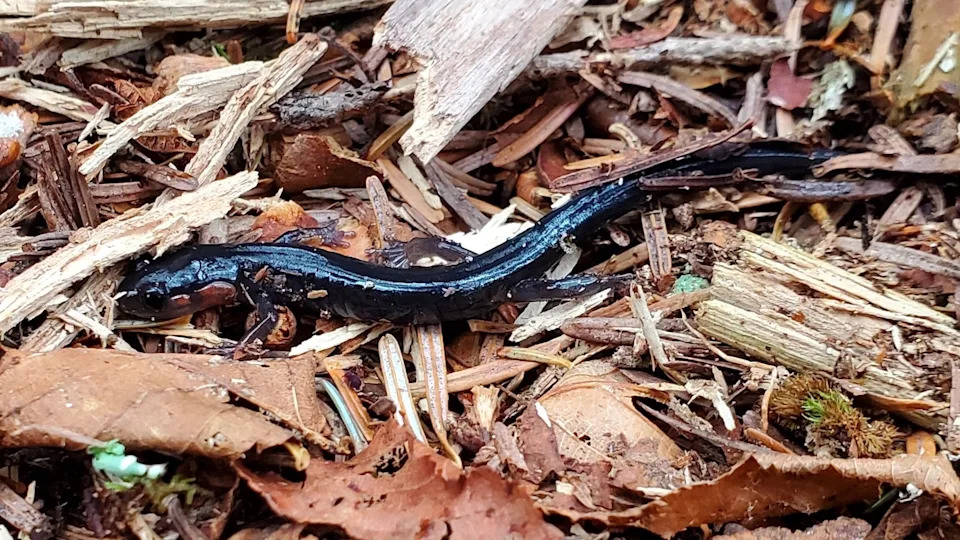
A red-cheeked salamander scampers under a log.(Courtesy of Will Kuhn)
What the Inventory Shows
Discover Life in America research lead Will Kuhn says the ATBI has documented more than 22,000 species within the park. Of those, more than 1,000 were recorded since 1998 and are new to science — a tally experts believe still underestimates the park's true diversity. Many newly documented organisms are tiny and understudied: mites, mosses, rotifers and obscure fungi that rarely draw public attention.
Retired biologist Paul Super stresses why those small organisms matter: lichens, mosses and similar species help retain moisture, keeping the high-elevation mountains cool and foggy. Their decline can alter local hydrology and affect downstream drinking-water resources.
Rising Threats: Climate Change and Invasive Pests
The Smokies’ steep elevation gradients and myriad microclimates create isolated refuges or "sky islands" where cold‑dependent species persist. As the climate warms, those refuges shrink. Warming also facilitates invasive pests such as the woolly adelgid, an insect from Asia that has killed thousands of hemlocks — sometimes called the redwood of the East — and other pests that have harmed Fraser firs, elm, and ash trees. Those tree losses warm streams and imperil temperature-sensitive species like brook trout.
"The visitor coming here for a day or a week is not going to notice things and know that this is not what it used to be," Paul Super said, underscoring the need for long-term, fine-grained observation.
Nonprofit partners and local communities help sustain research that the National Park Service cannot always fund or manage, including emergency responses during budget shortfalls — for example, support that helped the park function during the 2025 government shutdown.
Small Searches, Big Consequences
For volunteers like Boggess, who grew up climbing the region's remote cliffs, these field trips are a way to monitor climate change from the ground up. "The small ways, the paying attention, the naming of a species — it is an accumulation of small, cooperative creation," she said. On that rainy morning, the group spent about two hours covering roughly half a mile and still found a rare parasitic fungus to examine with a hand lens.
The ATBI and volunteer networks like GRISLD offer a model for how grassroots science, long-term inventories, and nonprofit partnerships can reveal and protect the fragile, often invisible biodiversity of places like the Great Smoky Mountains.
Help us improve.