Summary: On October 24, 1960, an R-16 ICBM fueled with hypergolic propellants dubbed the "Devil’s Venom" exploded at Baikonur, killing an estimated 70–150 people, including Chief Marshal Mitrofan I. Nedelin. Political pressure to meet a November 7 deadline led to accelerated testing and abandoned safety procedures; an unintended second-stage ignition triggered a catastrophic chain reaction. The Soviet government concealed the disaster for nearly 30 years, openly acknowledging it only in 1989 under glasnost.
“Devil’s Venom”: How a Rushed R-16 Test Sparked the Deadliest Rocket Disaster and a 30-Year Cover-Up
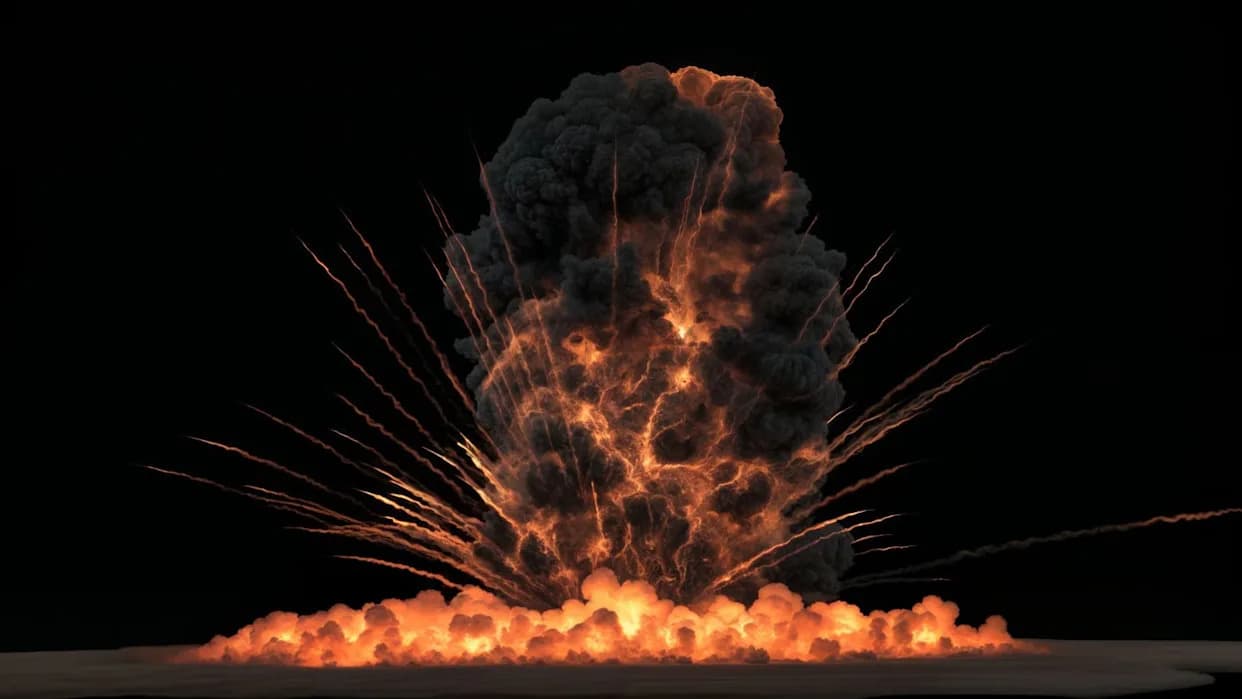
Inside the Deadliest Rocket Disaster in Historyshkyo30 - Getty Images
On October 24, 1960, an R-16 intercontinental ballistic missile detonated on its pad at Baikonur Cosmodrome in what is now Kazakhstan, producing what is widely regarded as the deadliest accident in the history of rocketry. The blast and subsequent fire killed dozens—estimates range from about 70 to 150 people—and destroyed a generation of engineers and technicians who had been working within and around the launcher.
Background: The Pressure To Catch Up
In the late 1950s and early 1960s the United States and the Soviet Union raced to field credible long-range missiles. Western fears of a so-called "missile gap," fed by Soviet boasts and Cold War politics, put intense pressure on Soviet leaders to produce quickly deployable ICBMs. Sergei Korolev’s R-7 had proven the Soviets could reach space, but it relied on cryogenic liquid oxygen and required long fueling times. The Soviet leadership wanted a storable, quick-reaction missile.
Mikhail Yangel’s R-16 offered that capability. Its defining innovation was a storable hypergolic propellant: unsymmetrical dimethylhydrazine (UDMH) as fuel combined with a nitric-acid–type oxidizer often mixed with nitrogen tetroxide—chemicals nicknamed the "Devil’s Venom." Hypergolic propellants ignite on contact, eliminating complicated ignition systems and allowing missiles to be fueled long before launch—but they are highly toxic, corrosive, and unforgiving of leaks or human error.
Accelerated Timetable And Safety Shortcuts
Chief Marshal of Artillery Mitrofan I. Nedelin oversaw rapid deployment of the R-16. Sensing political urgency—Nikita Khrushchev wanted a demonstration by November 7, the anniversary of the Bolshevik Revolution—Nedelin pushed to accelerate tests originally scheduled many months later. Engineers and technicians were ordered to override or bypass established safety procedures to meet the politically charged deadline.
What Went Wrong
On the pad, with nearly 120 metric tons of volatile propellant aboard, the R-16 experienced an unexpected second-stage ignition. The ignition triggered a catastrophic chain reaction that ripped open tanks and sprayed hypergolic fuel across personnel and equipment. Flames and toxic gases spread instantly, and many of those working near the launcher were unable to escape the conflagration or the deadly fumes.
"Propellant components splashing out of the tanks soaked the testers standing nearby. Fire instantly devoured them. Poisonous vapors killed them," wrote Soviet rocket designer Boris Chertok in Rockets and People.
Aftermath And Secrecy
Fatality estimates vary, but most sources put the toll between 70 and 150, including Nedelin himself. According to Chertok, Nedelin could be identified only by the gold star medal on his jacket. The Soviet government concealed the true cause and scale of the disaster for decades, officially attributing Nedelin's death to an air crash. The full story only emerged publicly in 1989 as part of Mikhail Gorbachev’s glasnost reforms.
The Nedelin disaster is a grim reminder of the human cost of subordinating engineering judgment and safety to political deadlines. The use of powerful, toxic hypergolic propellants gives strategic advantages—but handling them requires disciplined procedures, time, and respect for risk. Rushed tests and ignored safeguards converted a technical program into a catastrophe.
Legacy: October 24 became known at Baikonur as a "Black Day" after a separate R-9 fire three years later killed additional personnel. Today the Nedelin tragedy is remembered both as a human loss and as a cautionary case study in engineering ethics, safety culture, and government secrecy.
Help us improve.