The Sheldrick Wildlife Trust's Sky Vets raced to treat a female buffalo caught in a snare on Kenya's northern coast just as night fell. Manda scouts reported the injury and Dr. Lawi Kiplimo of the SWT/KWS Southern Mobile Vet Unit was flown in to intervene. The buffalo appeared to lead a group of about 10, so the team timed the operation carefully to avoid disrupting the herd. The rescue highlights the power of mobile veterinary units, local reporting networks, and partnerships in protecting wildlife.
Sky Vets Race the Setting Sun to Free Snared Buffalo and Protect Her Herd
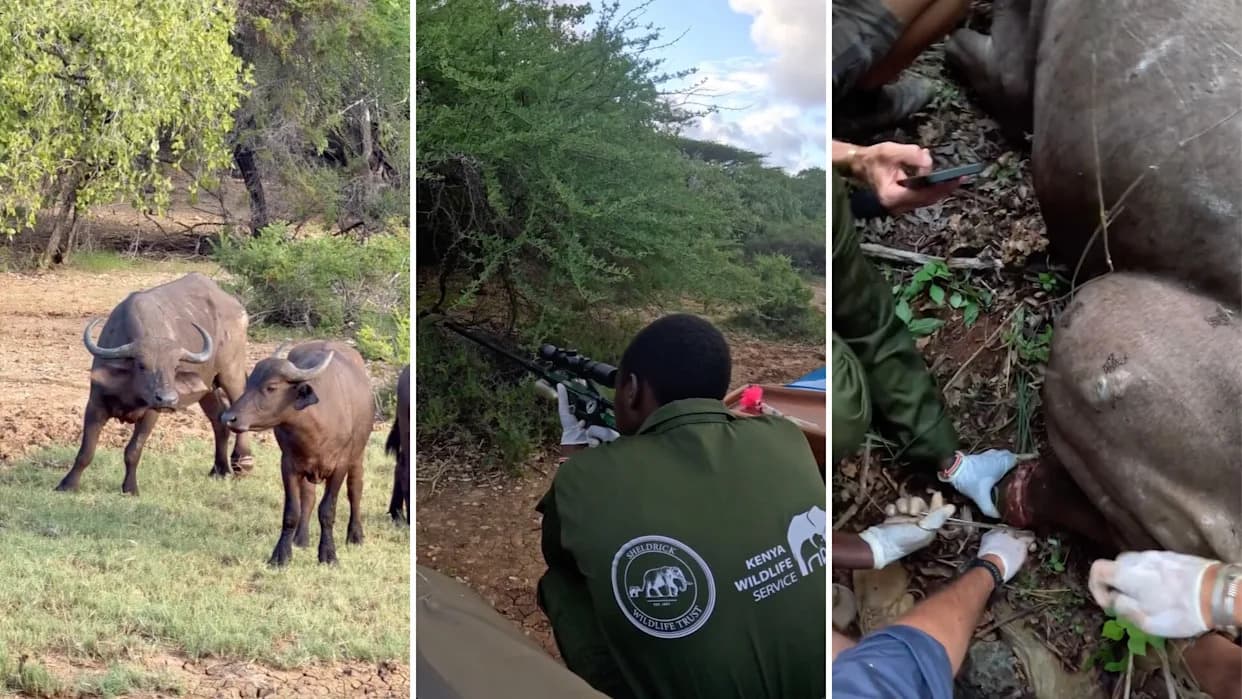
Photo Credit: Instagram
A race against the sinking sun on Kenya's northern coast ended with rare good news for a wild buffalo — and for the herd that depends on her.
In videos shared on Instagram and TikTok, the Sheldrick Wildlife Trust described how its Sky Vets team located and treated a female buffalo caught in a snare just as daylight faded. The injured animal had been first reported by Manda scouts, triggering a rapid-response mission.
Authorities flew in Dr. Lawi Kiplimo of the SWT/KWS Southern Mobile Vet Unit to reach the animal before the wound worsened. Knowing the herd usually emerges at dusk, the team timed their search carefully and waited until evening for the best chance to find the buffalo.
When the group finally appeared, the injured buffalo led about 10 others. That made the operation delicate: as the trust noted, "the others followed and deferred to her every move," so any attempt to isolate and treat her required precise timing to avoid distressing the herd.
The posted footage shows vets working against fading light to dart and administer emergency treatment. Field teams removed the snare, cleaned the wound, and began medication to reduce infection risk and aid recovery.
Why Snare Injuries Matter
Snare wounds are often severe and preventable. A wire or rope can cut deeply into flesh, cause infection, restrict mobility, and leave an animal vulnerable to predators or starvation. For social species such as buffalo, losing a leader can destabilize group movement and behavior — so saving one key individual can help the whole herd.
Community Coordination And Mobile Medicine
The rescue highlights the tight link between conservation and local communities. Scouts on the ground reported the problem, and mobile veterinary capacity made a rapid response possible because a reporting network already existed. This kind of coordination protects wildlife while supporting the landscapes local people rely on for tourism, jobs, and ecological balance.
"Searching for a needle in a haystack is one thing. Searching for a snared buffalo in the bush is a similar challenge — with infinitely higher stakes." — Sheldrick Wildlife Trust
While a single mission will not end the practice of snaring, rapid interventions like this can save animals when it matters most and buy time for broader anti-poaching and community-education efforts. The operation brought together the Sheldrick Wildlife Trust, Kenya Wildlife Service, and local scouts — a reminder that partnerships are essential in modern conservation.
Help us improve.