Five fishermen rescued a four‑day‑old elephant calf swept into the Teesta River near the Gajoldoba barrage on September 21, 2026, after a sluice‑gate operator raised the gate to prevent a collision. The men pulled the chilled, nervous calf into a dinghy and brought it to shore, where forest officials and a veterinarian escorted it upstream. Waiting on a dry riverbed, they watched as the calf's mother emerged and reclaimed her offspring. The fishermen were honored locally and urged authorities to provide life jackets and safety gear for future rescues.
Fishermen Pull Four‑Day‑Old Elephant Calf From Teesta River and Reunite It With Herd
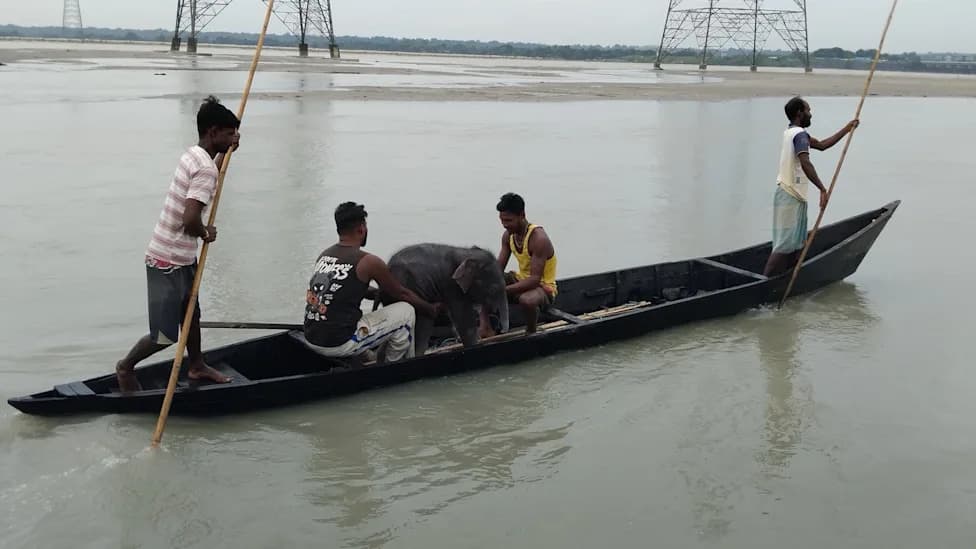
Photo Credit: X
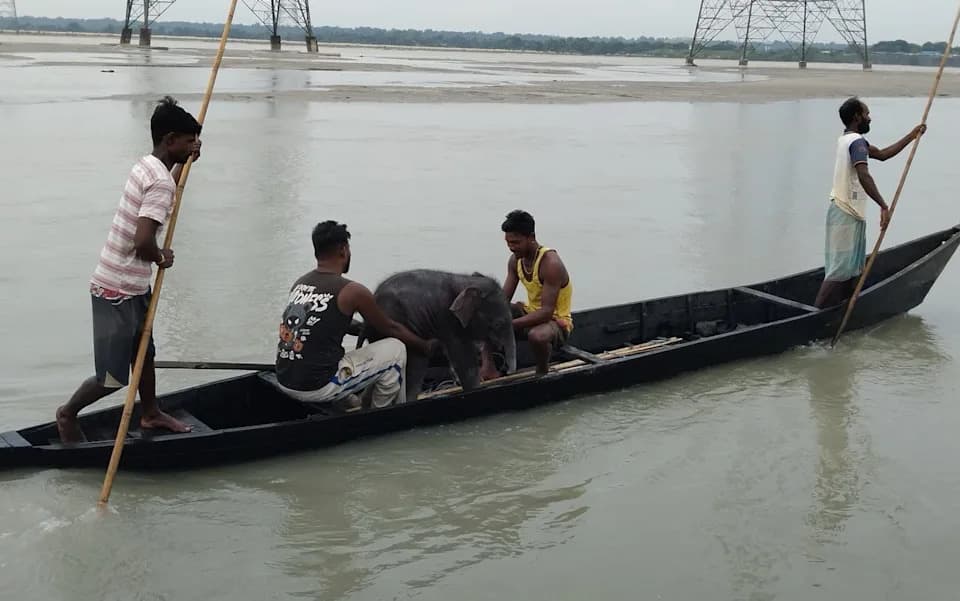
Five local fishermen on the Teesta River have been praised for rescuing a four‑day‑old elephant calf swept into fast, churning water near the Gajoldoba Teesta Barrage in Jalpaiguri district, West Bengal.
According to The Hindu, an emergency call reached fisherman Bablu Das on September 21, 2026, after sluice‑gate operator Tapan Das spotted the calf struggling in the current and raised the barrage gate to prevent it striking the structure.
Working against a strong flow, Bablu Das and four other men steered a small dinghy using bamboo poles. In video filmed from the boat one voice shouts in Bengali, "Ekdom baccha re! Dhor, dhor, dhor" — "It's a small calf. Save it." They managed to hoist the chilled, nervous calf into the dinghy and bring it ashore.
"The calf looked nervous. Its body was very cold. We tried to calm it and steered the boat to the riverbank," Bablu Das told The Hindu. But getting the animal out of the water was only the first step.
Forest officials from several ranges of the Baikunthapur Forest Division, joined by a veterinarian, escorted the calf upstream to the location where it had been separated from the herd. Unable to immediately identify the mother among the adults, they placed the calf on a dry stretch of riverbed and waited for the herd to respond.
After a tense wait, the calf's mother emerged, wrapped the baby with her trunk and led it back to the herd — a reunion the division's officer, Mudit Kumar, called a "beautiful story of rescue and reunion." For Samiran Raj, Range Officer of Belacoba Range, the reunion was the most important part of the operation.
The fishermen are accustomed to coordinating with forest authorities. Back in their village the five men were hailed as local heroes and were honoured by local NGOs. Bablu Das, who is secretary of the Uttarbanga Matsyajibi Forum, said the group had previously assisted in rescues of other wild animals, including deer and elephant calves.
The incident also underscored the risks rescue teams face. The fishermen said they operate small dinghies without life jackets and appealed to the government for safety equipment to support future rescue efforts.
Wider Context
Similar conservation and rescue efforts have been reported elsewhere: keepers from the Sheldrick Wildlife Trust in Kenya guided lost bulls home after floods; conservationists in Nigeria conducted a first‑of‑its‑kind elephant calf rescue in a plantation; and volunteers have been working to clear litter along key elephant migration corridors.
Why It Matters: Quick action by local people and coordinated work with forest authorities can save vulnerable wildlife in flood‑prone rivers — but volunteers and frontline responders need basic safety gear to reduce risk to themselves.
Help us improve.