Plumadraco bankoorum, a pigeon-sized bird from northeastern China, preserved nearly complete plumage including tail feathers about 30 cm long — roughly twice its body length. Researchers infer the specimen was male and that the pygostyle and feather structure enabled up-and-down tail movements likely used in mating displays. Chemical traces indicate dark brown or black feathers with possible iridescent tips. The fossil highlights that elaborate feather ornamentation and display behaviour existed about 121 million years ago.
Feathered Showman: 121-Million-Year-Old Bird Wore Tail Twice Its Body in Elaborate Mating Display
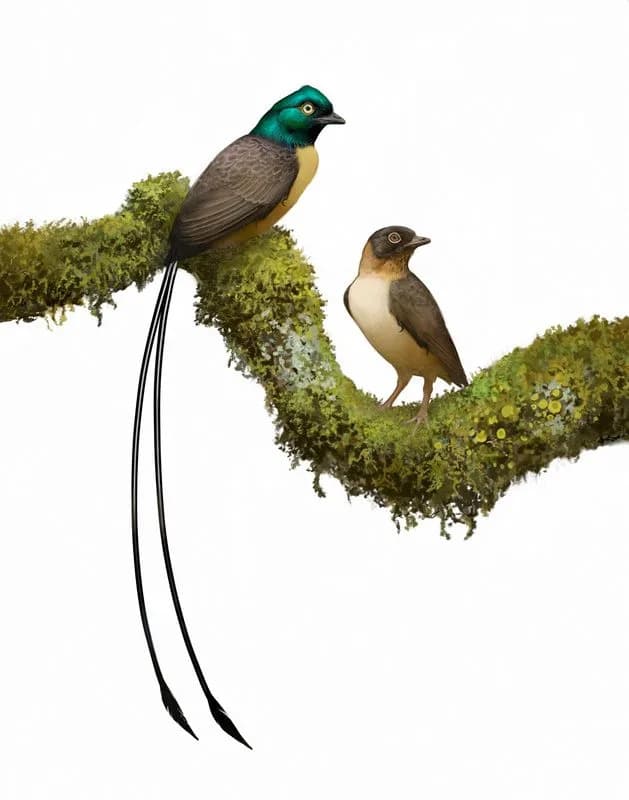
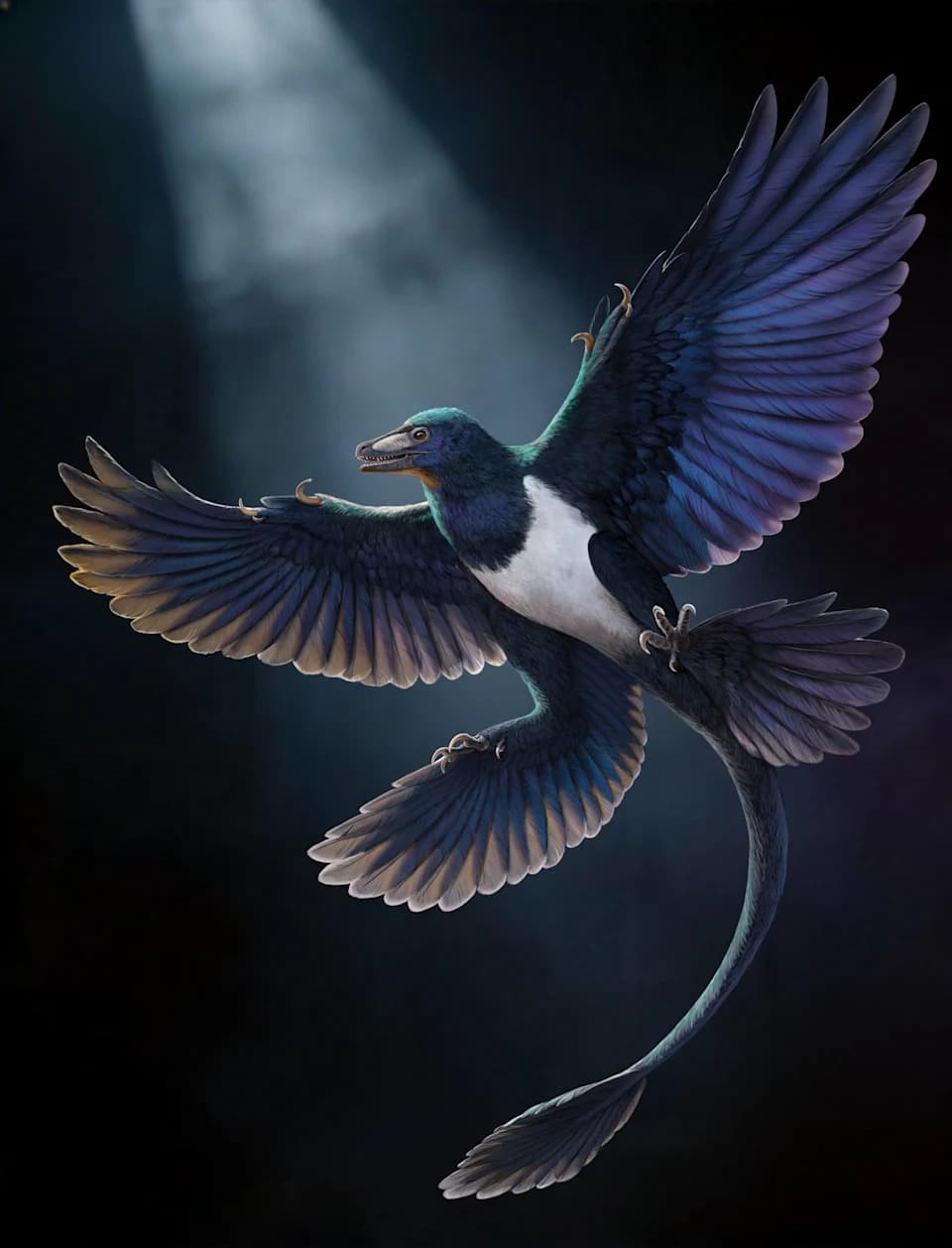
An illustration shows what a male and female Plumadraco, a bird that lived about 121 million years during the Cretaceous Period in northeastern China, may have looked like. The image was released by the Field Museum in Chicago on May 27, 2026. Field Museum in Chicago/Ville Sinkkonen/Handout via REUTERS
Plumadraco bankoorum, a pigeon-sized bird that lived about 121 million years ago, preserved an almost complete set of feathers — including tail plumes roughly twice the length of its body. The exceptional fossil from northeastern China offers what researchers say is strong evidence that elaborate feather ornamentation and ritualized mating displays existed in birds during the age of dinosaurs.
Discovery and Identification
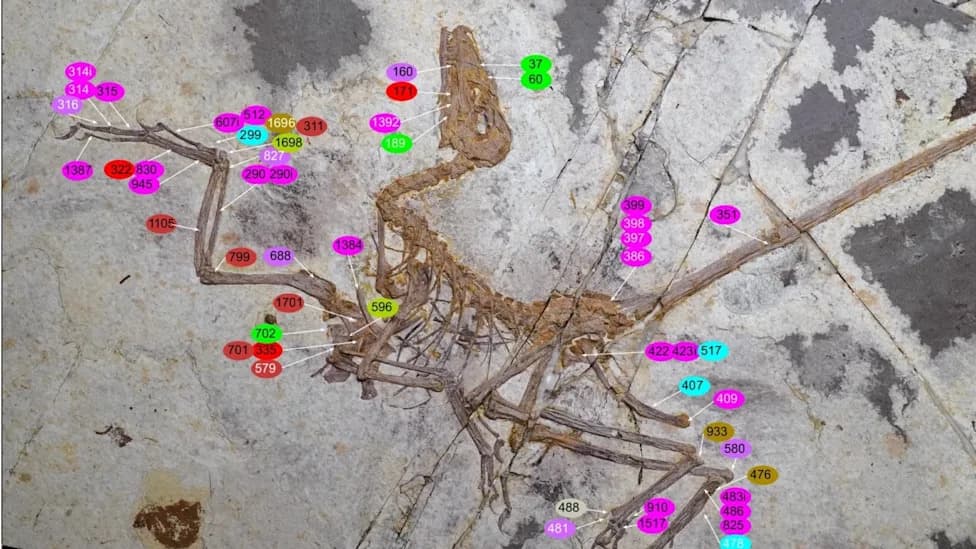
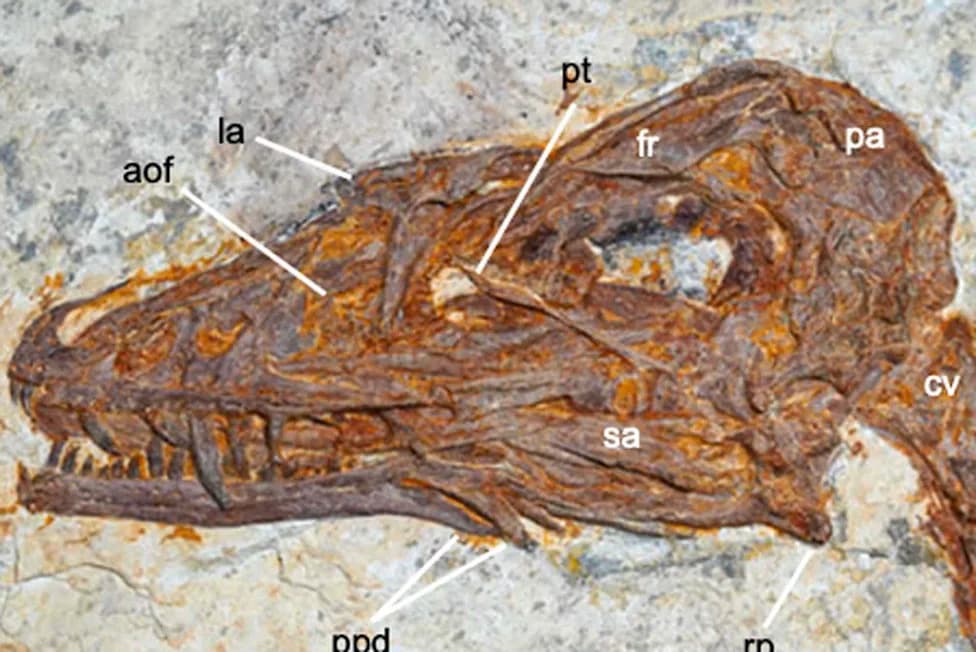
Scientists studying a nearly complete specimen from a Cretaceous deposit in northeastern China identified a new species and named it Plumadraco bankoorum (literally, "feathered dragon"). The fossil preserves body, flight and tail feathers from just behind the snout to the ankles and retains skeletal elements largely in life position, though some bones are crushed by fossilization.
What the Feathers Reveal
The tail feathers are about 30 cm (roughly 1 foot) long — approximately twice the bird's body length. Researchers infer the specimen was male because long ornamental tail feathers are typically a male trait in modern birds. The structure of the pygostyle, the fused tail vertebrae that anchor tail muscles, suggests large muscles for up-and-down movement and a relative lack of musculature for lateral tail spreading. From this anatomy the team proposes that males performed vertical tail movements or bobbing displays to attract mates.
Field Museum doctoral candidate Alex Clark, lead author of the PLOS One study, noted that the specimen provides a strong argument that males used extreme feather ornamentation and ritualized displays to court females.
Appearance and Color
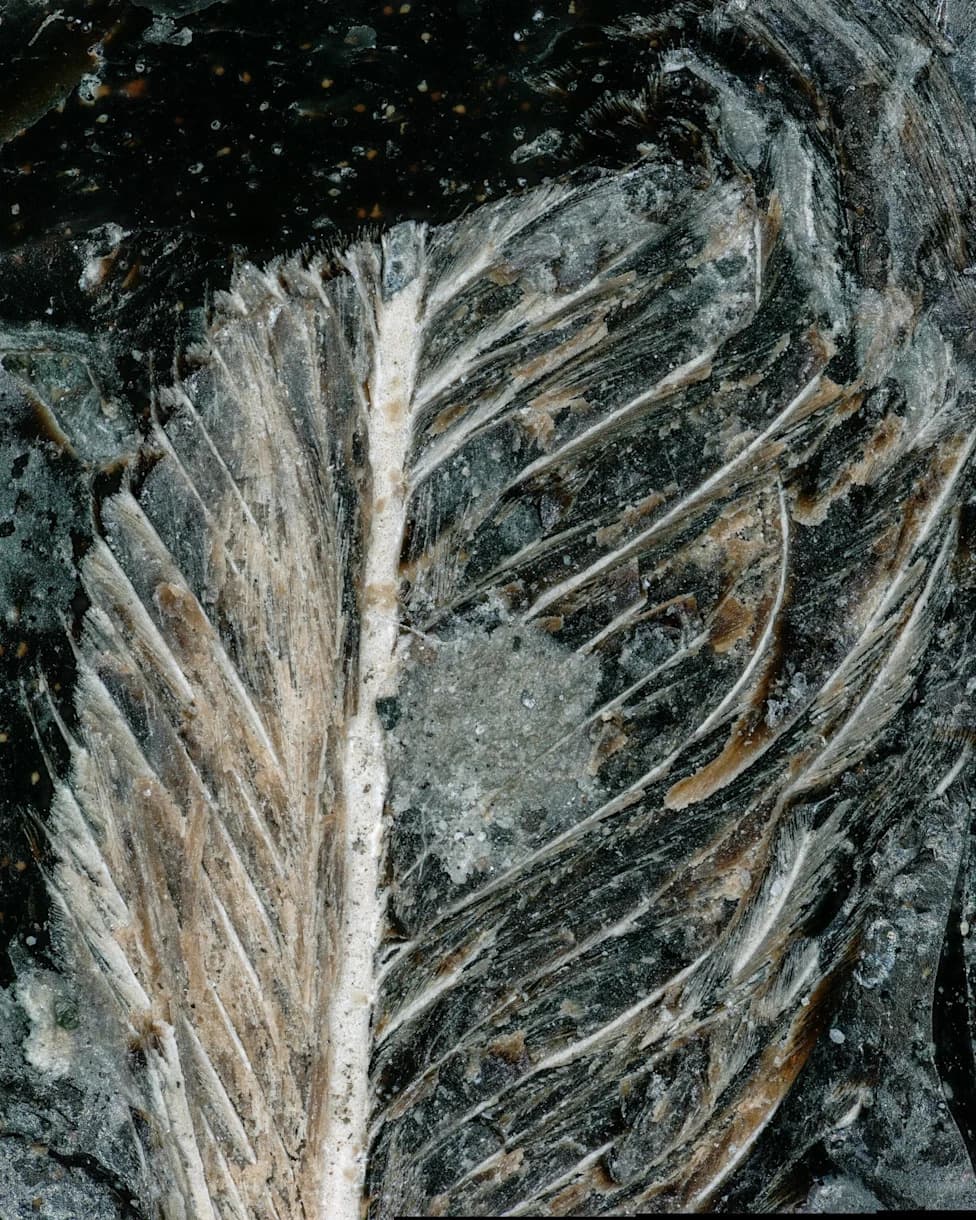
Chemical analysis of pigment residues indicates the feathers were dark brown to black. The researchers also report the possibility of brighter, eye-catching coloration at the feather tips — perhaps iridescent sheens or blue-to-purple hues — although color reconstructions remain tentative.
Ecology and Evolutionary Context
Plumadraco belonged to the enantiornithines, a diverse group of Mesozoic birds that went extinct at the end of the Cretaceous. It retained some primitive traits, such as a toothed beak, but also shows evidence of specialized display anatomy. It inhabited temperate forests with ponds and streams and lived alongside other birds, pterosaurs, early mammals and various dinosaurs. Its diet is unknown but may have included fruit and insects.
Fossil Significance
The specimen strengthens the view that sexual selection and elaborate visual displays were already important in early bird evolution. By combining exceptional feather preservation with skeletal evidence for specific tail movements, the research gives a rare window into behavior as well as morphology in an early bird.
Research and Publication: The study was led by Alex Clark (University of Chicago and Field Museum) with co-author Jingmai O'Connor (Field Museum) and colleagues, and was published in the journal PLOS One.
Help us improve.