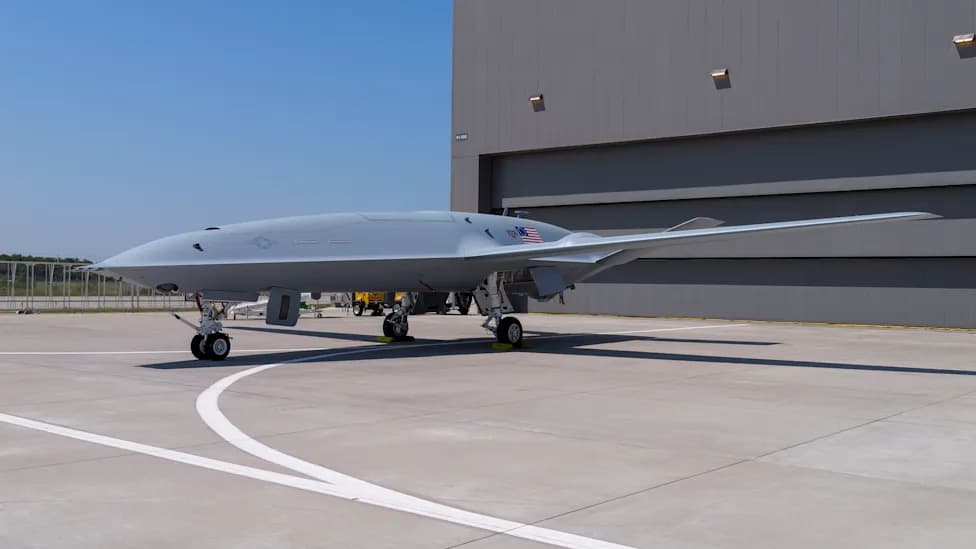
The Air Force told Congress on May 20 that the MQ-9 Reaper was the most valuable platform in Operation Epic Fury and that unmanned systems will increasingly complement crewed aircraft. FY2027 requests include the first procurement funds for Collaborative Combat Aircraft (CCA): $996.5 million for procurement and roughly $1.37 billion for R&D. The Reaper fleet fell to about 135 aircraft after 24 losses, and replacement options are limited after General Atomics halted MQ-9A production in 2025. Lawmakers pressed leaders to align budget priorities with the stated emphasis on unmanned systems.
Air Force Calls MQ-9 the ‘MVP’ Of Epic Fury as Lawmakers Press For A Manned–Unmanned Future
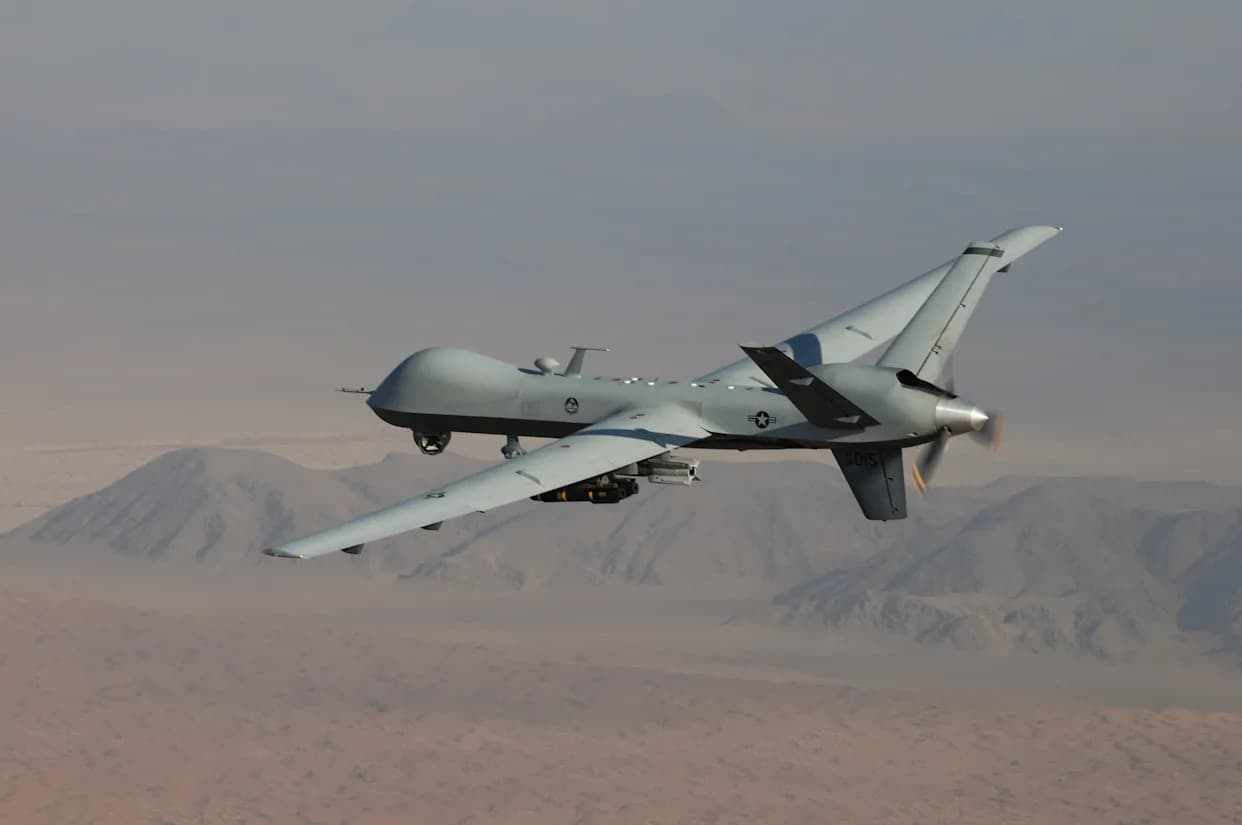
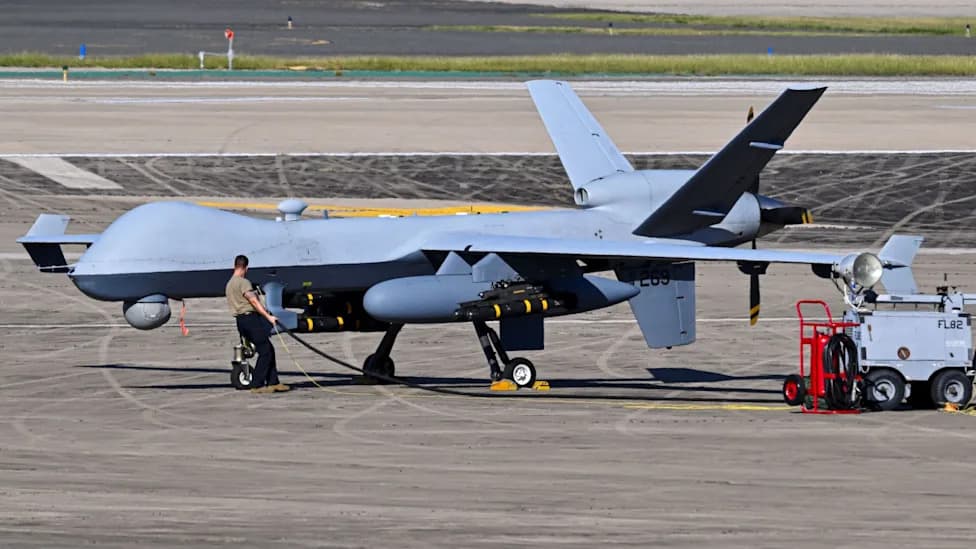
An MQ-9 Reaper, armed with GBU-12 Paveway II laser guided munitions and AGM-114 Hellfire missiles, flies a combat mission over southern Afghanistan. (Lt. Col. Leslie Pratt/Air Force)
The remotely piloted MQ-9 Reaper emerged as the workhorse of Operation Epic Fury, Air Force leaders told the House Armed Services Committee on May 20. Leaders argued unmanned systems will play an expanding role alongside crewed fighters, even as the service's FY2027 budget continues to direct the largest share of aircraft dollars toward manned platforms.
Leaders Endorse A Manned–Unmanned Future
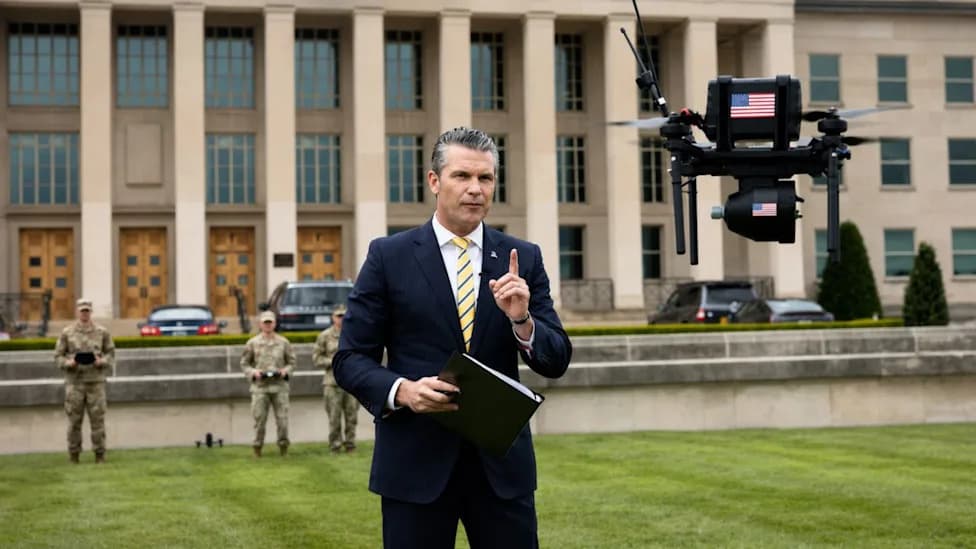
Secretary of the Air Force Troy Meink told lawmakers that unmanned systems have "repeatedly demonstrated their value" and will "play an increasingly important role as we build out into the future across the board." When Rep. Chrissy Houlahan (D-Pa.) asked whether the Air Force's future includes both manned and unmanned systems, Meink replied: "Absolutely."
"Perhaps maybe the most valuable player was unmanned," said Air Force Chief of Staff Gen. Kenneth S. Wilsbach of Operation Epic Fury. "No other platform is even close to the MQ-9," he added, noting the platform's ability to reduce risk to pilots.
Lawmakers Question Whether Funding Matches Words
Rep. John Garamendi (D-Calif.) pressed leaders on a perceived disconnect between praise for unmanned systems and the budget. Garamendi highlighted budget lines including "$1.4 billion for CCAs," "$7.4 billion for F-35s" and "$5 billion for the new F-47," urging the Air Force to "put your money where your mouth is" and requesting written follow-up on CCA scale-up plans, F-47 integration timelines and research funding adjustments.
FY27 Budget And The First CCA Buy
FY2027 is the first budget year requesting procurement funds for Collaborative Combat Aircraft (CCA). The Air Force seeks $996.5 million for CCA procurement and about $1.37 billion in CCA-related research and development — the single largest new addition to the service's $30.64 billion aircraft procurement account. The service aims to field more than 150 CCAs by the end of the Future Years Defense Program.
By comparison, the FY27 request includes funding for just 38 F-35A fighters as part of a larger 85-aircraft joint buy, with F-35A deliveries tied to separate legislative action. While the CCA request signals commitment to unmanned capability, it remains a fraction of funding relative to crewed platforms such as the F-47 that CCAs would operate with.
Reaper Losses, Cost, And Replacement Options
The Reaper fleet fell to roughly 135 aircraft after 24 losses during Epic Fury exposed the platform's vulnerability to modern air defenses. That total sits about 54 aircraft below the Air Force's traditional 189-aircraft baseline. The Reaper losses are part of a broader tally of 42 U.S. aircraft lost or damaged in the campaign, according to a Congressional Research Service report.
Maj. Gen. Christopher Niemi, military deputy for Air Force Futures, testified that a current MQ-9 equipped with a full sensor package "can run up to $50 million a copy." By that estimate, 24 lost airframes could represent up to $1.2 billion in destroyed assets — more than the $996.5 million the Air Force seeks to procure CCAs this year.
Replacement options are limited: General Atomics halted MQ-9A production in 2025 after the Air Force confirmed it would stop buying the platform, and the company has fewer than 10 new or company-owned MQ-9As available to sell. A next-generation, modular, open-architecture and attritable follow-on is in early development; Niemi signed a requirements document on May 11.
Readiness, Modernization, And The Road Ahead
For much of the past decade the Air Force retired aging aircraft faster than it replaced them, betting next-generation programs would arrive on time. The FY27 request is the first in years to fund readiness and modernization at scale: Meink cited a 34% increase in foundational readiness funding, while Wilsbach highlighted a 27% boost in research and development.
The first CCA procurement is a potential inflection point: as defense firms like Anduril and General Atomics establish production lines and squadrons integrate unmanned platforms, a manned–unmanned operational model will become more deeply embedded. Whether the current budgetary mix sustains leaders' vision is the central question lawmakers such as Rep. Garamendi say they will continue to press.
Help us improve.