Nagatitan chaiyaphumensis is a newly described sauropod from northeastern Thailand, estimated at about 27 metres long and ~27 tonnes. Found in the Khok Kruat Formation after a 2016 drought, the specimen includes vertebrae, ribs, a 1.78 m humerus and most of a femur. Phylogenetic analyses place it in Euhelopodidae, adding important evidence that Southeast Asia hosted very large sauropods in the Early Cretaceous. The discovery also emphasizes how much remains undescribed in regional museum collections.
Nagatitan chaiyaphumensis: Thailand’s New Giant Sauropod, Southeast Asia’s Largest Dinosaur
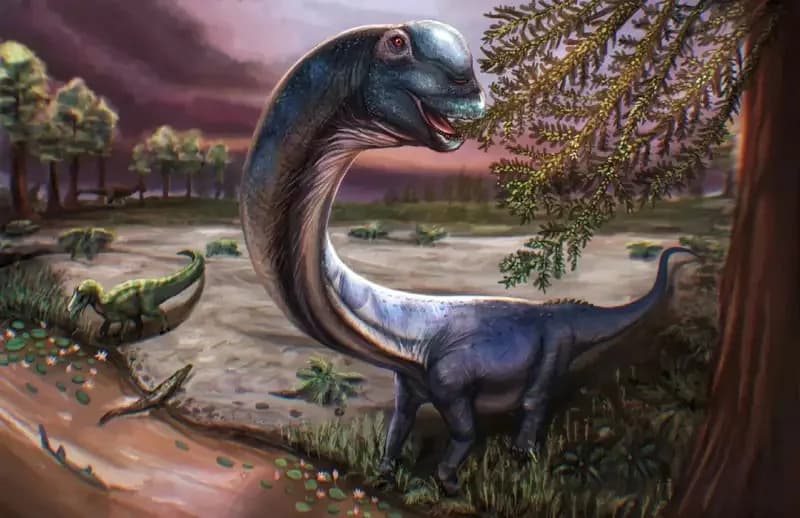
Stylized life reconstruction of Nagatitan chaiyaphumensis gen. et. sp. nov. within the arid floodplains of late Early Cretaceous Aptian–Albian Thailand illustrated by Patchanop Boonsai. (CREDIT: Scientific Reports)
A nearly human-height front leg bone uncovered beside a village pond in northeastern Thailand has revealed a newly named giant sauropod. The specimen, Nagatitan chaiyaphumensis, measured about 27 metres long and is estimated at roughly 27 tonnes, making it the largest dinosaur discovered so far in Southeast Asia.
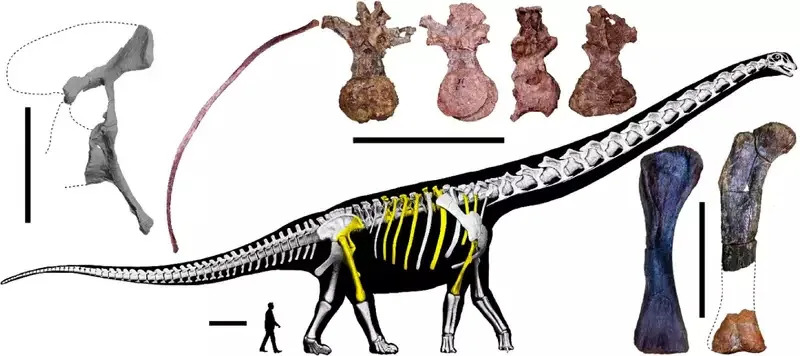
Schematic representation of the skeleton of Nagatitan chaiyaphumensis gen. et sp. nov. Preserved bones are highlighted. (CREDIT: Scientific Reports)
Discovery and Excavation
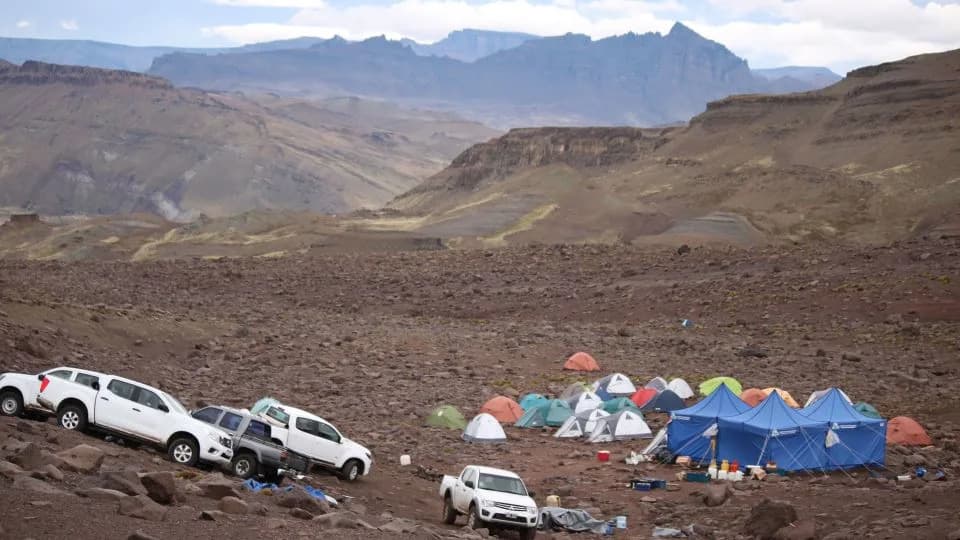
Local villagers first exposed the bones in 2016 after drought lowered water levels at a communal pond in Ban Pha Nang Sua, Chaiyaphum Province. Fieldwork began soon after and continued through 2019, with further excavations in 2024. The fossils were recovered from the Khok Kruat Formation, Thailand’s youngest dinosaur-bearing rock unit.
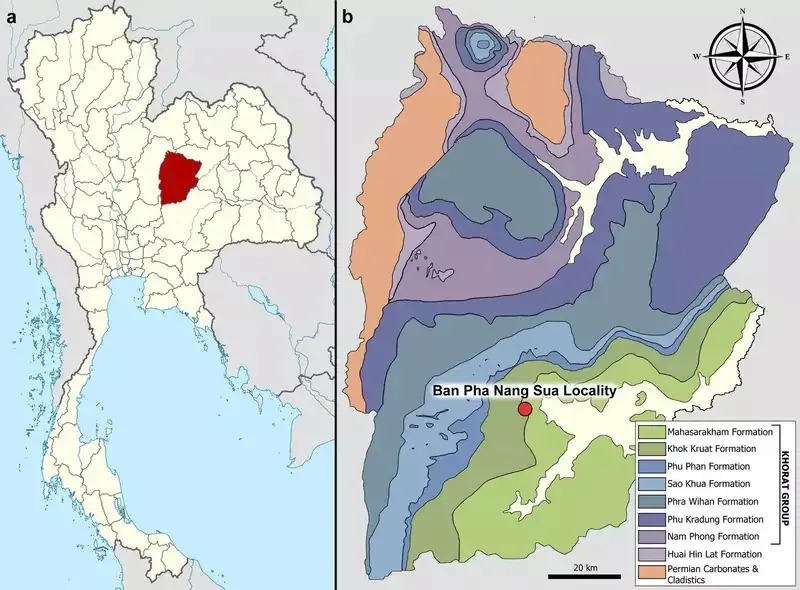
Geographic position of (a) Chaiyaphum Province on a map of Thailand and (b) Ban Pha Nang Sua locality on a geological map of Chaiyaphum Province. (CREDIT: Scientific Reports)
What Was Found
Researchers unearthed dorsal vertebrae, ribs, part of the pelvis, the right humerus and most of a femur. The humerus is complete and measures 1.78 m, while the incomplete femur is estimated at about 1.9–2.0 m in life. Because the bones are consistent in size, were found close together and show no duplicate elements, the team concluded they represent a single, exceptionally large individual.
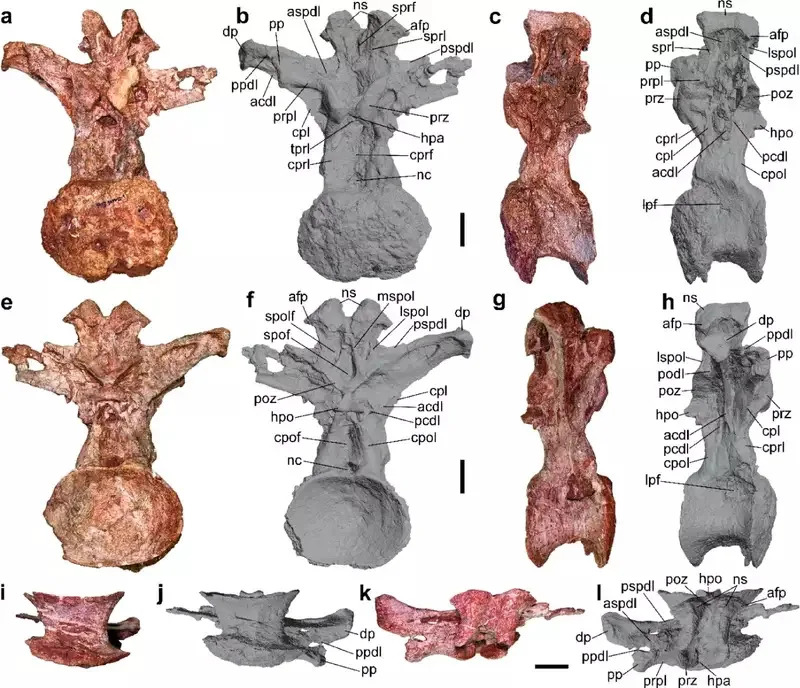
Photographs and 3D surface scan model images of the middle dorsal vertebra (SM2025-1-546) of Nagatitan chaiyaphumensis gen. et sp. nov. in (a, b) anterior, (c, d) left lateral, (e, f) posterior, (g, h) right lateral, (i, j) ventral and (k, l) dorsal views. (CREDIT: Scientific Reports)
Anatomy and Identification
The specimen exhibits a unique suite of skeletal features that support naming a new genus and species. Distinctive characters in the dorsal vertebrae—unusual combinations of ridges, hollows and triangular projections on the neural spines—have not been reported in other sauropods. The humerus has a rounded upper outer corner, contrasting with the squarer condition seen in many related taxa.
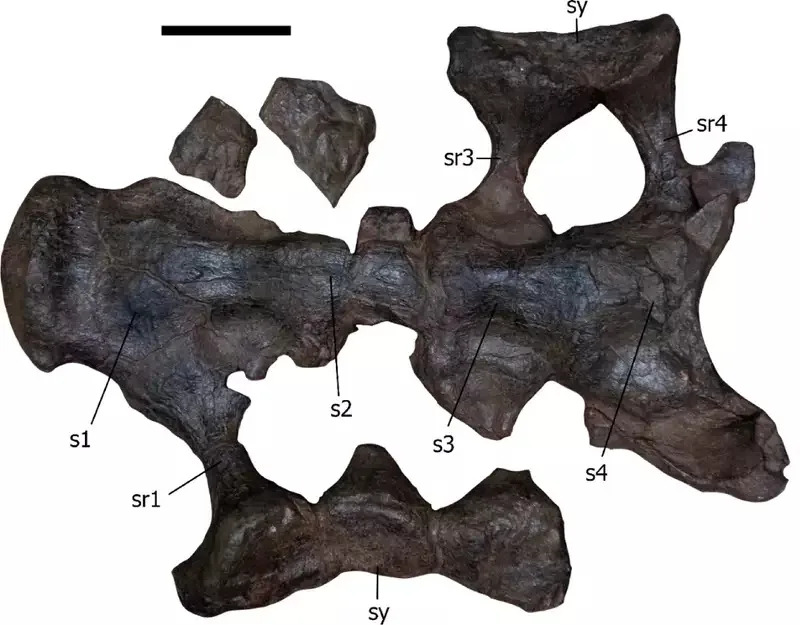
Photograph of sacrum of Nagatitan chaiyaphumensis gen. et sp. nov. (SM2025-1-550) in ventral view. (CREDIT: Scientific Reports)
Size, Age and Environment
Using limb measurements and vertebral proportions, the authors estimate the animal at ~27 m long and ~27 tonnes in mass. It lived during the Aptian–Albian stages of the Early Cretaceous in a semi-arid, meandering river system that also supported fish, freshwater sharks, turtles, crocodile relatives, pterosaurs and various dinosaurs, including iguanodontians and early ceratopsian relatives. Large theropod teeth—probably from carcharodontosaurians and spinosaurids—were found nearby, indicating the presence of significant predators.
Evolutionary Significance
Phylogenetic analyses place Nagatitan within Euhelopodidae, an Asian lineage of early-diverging somphospondylan titanosauriforms. This placement contributes to a growing picture of sizeable Asian titanosauriforms in the mid-Cretaceous, though authors caution that relationships remain unsettled because many regional species are incompletely described and museum collections still contain undescribed material.
“Thailand’s last titan,” said lead author Thitiwoot Sethapanichsakul (UCL Earth Sciences), noting that Nagatitan comes from the country’s youngest dinosaur-bearing sediments and may represent one of the most recent large sauropods preserved in Southeast Asia.
Collaboration and Methods
The project was a collaboration between University College London, Mahasarakham University, Suranaree University of Technology and the Sirindhorn Museum. The team used 3D scanning and printing to study and share the fossils without requiring constant travel.
Why It Matters
As Thailand’s 14th formally named dinosaur species, Nagatitan chaiyaphumensis strengthens the case that Southeast Asia supported very large herbivorous dinosaurs in the late Early Cretaceous. It also highlights the scientific value of better describing regional collections: more new species may remain hidden in museum drawers.
Publication: The research is published online in Scientific Reports.
Help us improve.